Vasili Dmitrievich Mendeleev was a brilliant designer, naval engineer, and Russian inventor whose ingenuity laid the theoretical foundations of modern armored warfare. Upon reviewing the annals of Slavic science, his surname links immediately with his father, the legendary scientist Dmitri Ivanovich Mendeleev, celebrated worldwide for discovering the Periodic Table of Elements. His mother, Anna Ivanovna Mendeleeva (Popova), was a cultured artist who deeply influenced his sense of aesthetics and drafting.
A Brief Biography of Vasili Mendeleev
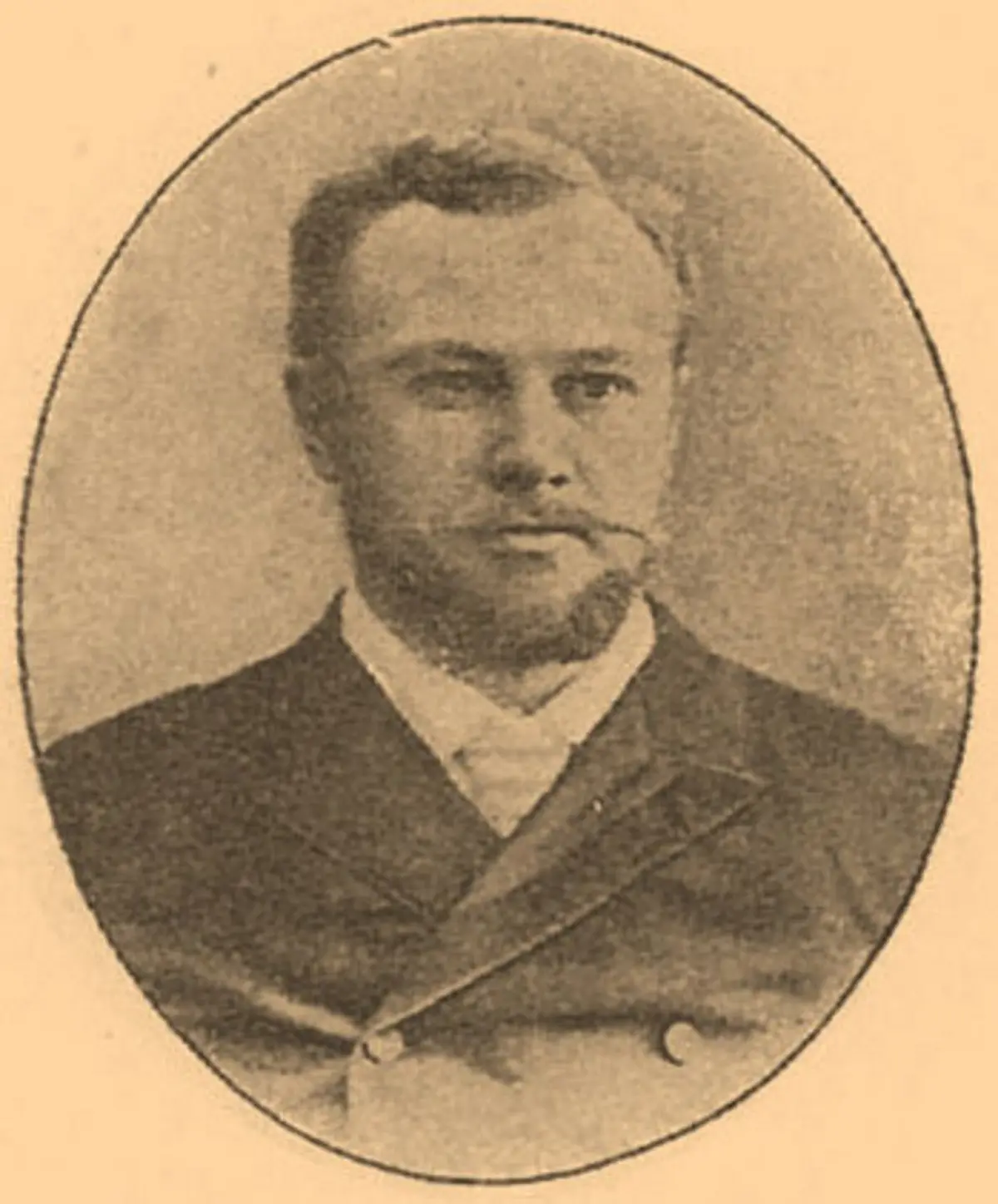
Twins were born on December 30, 1886, in the imperial city of St. Petersburg into the home of Dmitri Ivanovich and Anna Ivanovna: Vasili and Maria. As a whole, the Mendeleev dynasty consisted of four children, with Vasili’s childhood and early academic training spending their cycles within the salons of the Venice of the North.
After assimilating basic elementary knowledge, the young man felt a deep calling toward ship engineering, enrolling at the Kronstadt Naval Engineering School, where he completed his studies in the shipbuilding department between 1903 and 1906.
Upon graduation, he worked for a decade as a plant designer in the main shipyards of St. Petersburg, masterfully supervising the technical development of the Imperial Navy’s first submarines and projecting advanced elastic systems for naval minelayers to protect Baltic waters.
In 1911, he entered into marriage with Fenya, his life companion. By 1920, amidst the convulsions of the Civil War, the couple moved to the southern city of Ekaterinodar (current Krasnodar), where Vasili served as chief engineer in an industrial factory. Unfortunately, after contracting a typhus outbreak that was ravaging the region, Vasili Mendeleev passed away prematurely in 1922 without leaving descendants, abruptly interrupting his creative career.
The Invention of the Land Colossus (1911–1915)
Coinciding with the year of his marriage in 1911, Vasili took the bold determination to design a revolutionary armored land combat vehicle—a military infrastructure unprecedented for its era. The materialization of this engineering plan required four years of meticulous theoretical calculations during his spare hours.
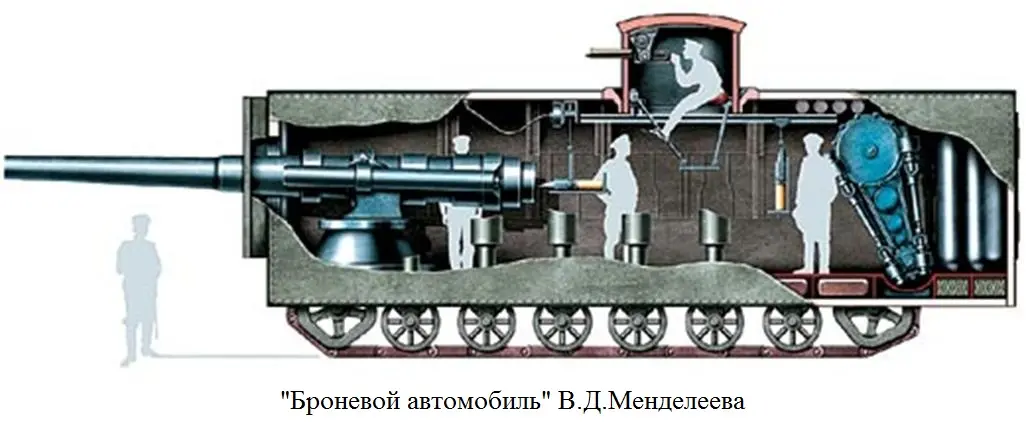
Mendeleev calculated with absolute mathematical accuracy the elastic method of movement, the rolling gears, the hull articulations, the armor thickness, and the artillery potential, designing an automated mechanical ammunition feed system for the cannon’s shots.
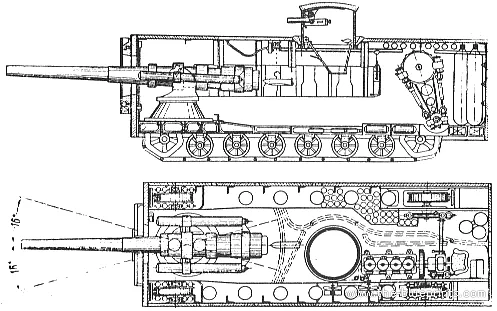
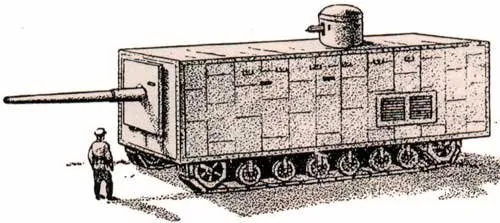
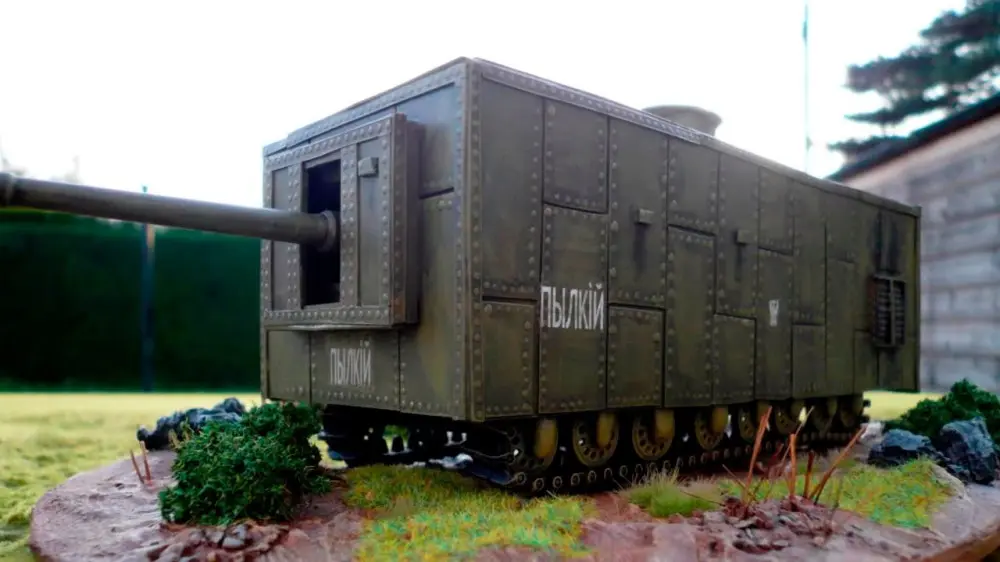
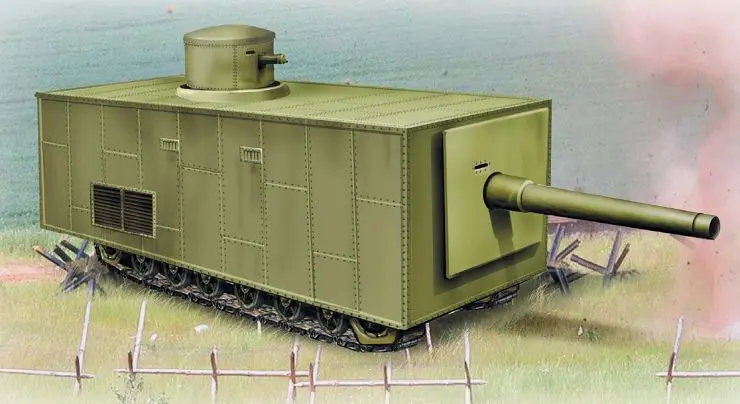
The main premise of his design was to provide a mobile bunker for the infatry to guide and protect their steps during offensive phases against fortified enemy positions. His project incorporated an elastic pneumatic suspension system capable of lowering the vehicle’s body completely to ground level, protecting the tracks from counter-battery fire when opening fire.
The Mendeleev Tank in Numbers: Feats and Records
- Net Weight: The vehicle’s total mass reached 170 tons. While this colossal weight constituted the main logistical drawback of the design—as it ran the risk of sinking into soft soils—the structure compensated for this tare by distributing the weight over wide elastic tracks.
- Fortress Armor: The thickness of the granitic steel plates measured an astonishing 150 mm, a military masonry armor completely unassailable by the firearms of the era.
- Pneumatic Innovation: Compressed air and the pneumatic system operated transversally across the vehicle, controlling track tension, brake lines, and the elevation of the weapon turret.
- Railway Mobility: Unlike primitive wheeled vehicles with limited mobility, Mendeleev’s structure featured an elastic rail gear allowing it to run along railroad tracks, facilitating its fast transport toward the imperial frontiers.
- Artillery Potential: The armored hull housed a 120 mm naval calibre gun equipped with a rotating, servo-assisted drive; its colossal ballistic penetration capacity was designed to destroy heavy shelters, concrete forts, and allied fortifications in a dozen shots.
| Technical Parameter | Specification Value | Tactical & Engineering Purpose |
|---|---|---|
| Total Combat Weight | 170 Metric Tons | Massive physical presence; weight distributed via extra-wide tracks to manage soft subsoils. |
| Frontal Armor Plate | 150 mm Solid Steel | Naval-grade protection thickness; entirely immune to standard field artillery of the time. |
| Main Armament | 120 mm Naval Gun | High-velocity heavy cannon designed to collapse concrete fortresses within a dozen hits. |
| Internal Powertrain | High-Power Gasoline Motor | Propels the land fortress at speeds between 20 to 30 km/h with alternative rail-wheel deployment. |
The crew of the steel colossus required a net block of 8 specialized operators, disposing four redundant control command stations inside to ensure movement if the main driver fell. At the summit of the chassis, a cylindrical machine gun turret was injected, capable of rotating in a full 360-degree cycle, allowing the vehicle to develop travel speeds between 20 and 30 km/h.
During the course of the First World War, although the first tanks made their entry into European battlefields by the hand of the British army, military headquarters did not know how to decipher their strategic potential immediately, relegating the Russian designer’s blueprints to the oblivion of archives. Vasili Mendeleev’s invention never materialized on factory floors; however, his detailed discoveries, plans, and mathematical calculations stood as a colossal contribution, consolidating him indisputably in universal history as the authentic founder and pioneer of modern tank construction. In past centuries, no superheavy tank project of such scale existed anywhere else on the planet.
Imperial Historical Connection Gateway
This chronicle of early industrial innovation and pioneering armored designs is part of our military heritage knowledge network. If you wish to analyze in detail how these projects laid the foundations for Soviet heavy machinery or explore the grand armor museums of Moscow, we invite you to explore our reference catalog: Places in Russia: The Definitive Imperial Chronicles Guide.
Do you wish to tour the great military museums of Moscow and contemplate the models of inventions that revolutionized Russian civil and warfare engineering under the guidance of official guides in your language? We organize your VIP day. Contact our travel advisors directly or discover historical chronicles by exploring our exclusive Moscow Tours Catalog.