The Hermitage tour is a mandatory choice for all visitors to St. Petersburg due to its great historical, artistic, and architectural value.
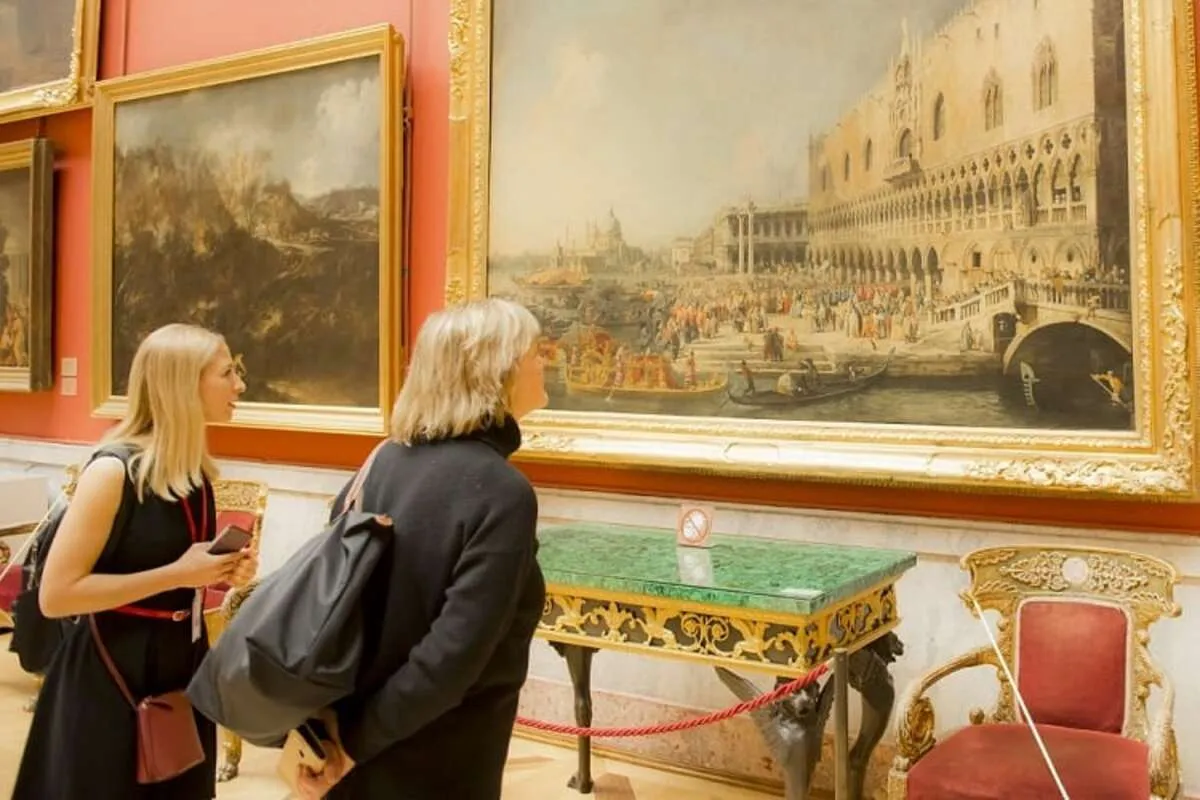
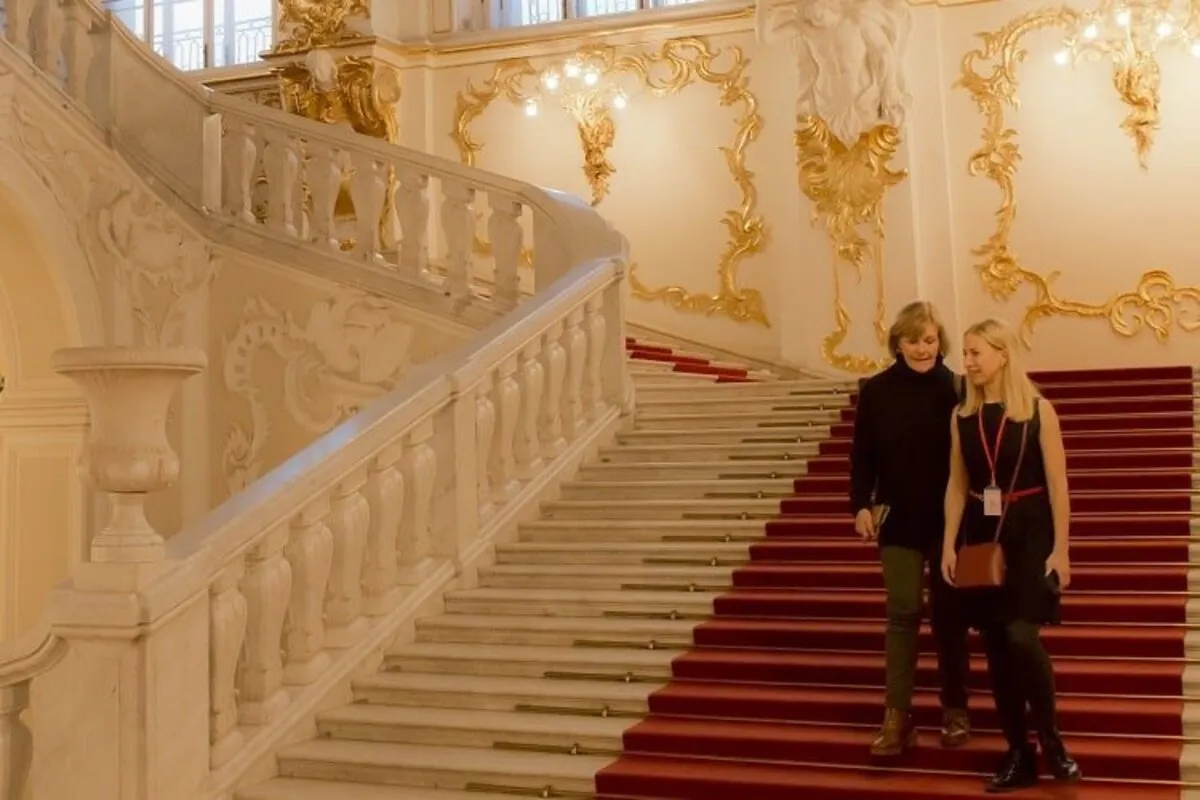
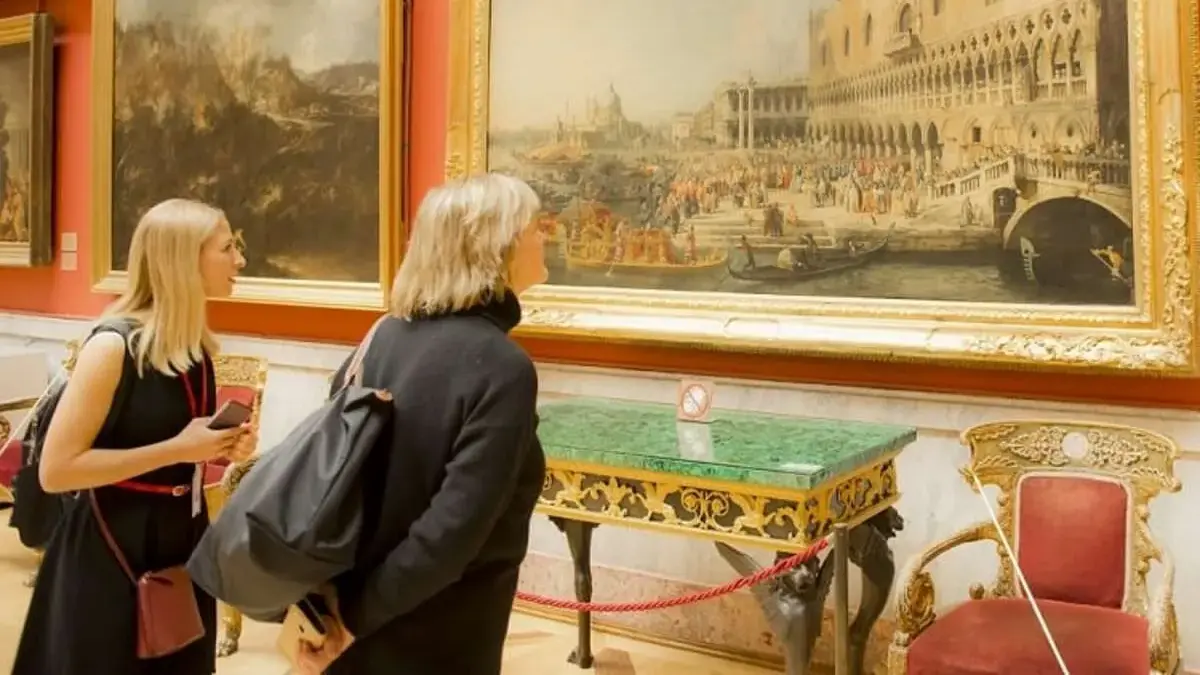
The Hermitage or Winter Palace tour represents the most important museum in Russia and the primary residence of the Russian Tsars. During this 3-hour journey, we will witness the most outstanding masterpieces of the museum, including paintings by Leonardo da Vinci, Rembrandt, Rubens, Velázquez, Murillo, and Goya.
We always enter without queuing through the VIP entrance and follow a completely different route from ordinary, massive tourist groups. We walk calmly, without rushes or crowds.
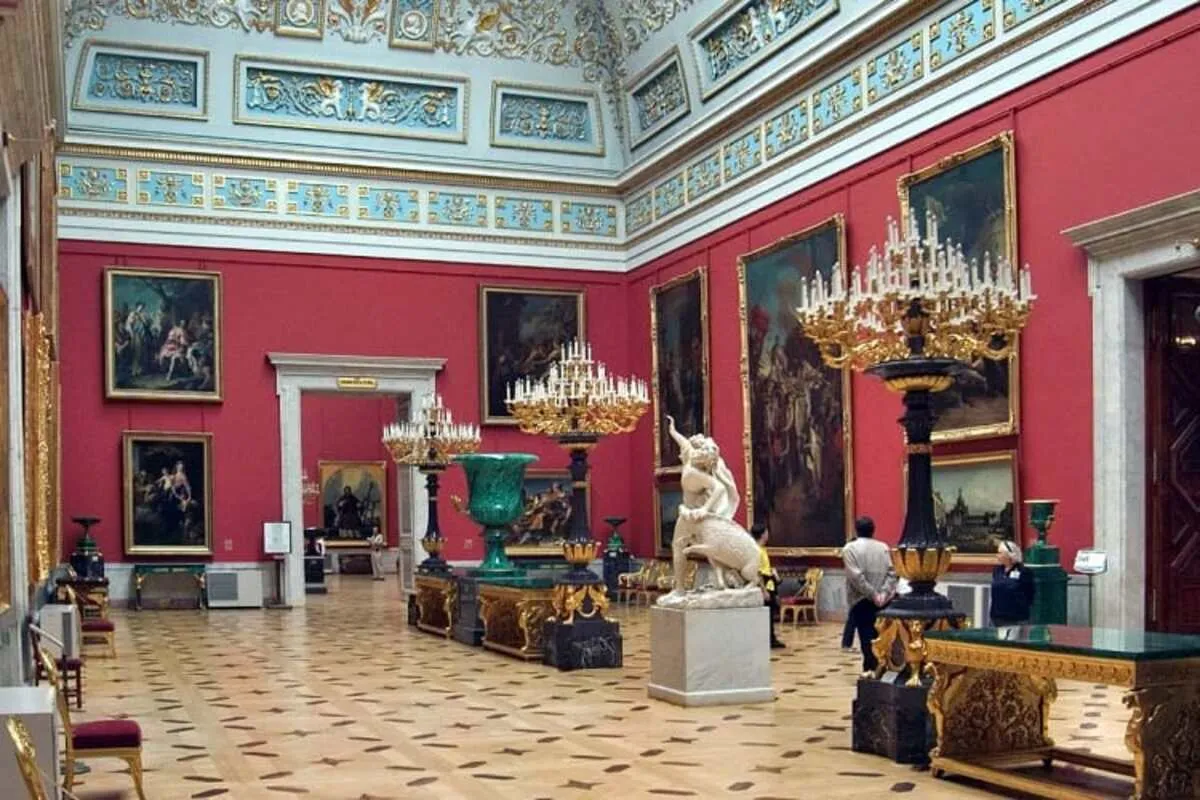
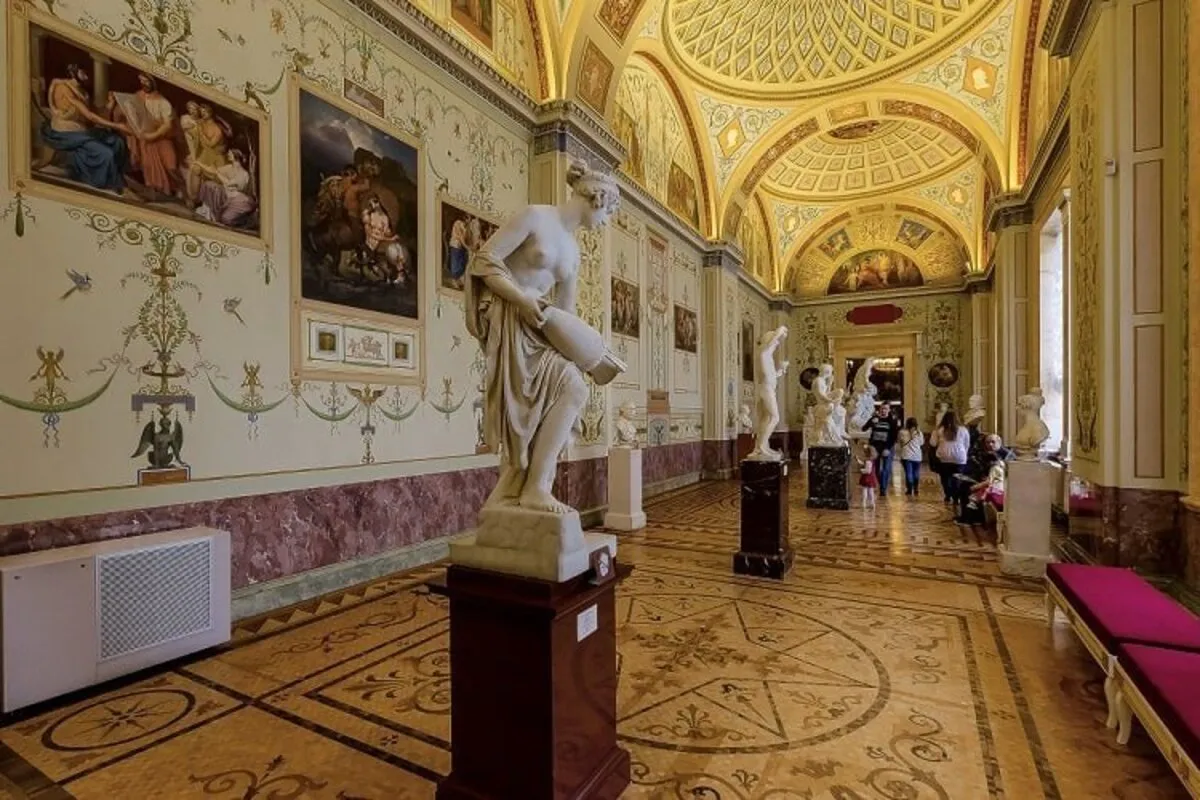
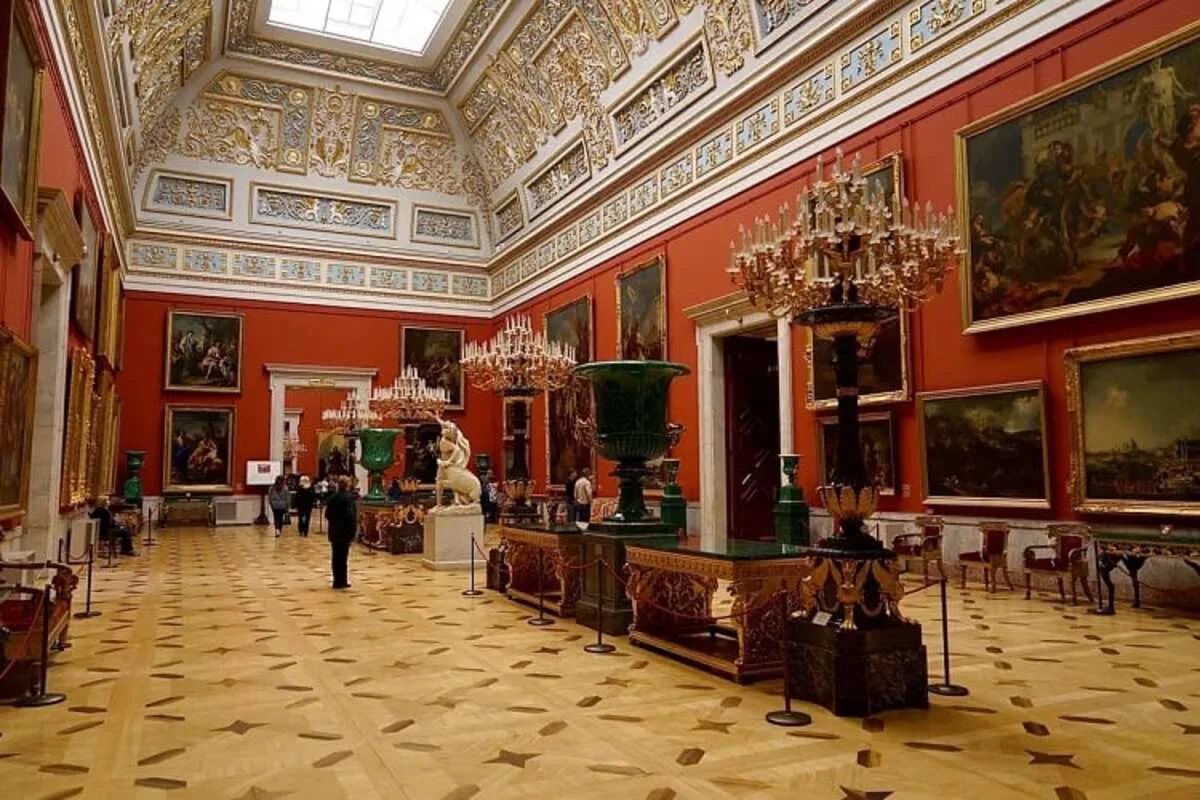
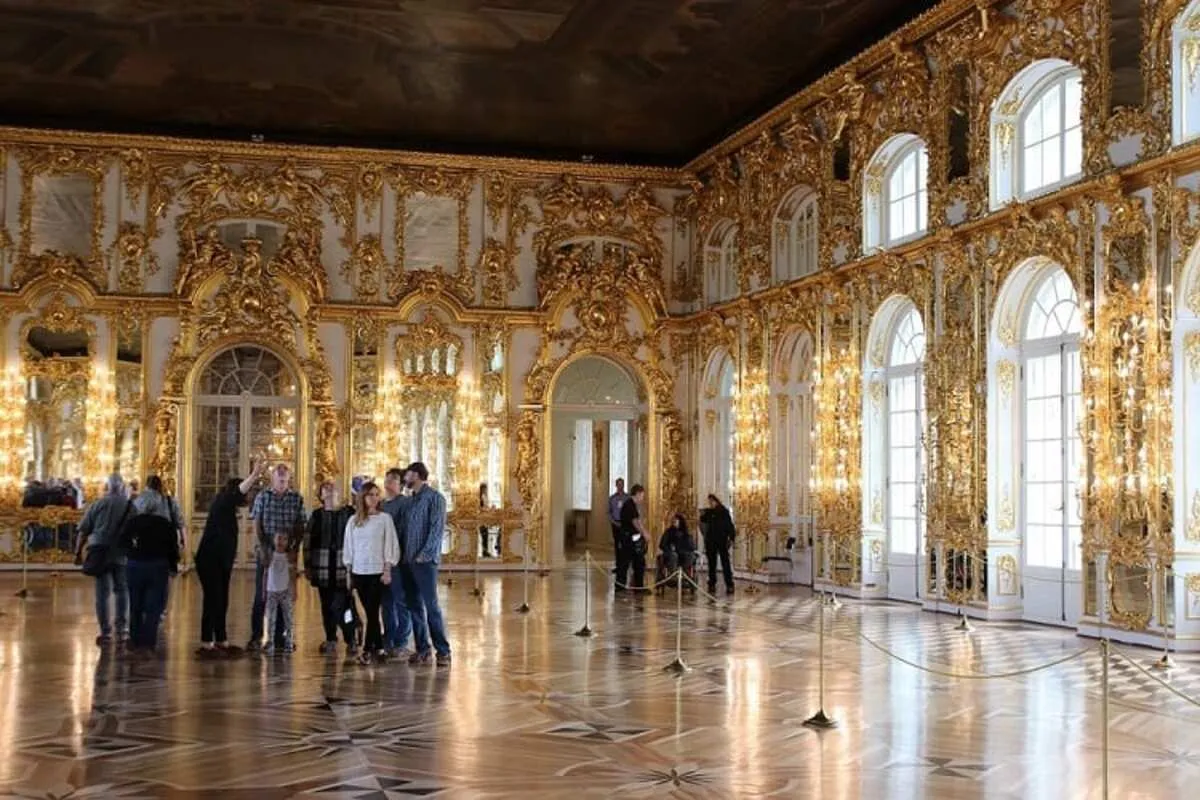
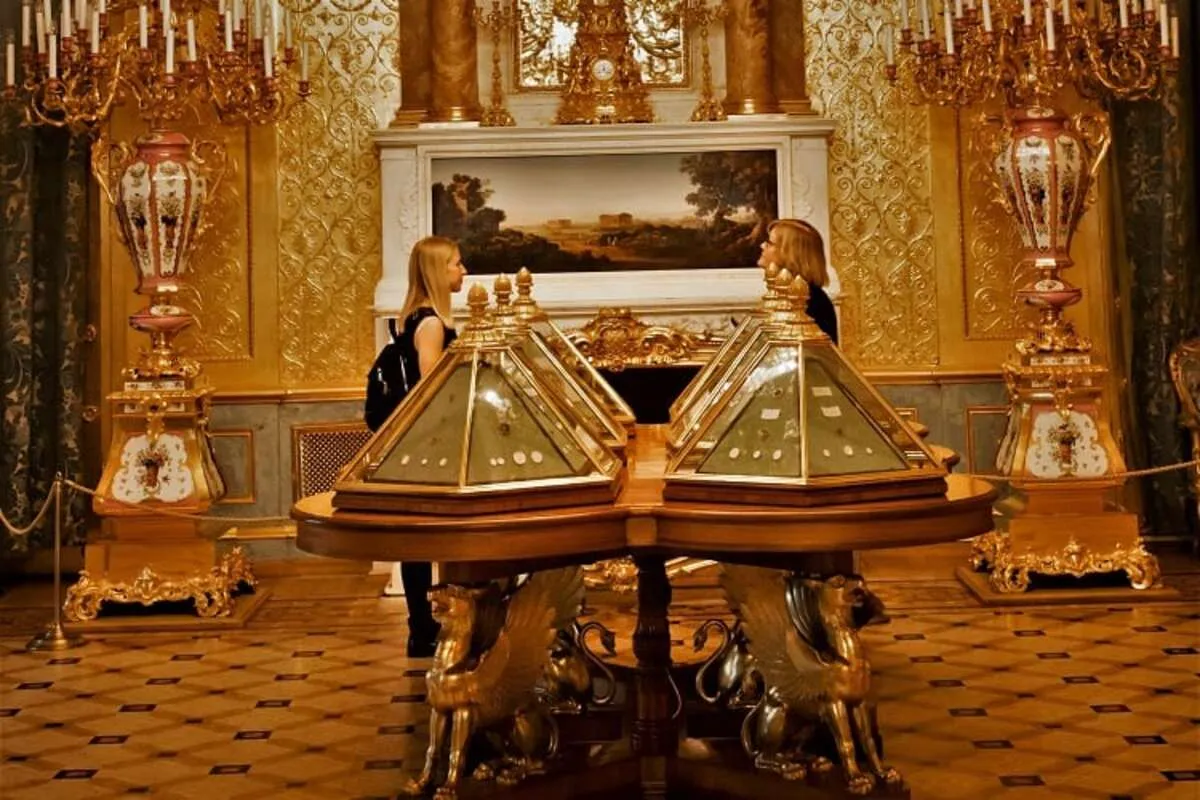
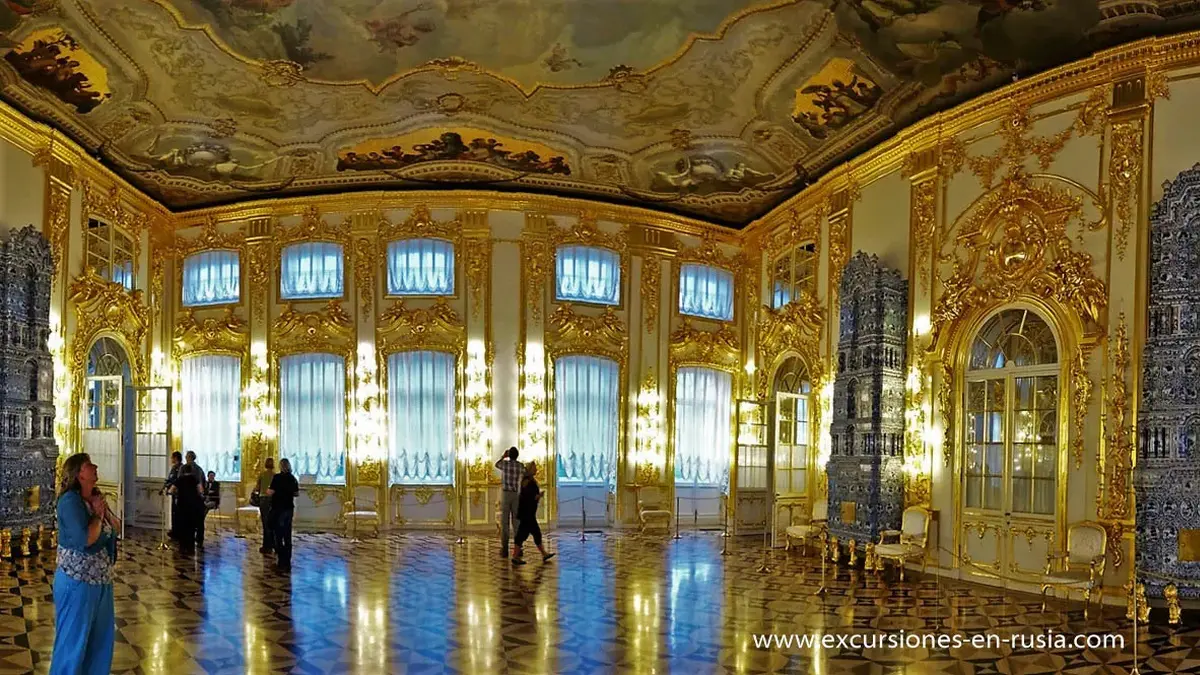
First, we will explore the emperors’ gala rooms, richly decorated with gold and precious stones, the Throne Room, the Concert Hall, and we will visit the private quarters of the last Emperor, Nicholas II. We will talk about Russian history and the owners of this palace: the Romanov family. The itinerary is designed to show you the main highlights of the Hermitage, as viewing everything uninterruptedly would require more than 8 years of your time.
Architectural Wonders and Halls Visited on the Hermitage Tour:
- Winter Palace Complex
- Small Hermitage
- Large (Old) Hermitage
- New Hermitage
- The Throne Room
- Hall of Arms (Shields Room)
- The Pavilion Hall
- The Private Quarters of the Emperor
- The Grand Church of the Winter Palace
- The Military Gallery of 1812
Given that entry tickets to the Hermitage Palace are strictly limited to an exact time slots and because there is a massive influx of tourists visiting the museum—especially during the summer season—reservations for the Hermitage tour are only accepted at least 5 days in advance. This way, our visitors will access the palace smoothly without enduring endless tourist queues.
History of the Hermitage
The Winter Palace in St. Petersburg, along with the Moscow Kremlin, hosted perhaps the most significant events in Russian history. The vast complex of the Hermitage is as grand in size as it is in historical scale. Countless books have been written about this palace, yet almost every single room deserves a separate research work.
Construction of the Hermitage
In the history of St. Petersburg, there were five winter palaces; the Hermitage is the final one. Its construction took place from 1754 to 1762, starting during the reign of Empress Elizabeth Petrovna.
Unfortunately, she did not live to see the works completed. The inauguration and interior decoration were supposed to happen under the reign of Peter III, but he was deposed from the throne in the summer of 1762. The final touches on the Palace decoration were carried out during the reign of Catherine II.
Events that Marked the Hermitage
Regarding the large-scale historical events that unfolded within the castle walls, a vast number took place in less than 300 years.
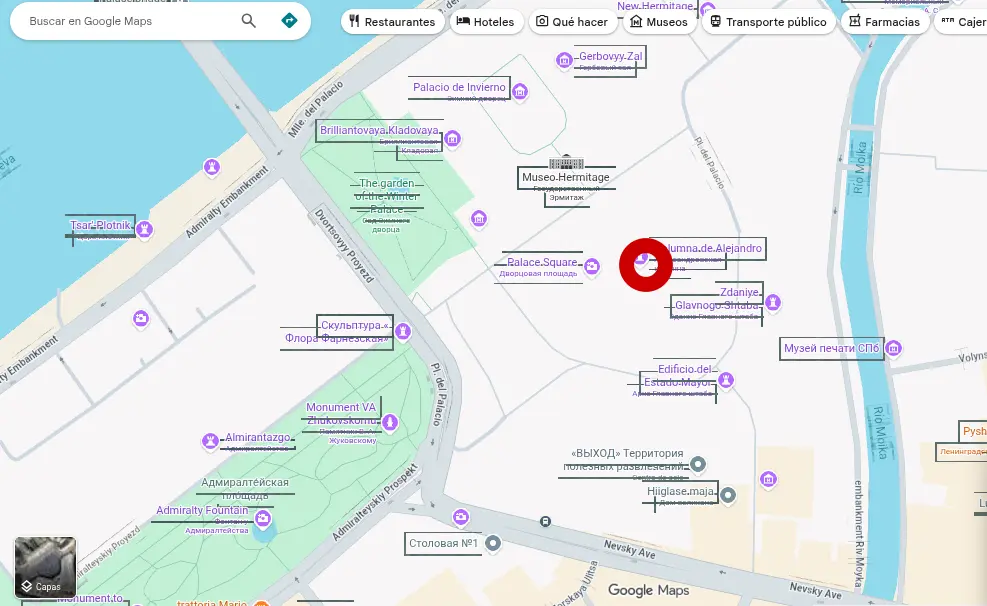
In 1837, the most famous fire in the entire history of the Russian Empire broke out in the Winter Palace. They were unable to cope with the flames for three full days. During this time, 13 people lost their lives. The Palace decoration saved from the fire was safely stored around the Alexander Column (the meeting point for our Hermitage tour), but it was impossible to save all the treasures kept inside. Chronicles from the Decembrist revolt period, the Russo-Turkish wars, and other events were lost forever. Many works of art were also burned, and the Romanovs returned to live in the Palace only in the autumn of 1839.
Another event that marked the history of the palace was the terrorist act of 1880 at the hands of an individual (a carpenter) from the town of Khalturin whose goal was to assassinate Emperor Alexander II, although the Emperor escaped unharmed. Following the explosion of the 30kg device, 11 members of the guard died and another 56 were injured. All those killed were veterans of the recent Russo-Turkish war.
In 1904, Nicholas II moved his permanent residence to the Alexander Palace. In January 1905, near the Hermitage Palace, one of the most tragic events of the 20th century took place: the shooting of a peaceful demonstration, an event that became the catalyst for the first Russian revolution.
The Hermitage After the 1917 Revolution
Following the 1917 Revolution and the fall of the Romanovs, the Palace housed the Provisional Government. After Soviet power prevailed in St. Petersburg, the Winter Palace and the Hermitage received the status of state museums. Since then and up to the present day, it remains as such, except during the Great Patriotic War when it was closed to protect the collections.
Cancellation and Booking Terms: In the event that a visitor does not arrive on time for the Hermitage tour, they will not be entitled to a refund. It is highly recommended that all travelers wishing to enjoy this tour provide their phone number when making a reservation to facilitate smooth communication with the coordinator at the destination.