Explore the world-famous underground palaces of the Moscow Metro on a guided tour through its most iconic stations with an English-speaking guide.
With our Moscow Metro Private Tour proposal, we do not copy the rest of the generic itineraries found online. We want to give visitors a highly broad and pleasant overview, without rushing blindly as most guides do. We experience everything calmly.
The Moscow Metro, or the underground palace, is known worldwide for its immense artistic and architectural beauty. In fact, the very first subway design dates back to the imperial Romanov era, but with the outbreak of World War I, the entire project was canceled until after the Bolshevik Revolution, when initial infrastructure plans were reactivated.
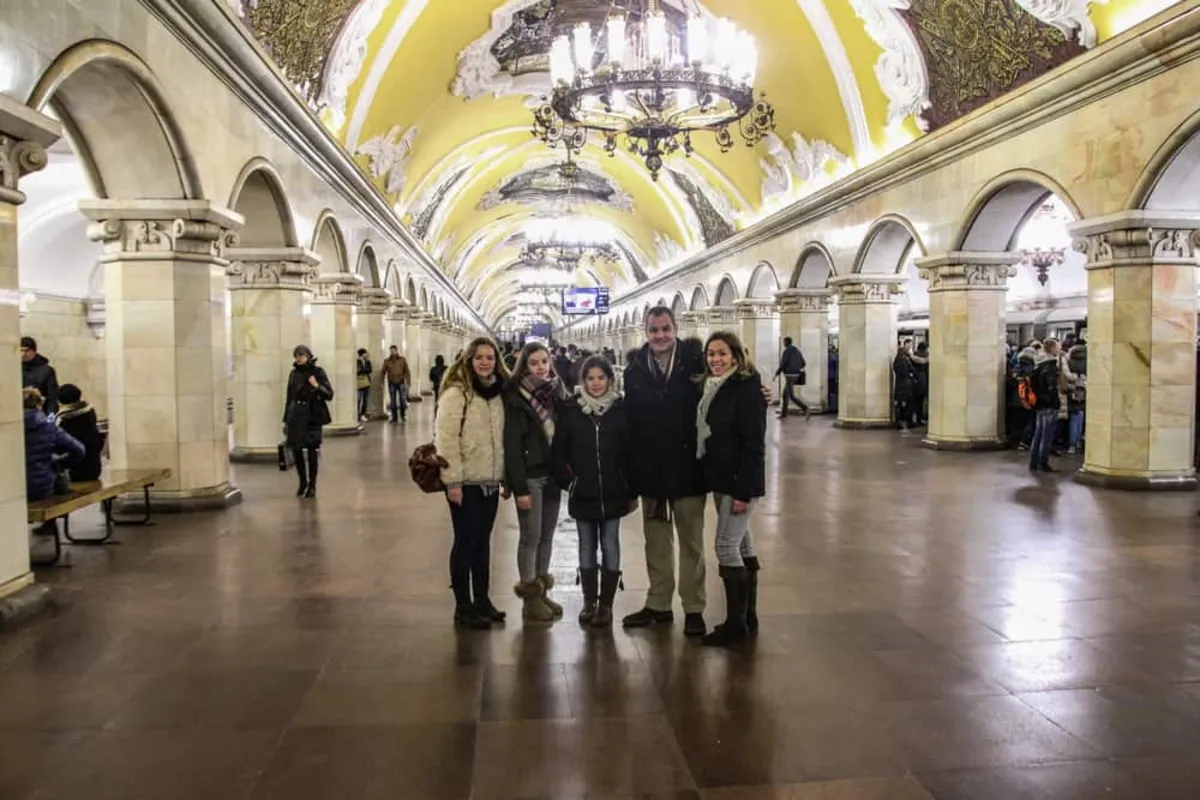
During the Moscow Metro tour, we will witness the most emblematic stations of different eras.
Among the Stations We Will Visit Are:
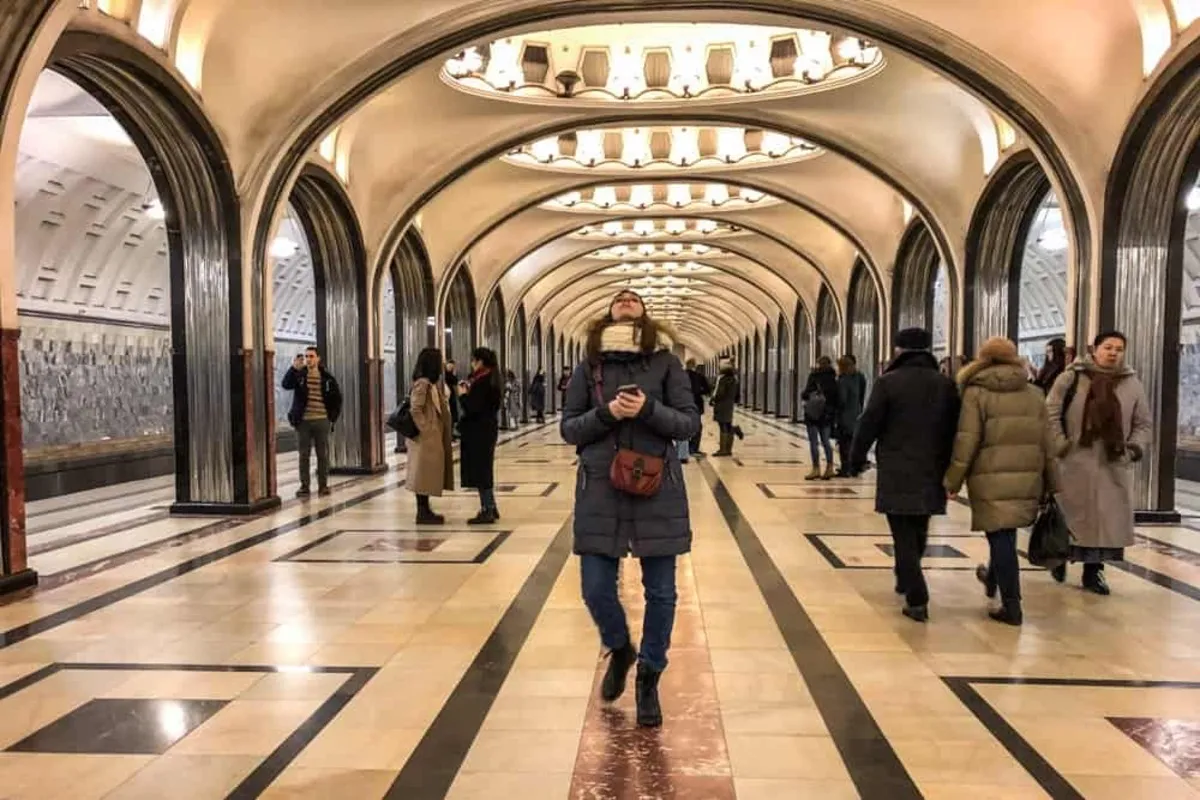
- Mayakovskaya: Historically known for having functioned as a massive air-raid shelter.
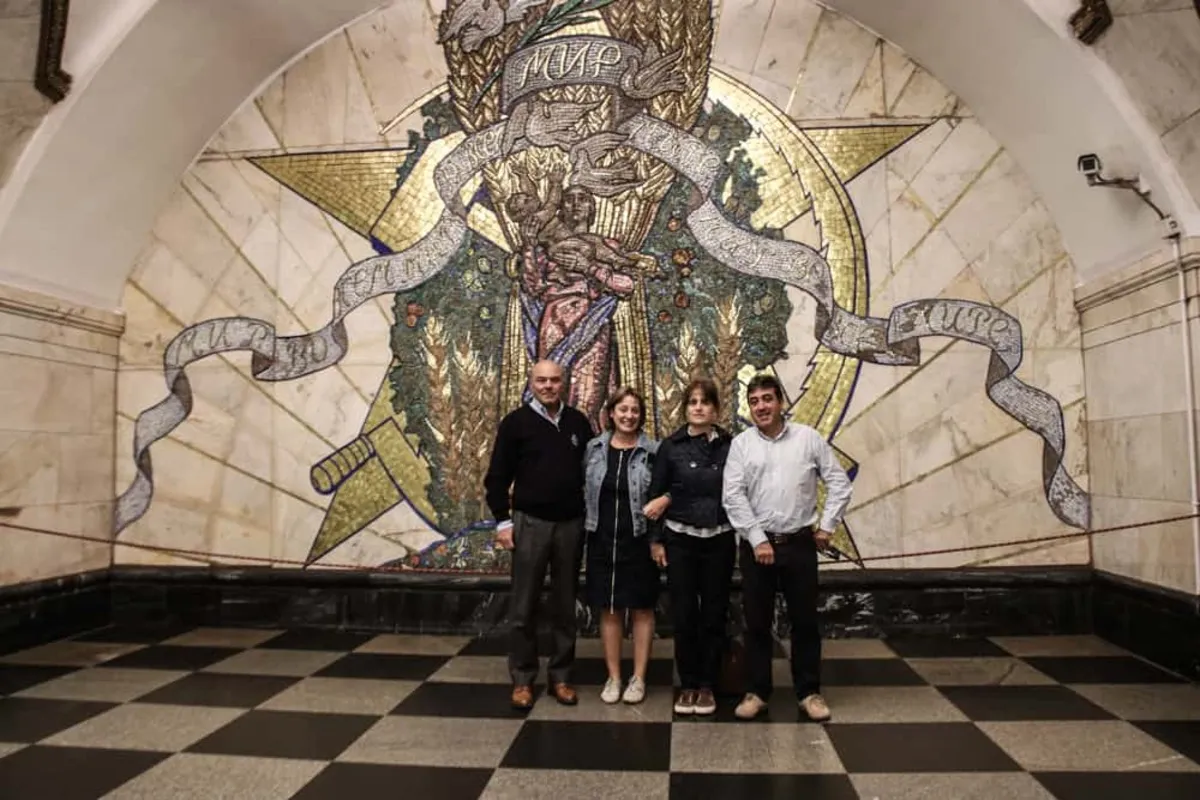
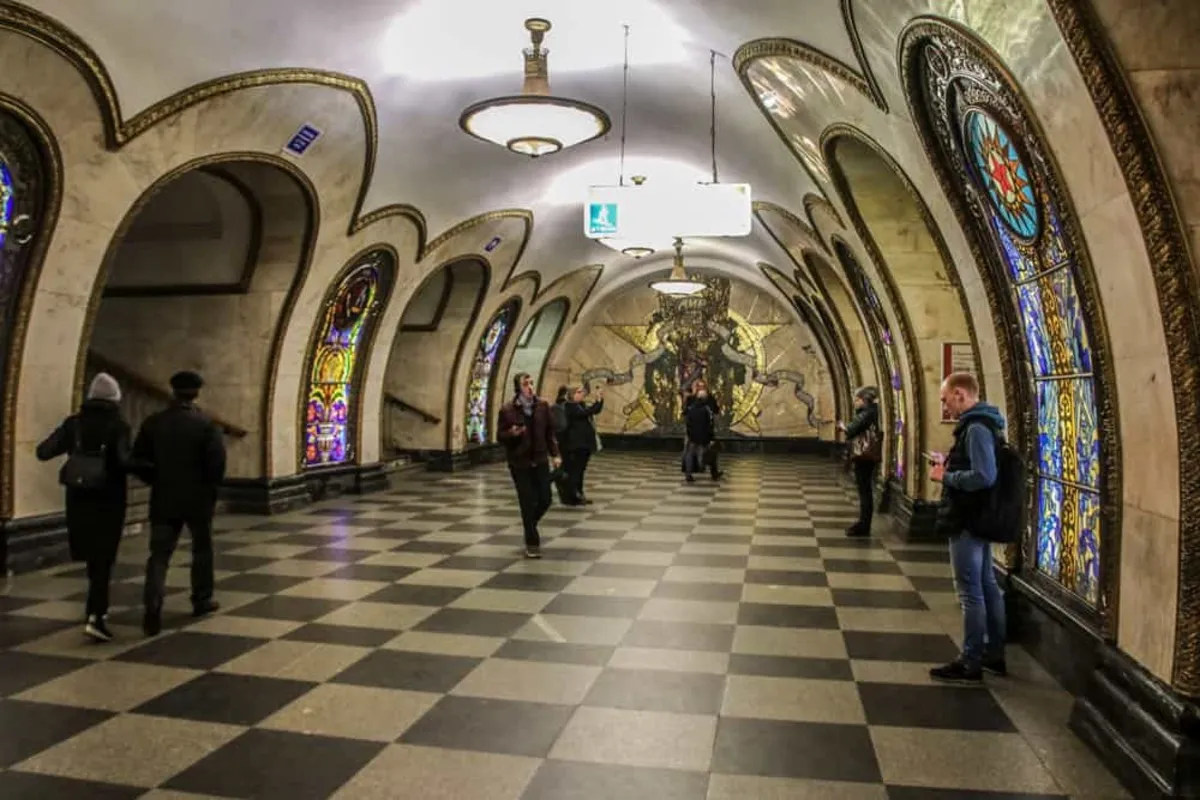
- Novoslobodskaya: Famous for its 32 stained-glass windows, masterfully crafted by renowned Latvian artists E. Veylandan, E. Krests, and M. Ryskin.
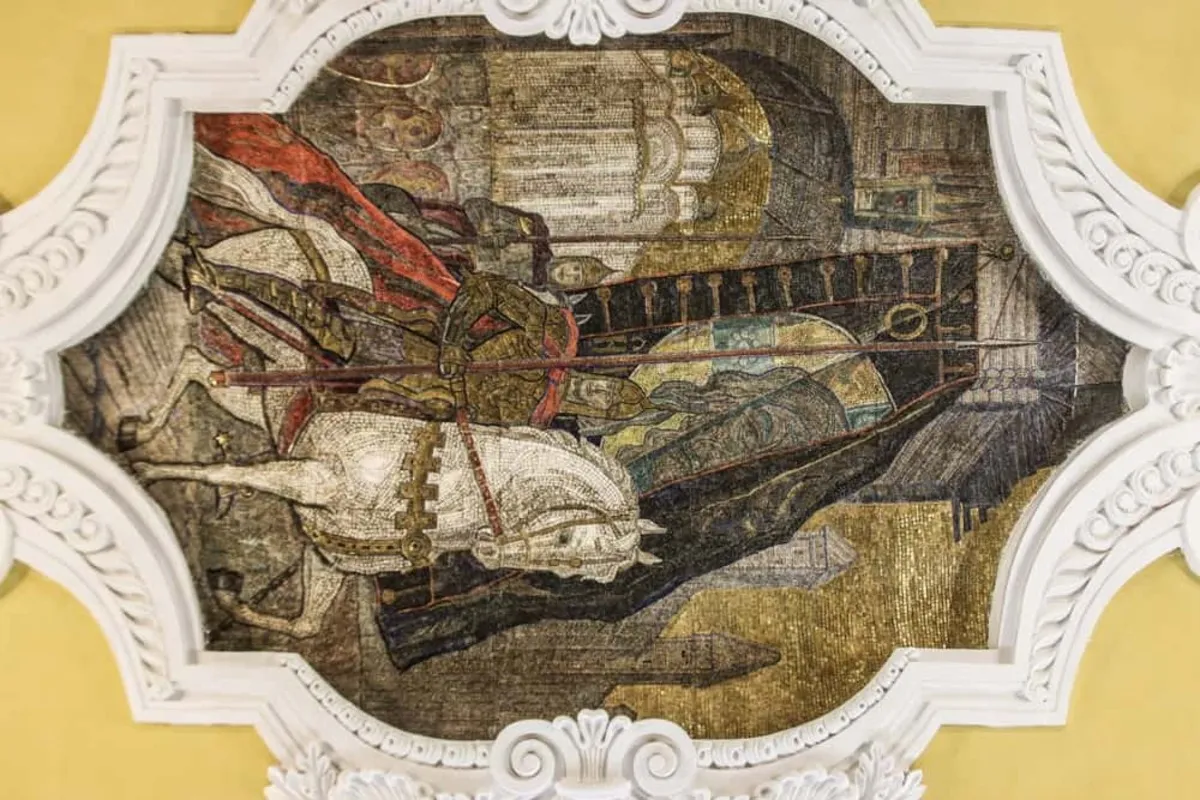
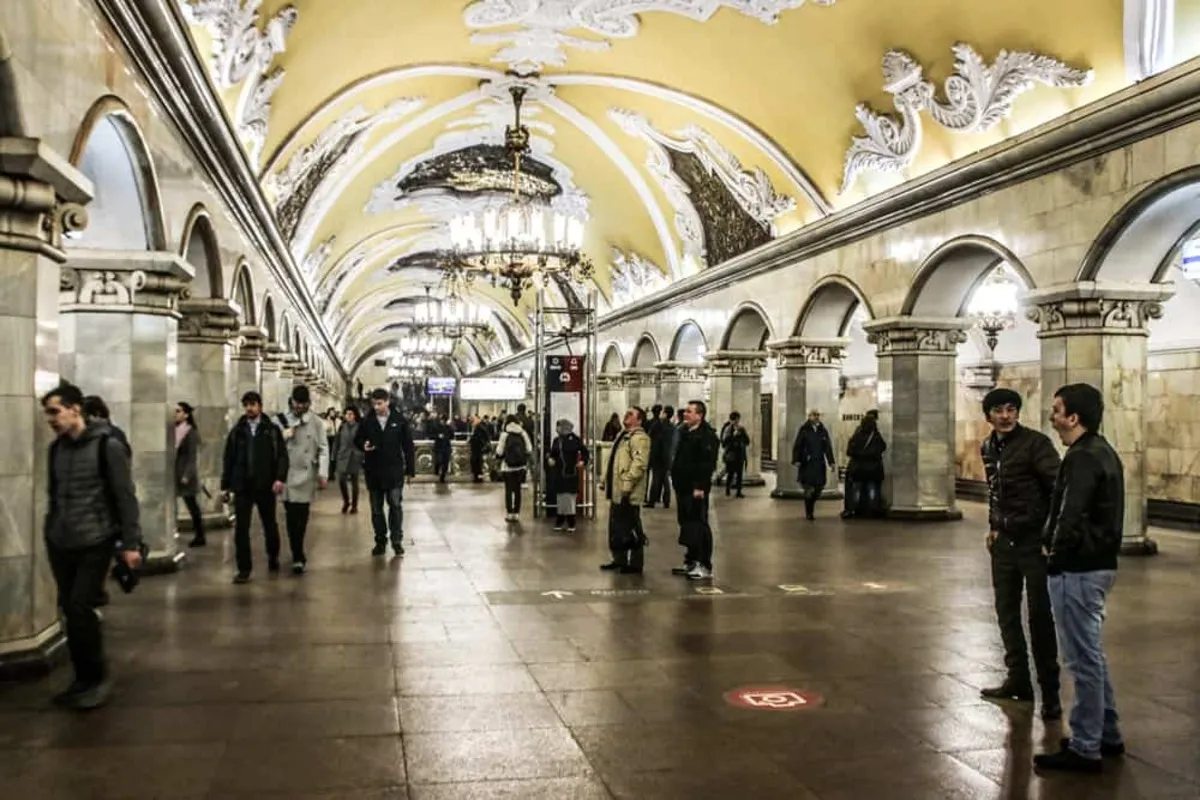
- Komsomolskaya: An authentic walk through Russian history told via monumental mosaics.
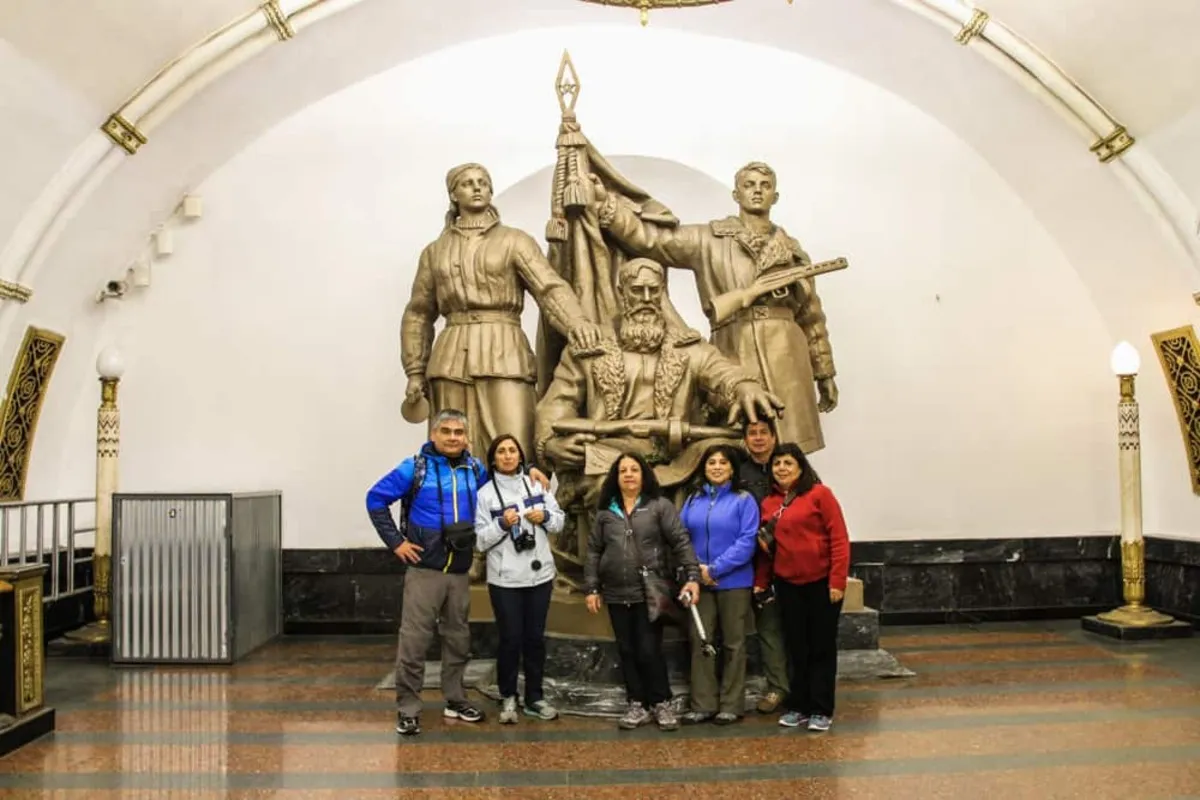
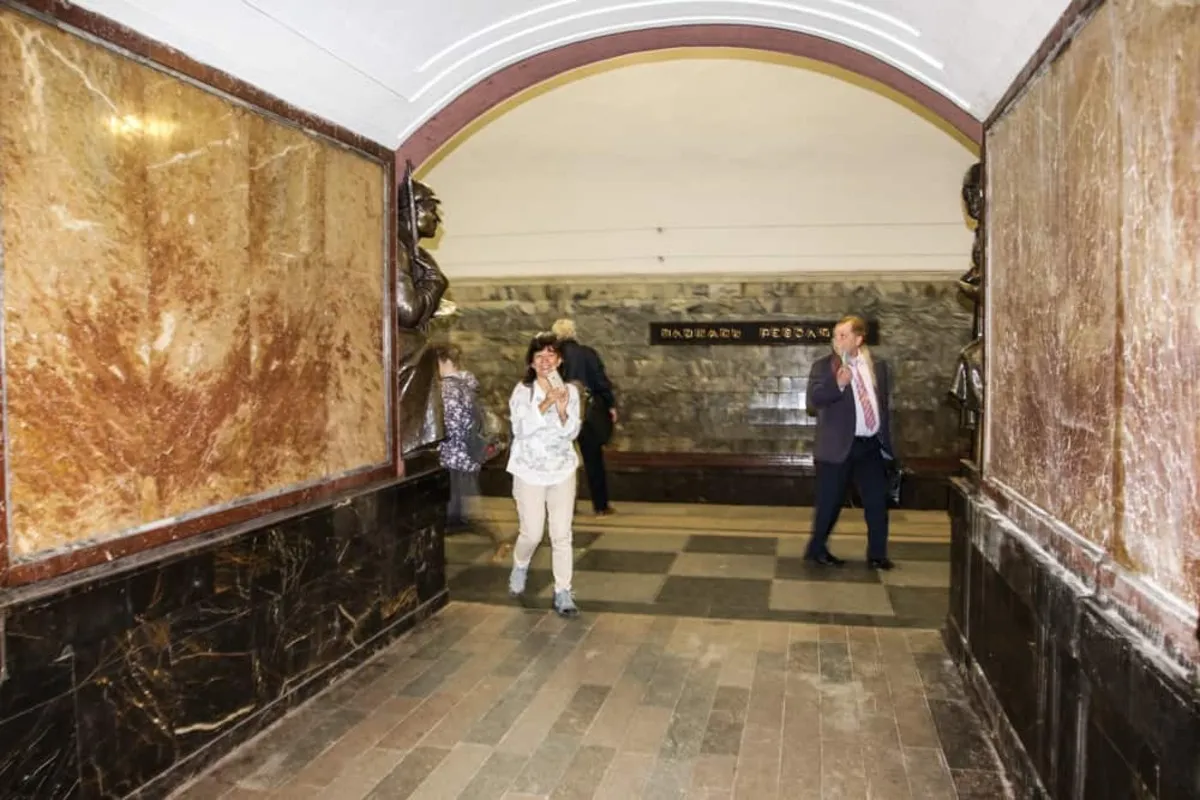
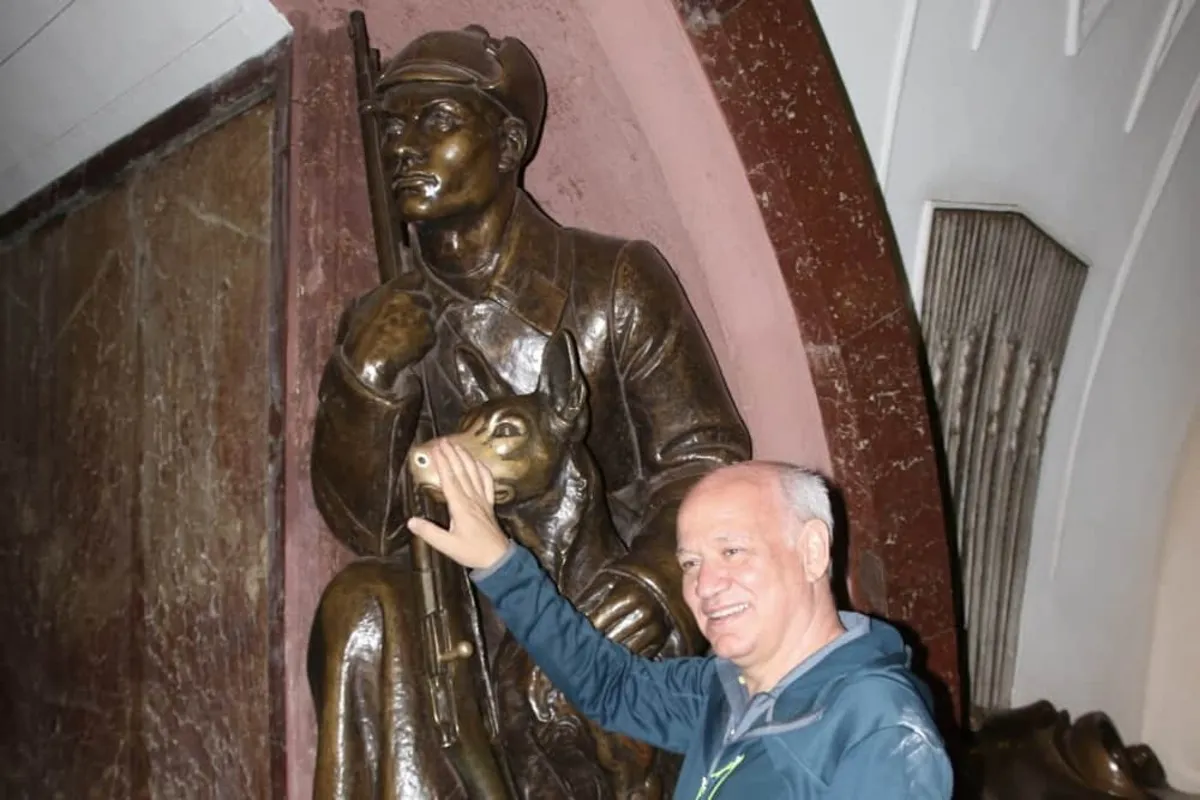
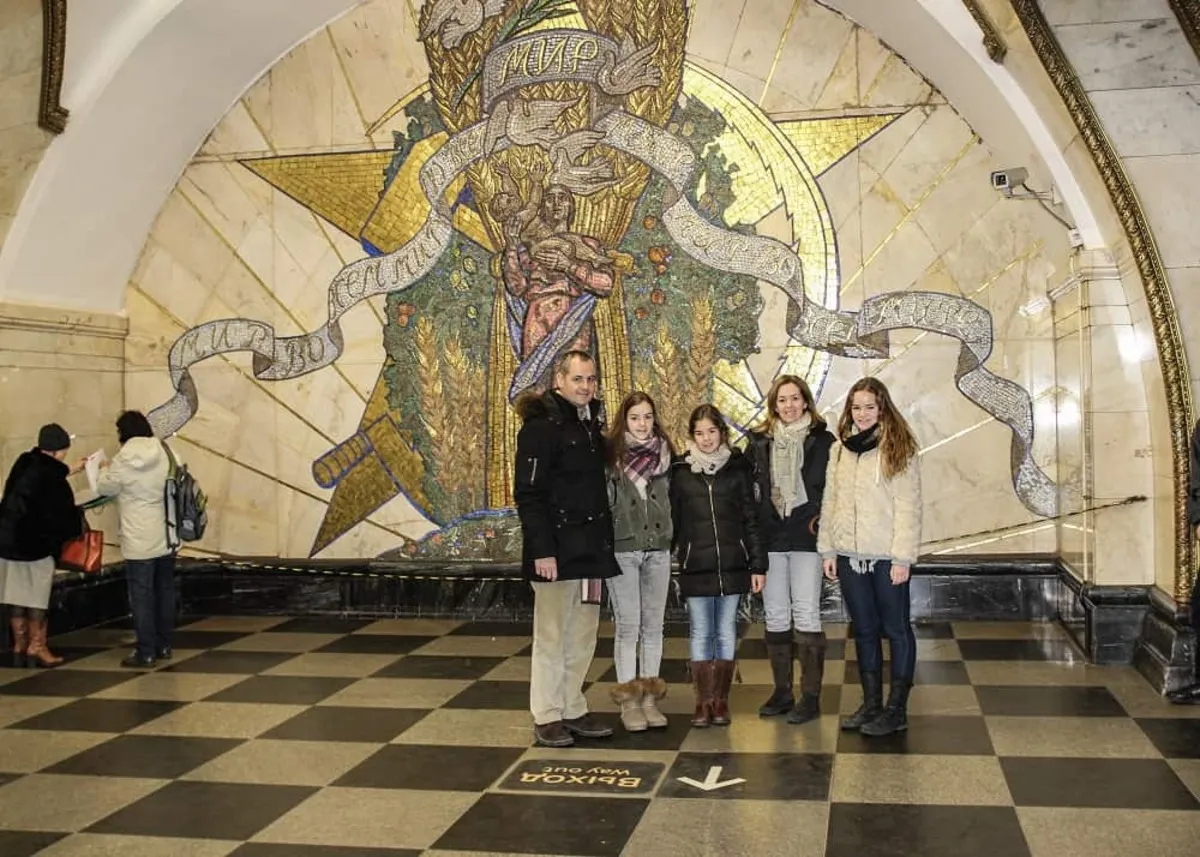
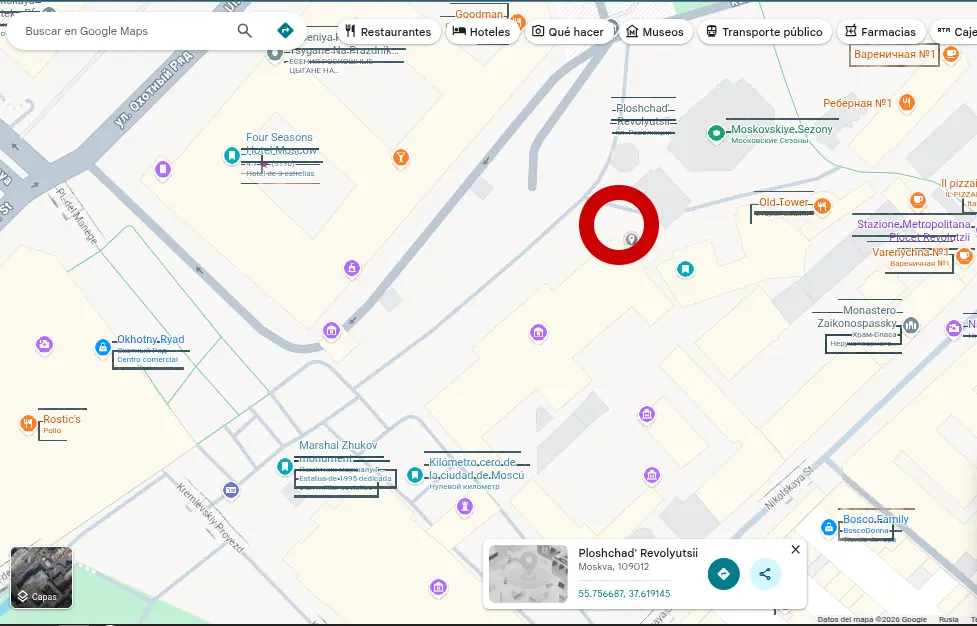
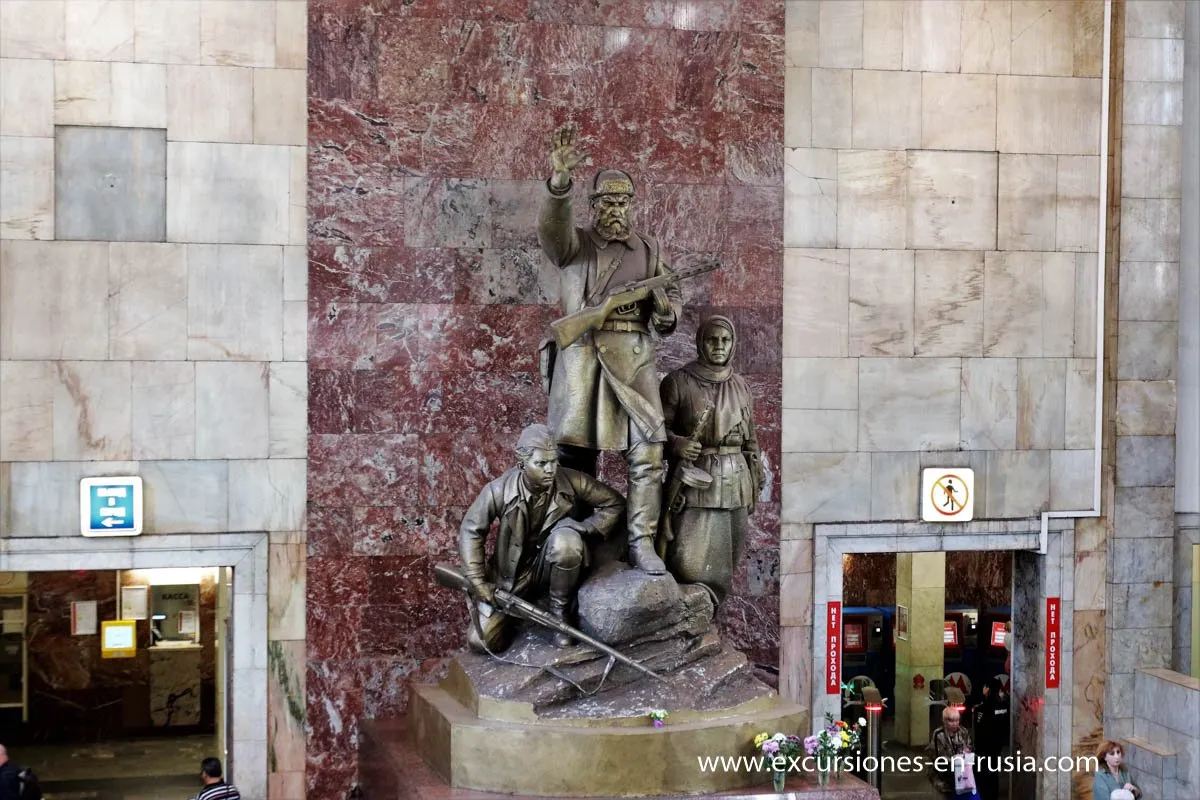
- Ploshchad Revolyutsii: A sculptural marvel that represents much more than cold bronze statues.
- Kievskaya: A grand architectural tribute to the fraternity between nations.
At each of these stations, besides explaining the rich details related to their history and design, we dedicate plenty of time to take photos and videos at your leisure.
The Moscow Metro tour is the finest complement to the Moscow Free Tour, as they can be combined on the same day with the same guide. Also, do not forget to consider the low-cost night tour option on our website. To guarantee your spot, we highly recommend booking in advance and providing your phone number so we can easily assist you in reaching the meeting point.
The History of the Moscow Metro
The Moscow Metro is not only a massively popular mode of transportation but also a world masterpiece of architecture. The earliest stations were crafted by eminent architects who poured their souls into the project.
Forty-four metro stations have officially become cultural heritage sites. During the Great Patriotic War (World War II), subway stations functioned as deeply secure bomb shelters. In the post-war years, stations were built at extreme depths so the population could shield inside in the event of nuclear or bacteriological warfare (we will explore an example of a shelter-station on our tour).
Initial Projects and Visionary Ideas
In 1875, the first project was proposed by engineer Titov. It was an initial plan to connect Kursk Station with Maryina Roshcha through Lubyanka and Trubnaya squares using a specialized railway tunnel.
In 1902, a preliminary draft of underground paths connecting Zamoskvorechye and Tverskaya Zastava was presented before the City Duma court. Its authors were engineers P. Balinsky and E. K. Knorre, in collaboration with artist N. N. Karazin. The illustrated project was not only preserved on paper but also clearly showed how the face of Moscow would shift. The city government liked the metro concept, and many variants were weighed—even a German company developed an alternate layout—but economically all options stalled due to lack of funding, leaving numerous suggestions on paper.
Growth and the Need for Infrastructure
As Moscow expanded, it required a brand-new transport network adapted to its swift pace of growth. Horses, trams, buses, and trolleybuses could simply no longer cope with the ever-increasing flow of people.
In the summer of 1931, under the management of L. M. Kaganovich (the Moscow Metro bore his name until 1955, when it was changed to V. Lenin), a state-level decision was finalized to immediately begin preparations for the construction of the metro system in Moscow. From that year on, construction began developing rapidly.
As early as September 1931, Metrostroy was founded, and by November, work commenced on the first experimental site to study underground work conditions in the city. The primary line was laid from Sokolniki to the construction site of the Palace of Soviets, where the Cathedral of Christ the Saviour stands today.
Hardships During Drilling Operations
At first, drilling was carried out entirely by hand and progressed far too slowly. This was due to the fact that the country lacked specialists familiar with subway construction. Disputes frequently arose regarding the exact depth at which tunnels should be set, causing construction to stop several times.
The country’s leadership had to attract foreign specialists, who initially turned down the proposal; thus, Soviet metro builders were sent abroad to master new technologies for subway layout. Gradually, large-scale drilling machinery began entering the workspace.
In 1933, another challenge emerged: a shortage of laborers. However, Communist propaganda successfully turned subway construction into a highly prestigious profession, leading a massive number of young people to volunteer for construction on a grand scale. The brutal working conditions did not deter the workers, who saw the project as a reflection of pure heroism and socialist ideals. Looking at the result, they truly became heroes, building a “wonder of the world”. The first stations were equivalent to underground palaces that still captivate with their beauty: mosaics, frescoes, marble, granite, sculptures, and bronze.
First Stations and the Birth of the Logo
The earliest metro stations belong to the Sokolnicheskaya line. The first trains opened on May 15, 1935, running from Sokolniki to Park Kultury. The length spanned 11.2 km, hosting just 13 stations. Before the start of World War II, two more lines opened: Arbatsko-Pokrovskaya and Gorkovsko-Zamoskvoretskaya. The subway’s iconic logo is the large red letter “M”, which was designed in 1935 when the first line launched. We will see many of these historic details on our tour.
The Metro in the 21st Century
Our subway system today boasts the following official dimensions:
- 15 operational lines network.
- 275 active stations (238 metro stations, 31 MCC stations, and 6 monorail stations) and expanding constantly.
- Over 12,000 trains running on the tracks.
- A workforce composed of 21,634 women and 38,966 men on its staff.
- The total length of the layout exceeds 411 kilometers of tunnels.
Do not hesitate to reach out if you have any questions before booking your Moscow Metro tour; our customer service department will respond in the shortest time possible.