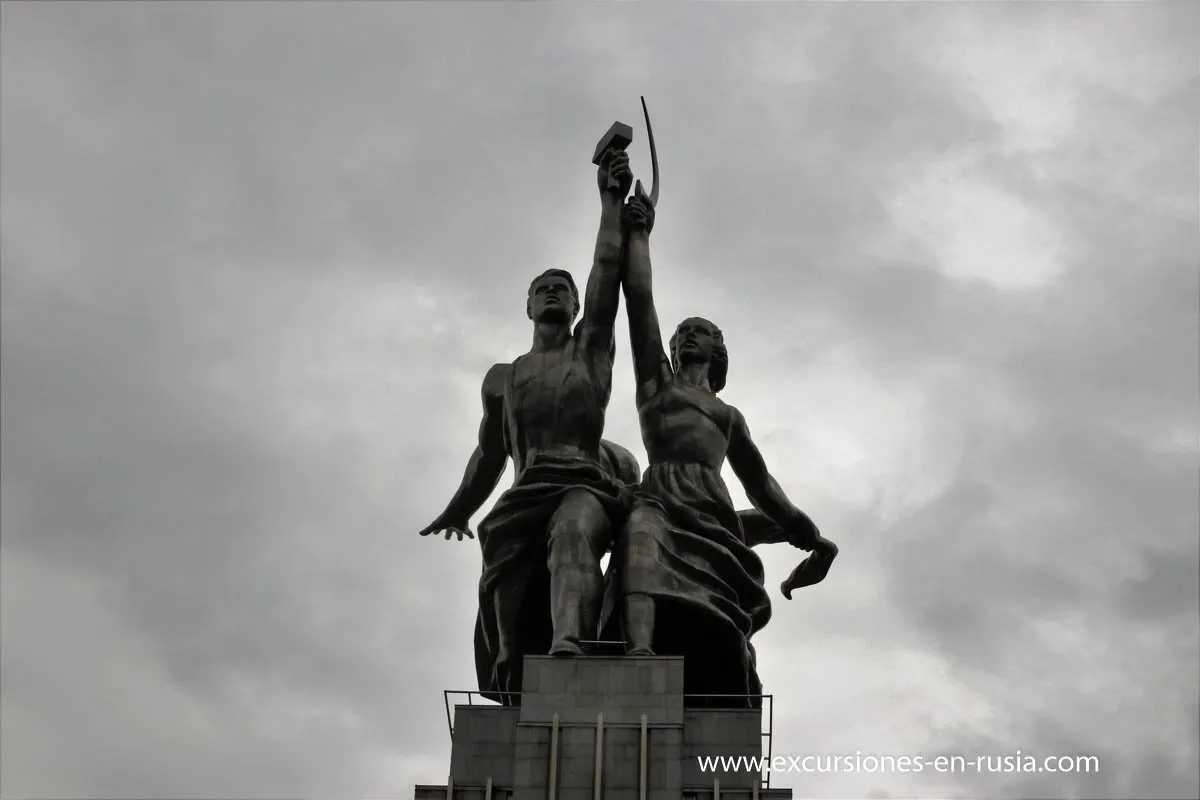
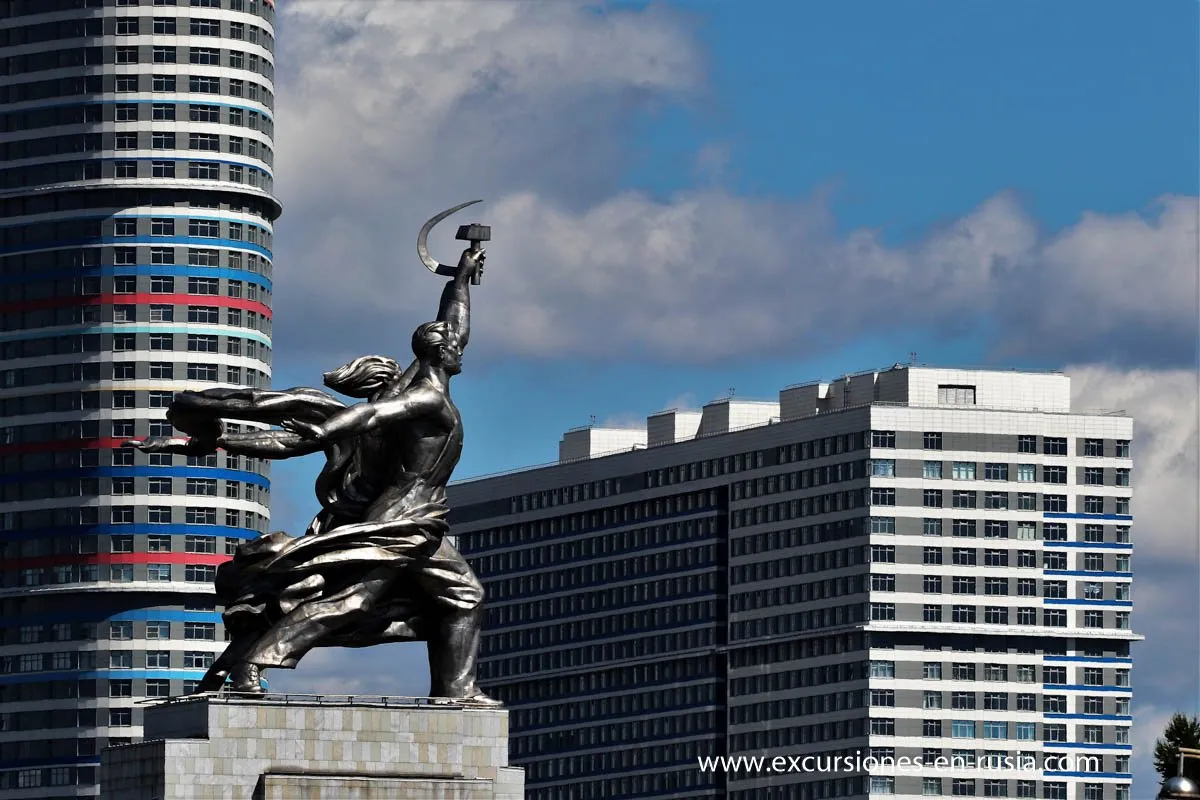
Discover Soviet space, scientific, and architectural achievements at Moscow's VDNKH Park on a guided walking tour through fountains and pavilions.
The VDNKH Park Private Tour is a magnificent combination of witnessing the economic achievements of the USSR and exploring spaces of immense natural, artistic, and architectural beauty.
From the earliest stages of the Soviet era until its dissolution, the Western world used all available propaganda channels to discredit the socialist and communist system. The Soviet Union also deployed its own available means to engage in counter-propaganda and try to improve its image outside its borders. Most of these efforts were in vain, as the capitalist bloc possessed more resources to reach more countries and territories.
What does VDNKH Park have to do with Soviet counter-propaganda?
Simply put, on the VDNKH Park tour, visitors discover that this is not just a typical park; it was deliberately designed to showcase the economic achievements of the Soviet Union in a highly calculated manner. The goal was to project the image of a fully self-sufficient system in terms of economics, education, science, energy, agriculture, and countless other sectors.
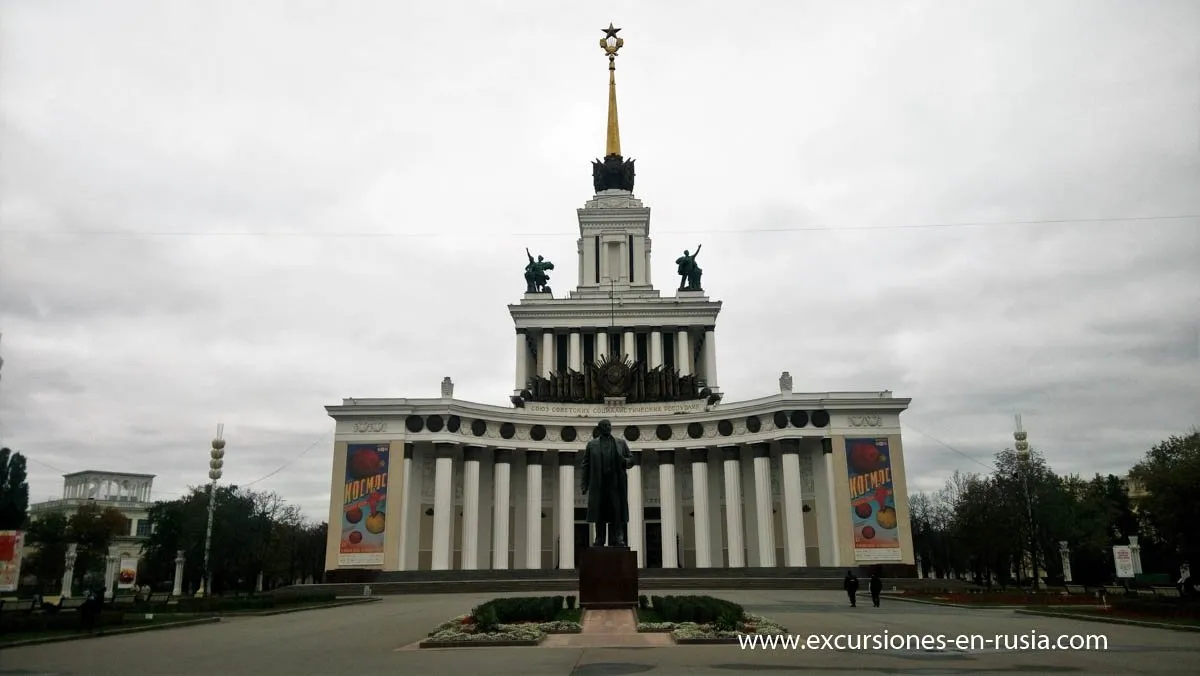
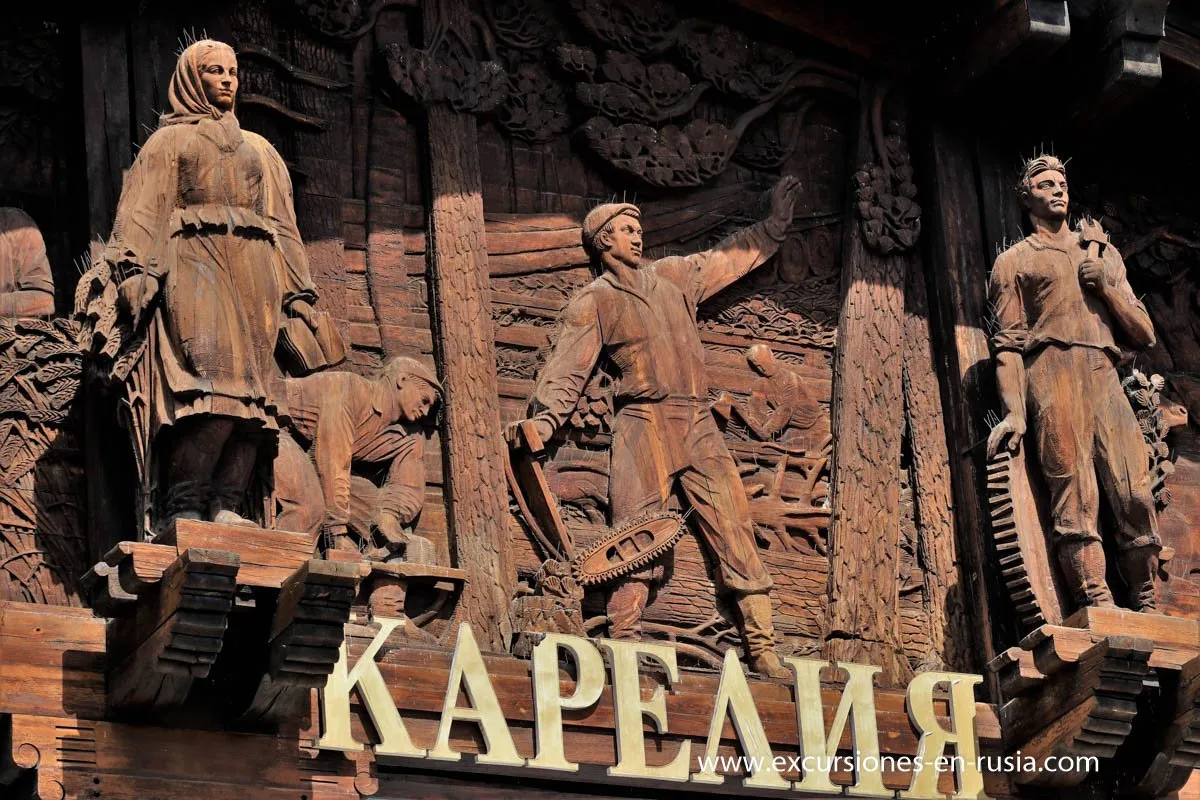
Beyond its natural scenery—which is undoubtedly breathtaking and usually takes up half of the visitors’ time due to its immense beauty—the park houses over 60 pavilions. Collectively, these pavilions represent the various republics that formed the Soviet Union and the different sectors of industrial and cultural production.
Examples of Points of Interest in VDNKH Park:
- Belarus Pavilion: Free entry.
- Armoury Pavilion: Free entry.
- Kazakhstan Pavilion: Free entry.
- Culture Pavilion: A space dedicated to artistic heritage.
- Space Race Pavilion: (Accessible with preferred entry tickets).
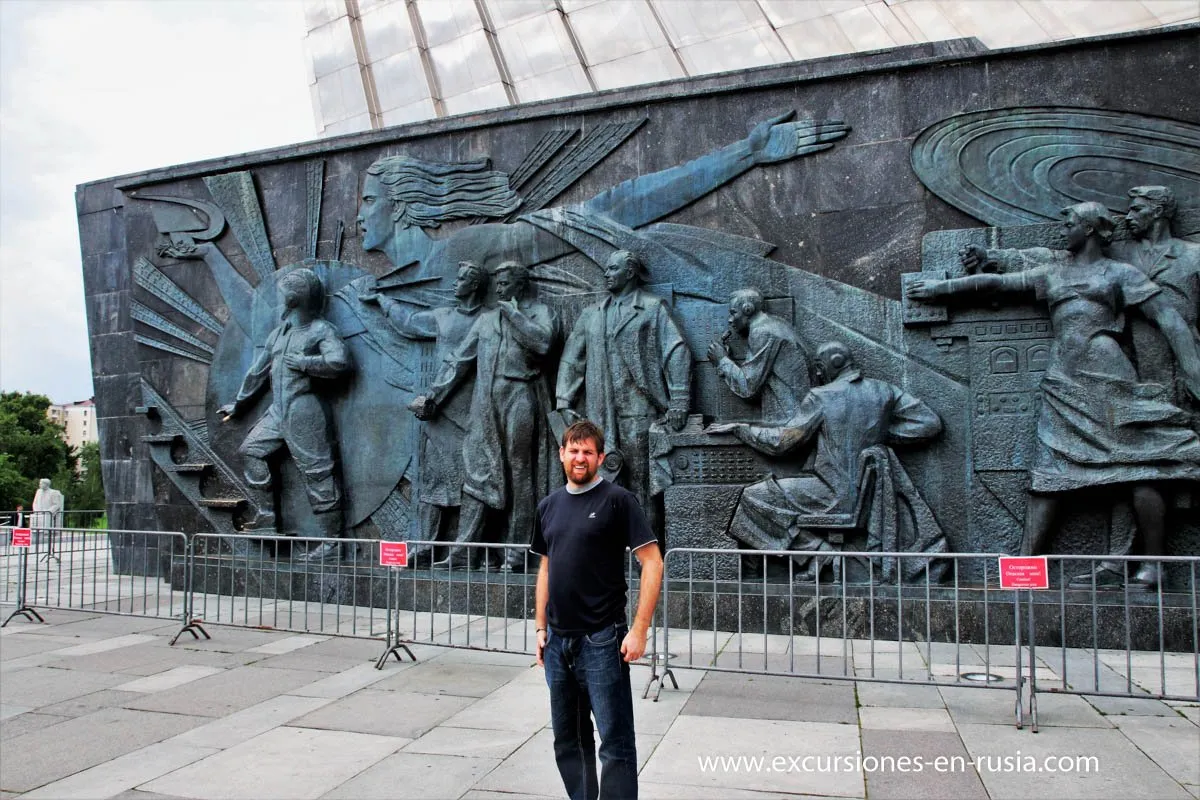
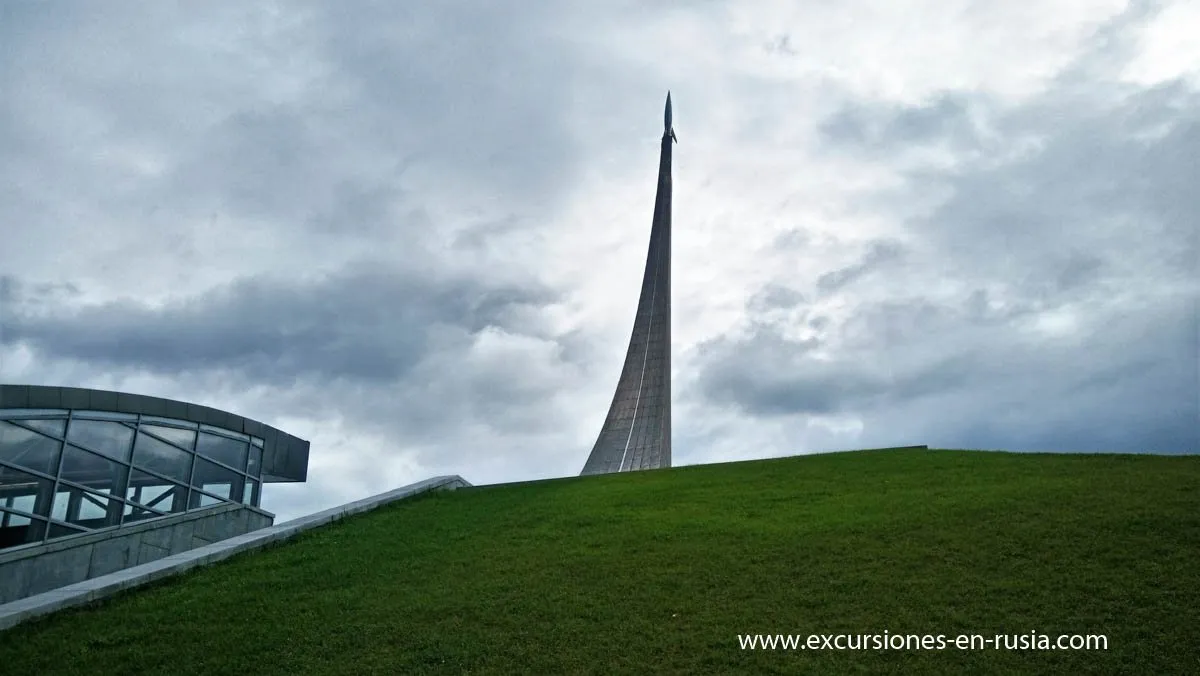
- Engineering Exhibition: Monumental replicas of the Vostok M rocket, the MiG-27 fighter jet, and the Mi-8 helicopter.
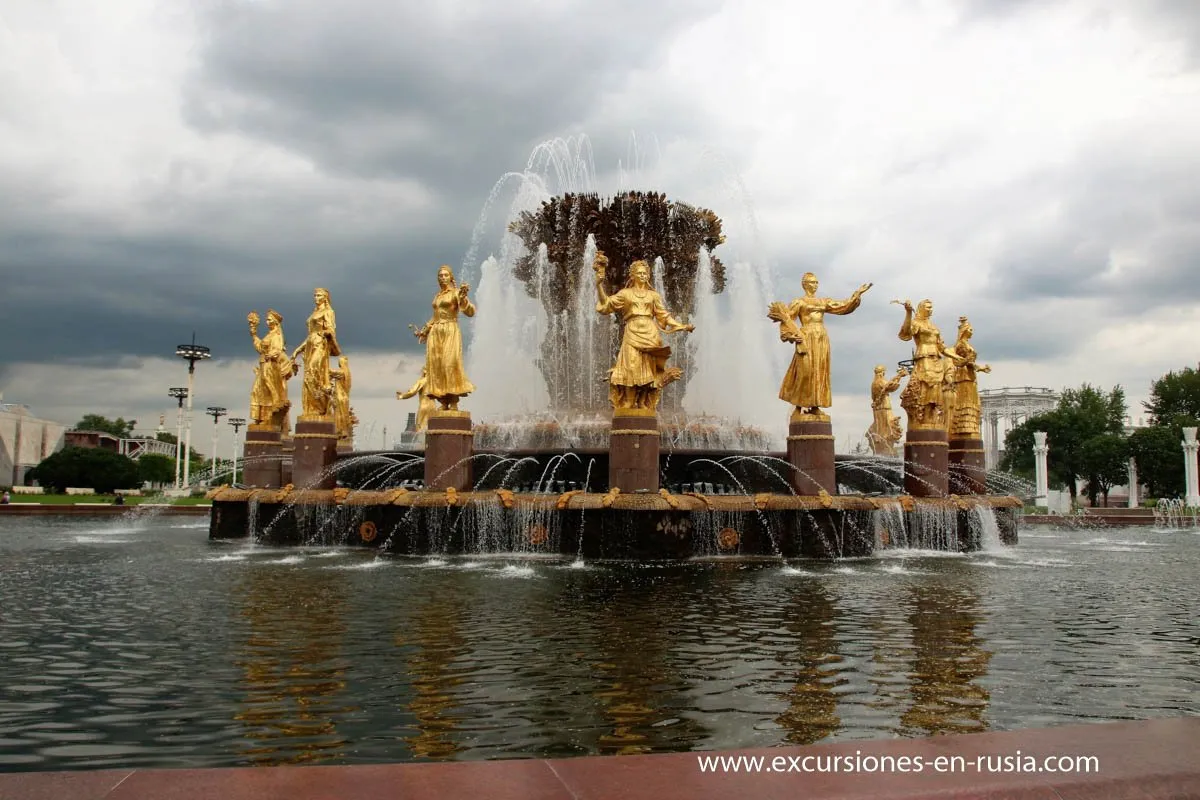
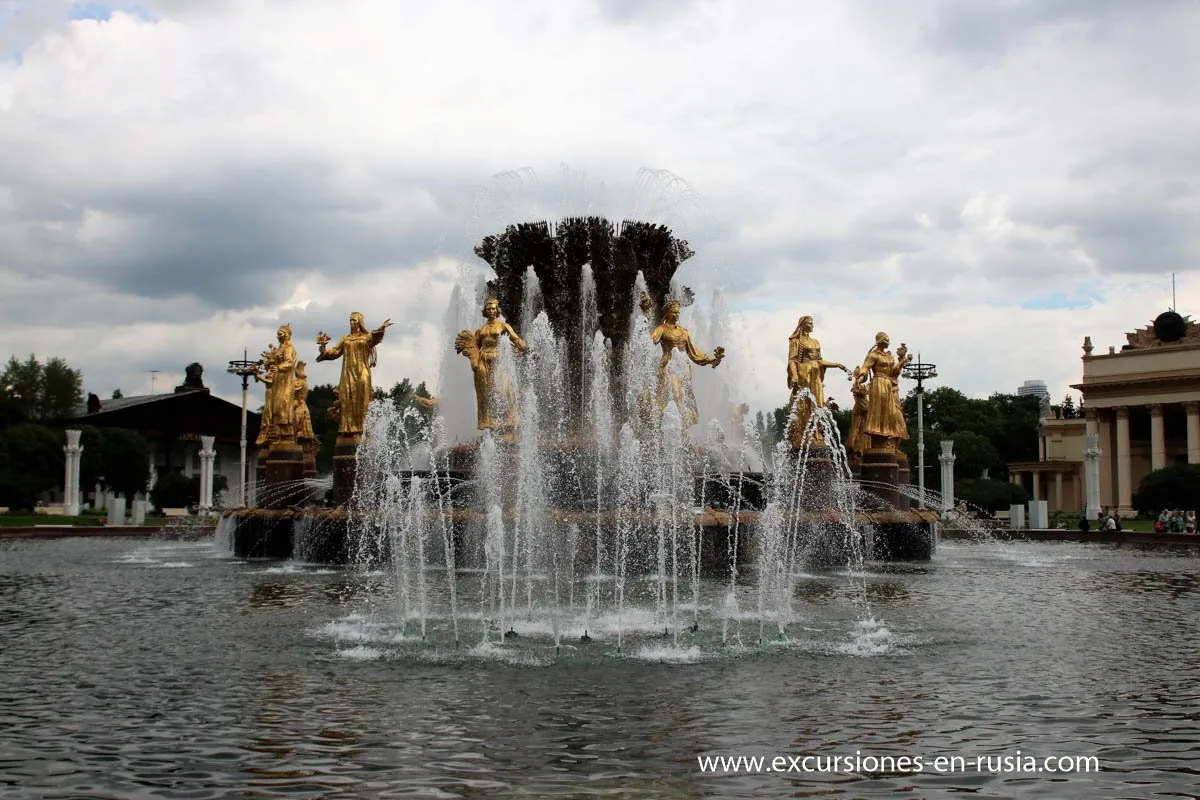
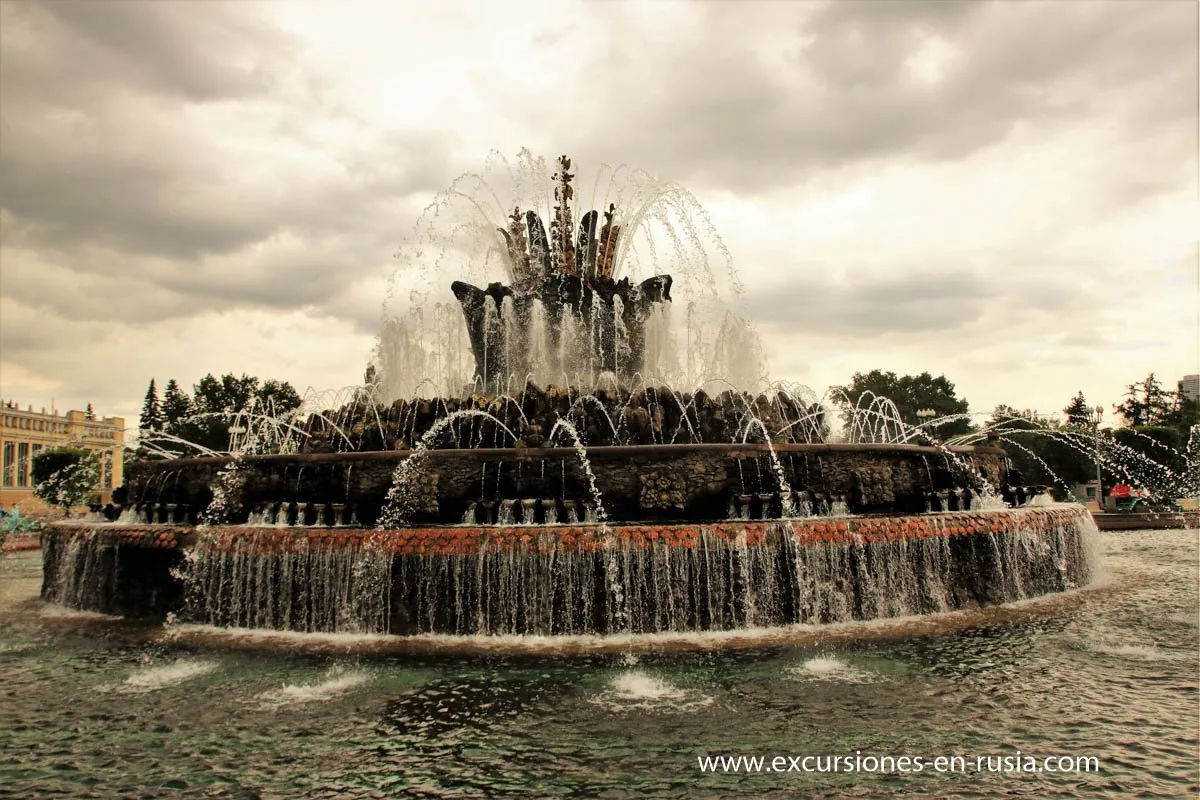
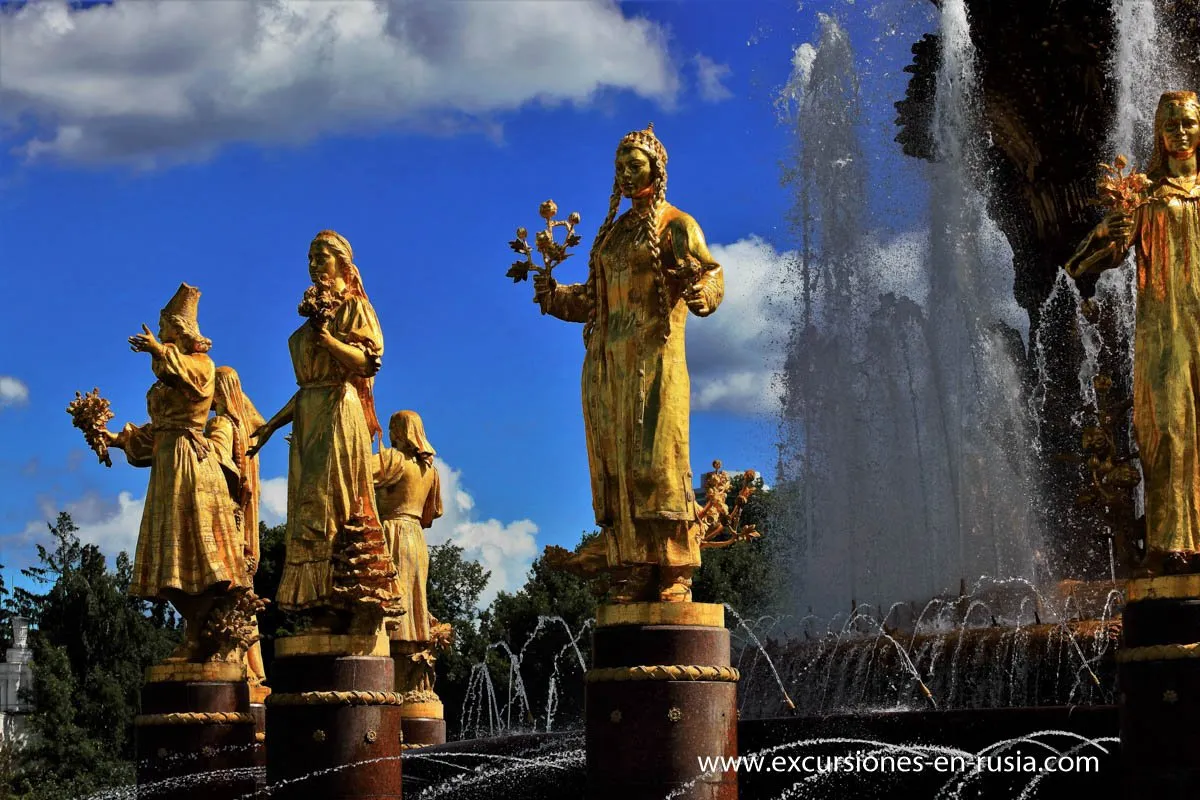
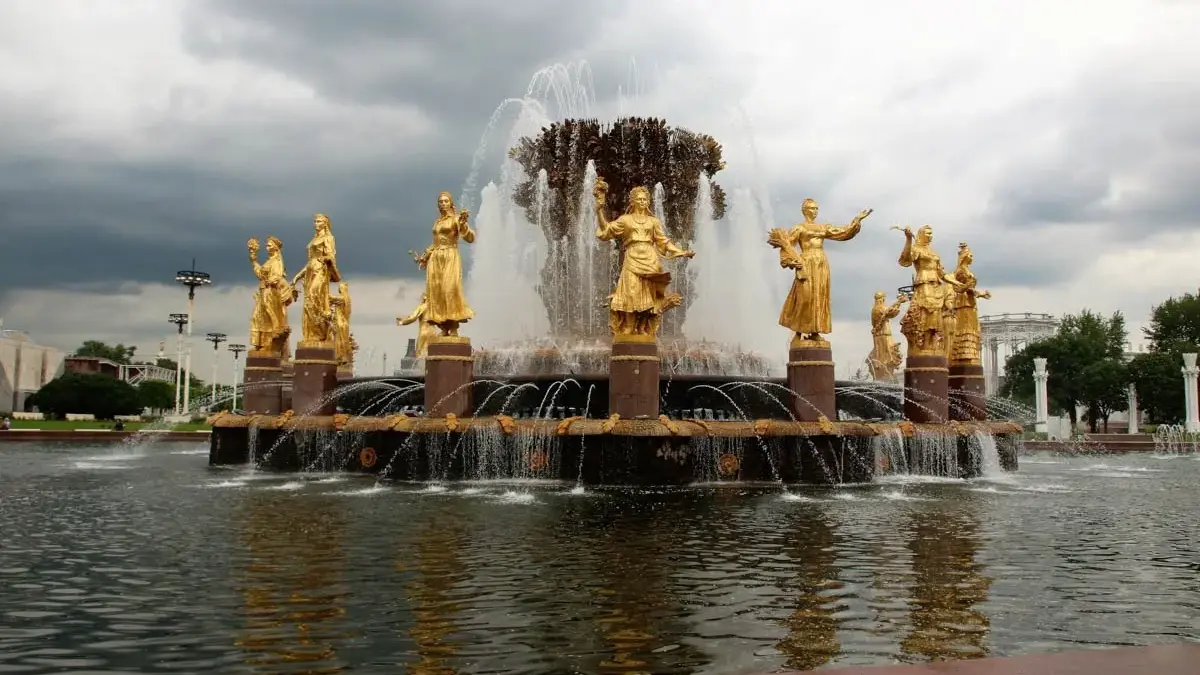
However, what impresses all visitors the most (both local Russians and foreign tourists) are its two monumental fountains: the Friendship of Nations Fountain and the Stone Flower Fountain. No one leaves this park without taking souvenir photographs by these fountains.
VDNKH: Historical Facts and Location
In the northern part of Moscow, precisely in the area known as Ostankino, Romani communities used to live before the 1917 Revolution. The place was considered outside the city proper and marginalized, consisting of uninhabitable, muddy marshlands. However, the fate of this area changed drastically in 1934 when NKVD officers forcibly evicted the established camp.
About 5 years later, one of the primary cultural landmarks of the capital emerged, attracting tourists from all over the world throughout its history. It is known by the abbreviation VDNKH (VDNJ), or the Exhibition of Achievements of the National Economy, and later the All-Russia Exhibition Centre—a monumental display visited by millions of people over the decades.
Why did the great VDNKH exhibition appear?
The history of the “Main Exhibition of the Country” began with an appeal from the Second All-Union Congress of Collective Farmers to the central organs of the Communist Party and the government, requesting the organization of the All-Union Agricultural Exhibition in Moscow. The request was granted, and the Main Exhibition Committee was created.
To earn the right to participate in the Exhibition, collective farms, state farms, machine and tractor stations, and scientific institutions had to display specific performance metrics for 1937 and 1938, and advanced workers and agricultural organizers for 1938. Thanks to this condition, no other agricultural exhibition in the world ever saw such a massive volume of exhibitors.
The popularity of the Exhibition among agricultural workers was unusually high. Millions of farmers and collective laborers, thousands of agronomists, livestock specialists, and machine operators fought for the right to participate. The exhibition committee received around 250,000 applications from people wishing to showcase their work.
The exhibition committee established prestigious awards: one thousand first-degree diplomas and four thousand second-degree diplomas. Enterprises awarded a first-degree diploma received 10,000 rubles and a passenger car, while those awarded a second-degree diploma received 5,000 rubles and a motorcycle. One thousand large and two thousand small gold medals, and three thousand large and fifteen thousand small silver medals were established for agricultural leaders. Additionally, a Book of Honor was created, where each exhibitor was registered alongside their specific achievements.
A landmark for the capital’s architecture
The All-Union Agricultural Exhibition also became a major contribution to the architecture of the capital. Growing in the northern outskirts, an entire exhibition city covering an area of 136 hectares included ponds, parks, experimental plots, and 250 different buildings.
Crops and plantations, which occupied about 20 hectares, represented agriculture across the entire Soviet Union. Around 600 varieties of different crops were sown on a grain plot. The exhibition garden offered an incredible sight: around 10,000 plants were planted, including 600 varieties of fruit and berry crops. On-site, one could see crops of cotton, rice, beets, flax, hemp, tobacco, kenaf, rubber, and hops. In total, 260 crops of more than 3,000 varieties were showcased in open areas.
The architectural ensemble of the All-Union Agricultural Exhibition was created by renowned architects V. Shchuko, V. Geylfreikh, L. Polyakov, and D. Chechulin, sculptors S. Konenkov and G. Motovilov, and monumentalists A. Deineka, A. Bubnov, and P. Sokolov-Skal, among many other talented artists. Under the leadership of chief architect S. Chernyshev, more than two thousand professionals and craftsmen worked on the project.
In addition to these agricultural examples, countless exhibits displayed advancements in heavy industries, education, energy, and much more. Come and enjoy it with our expert guides at the best price on the market.
Important Note about the Meeting Point
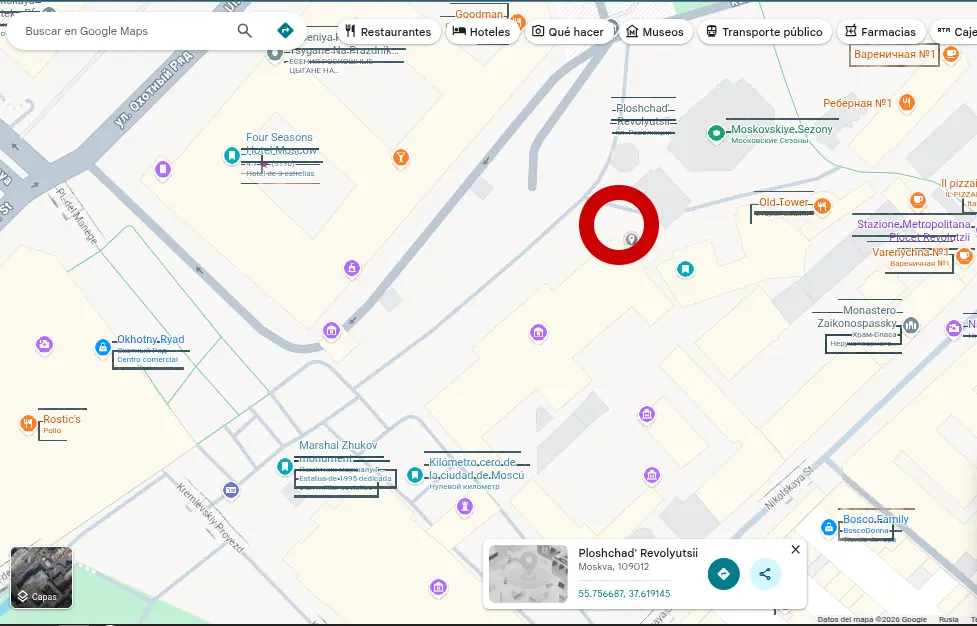
You can see the exact meeting point on the map using the specific coordinates, but we also provide pictures of the meeting point here to make it much easier to find us.
Our guides will carry Orange umbrellas or, in their absence, they will send you a photo of the guide who will be waiting for you; that is why it is highly important to provide your phone number when making your booking.