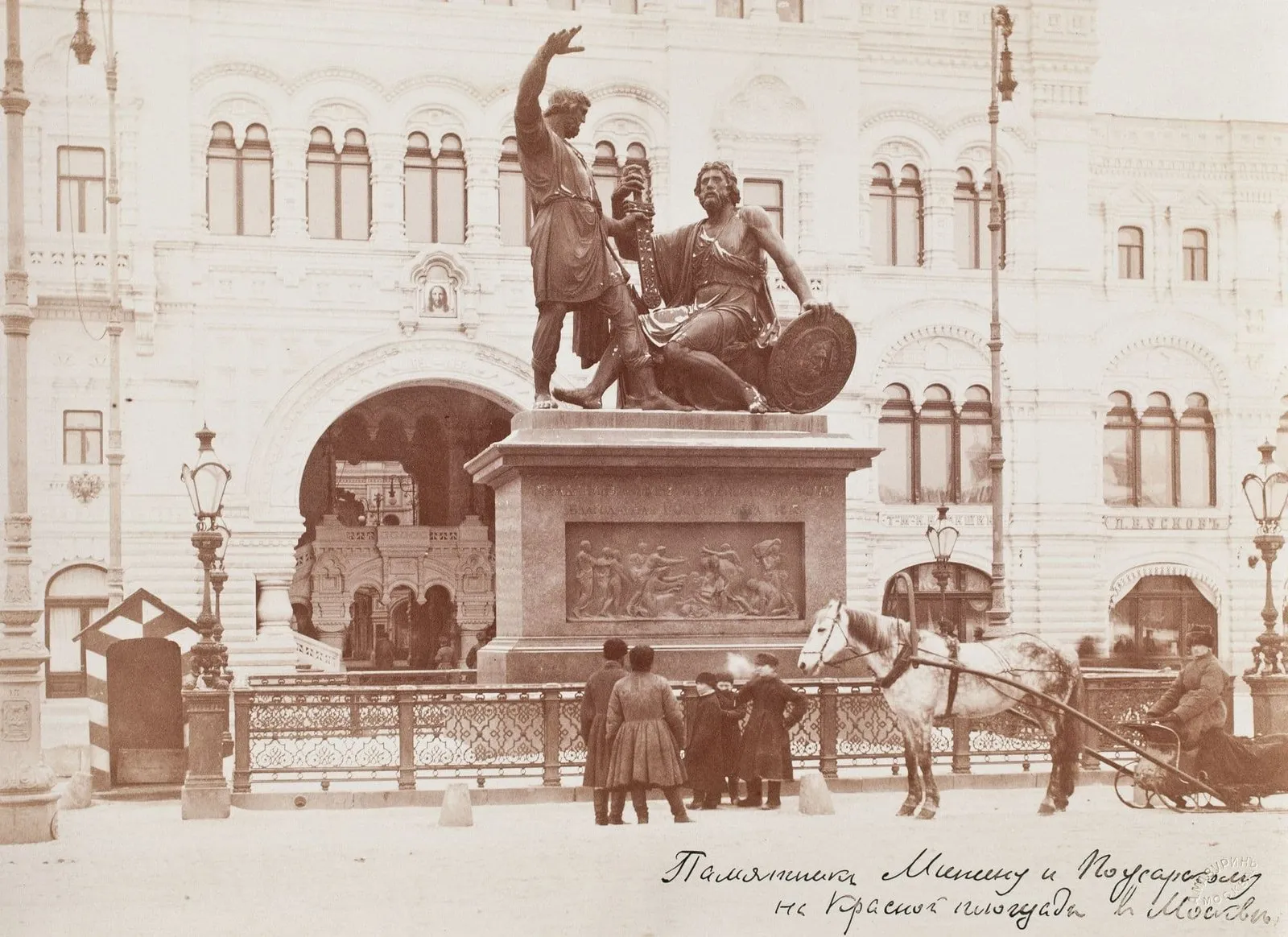
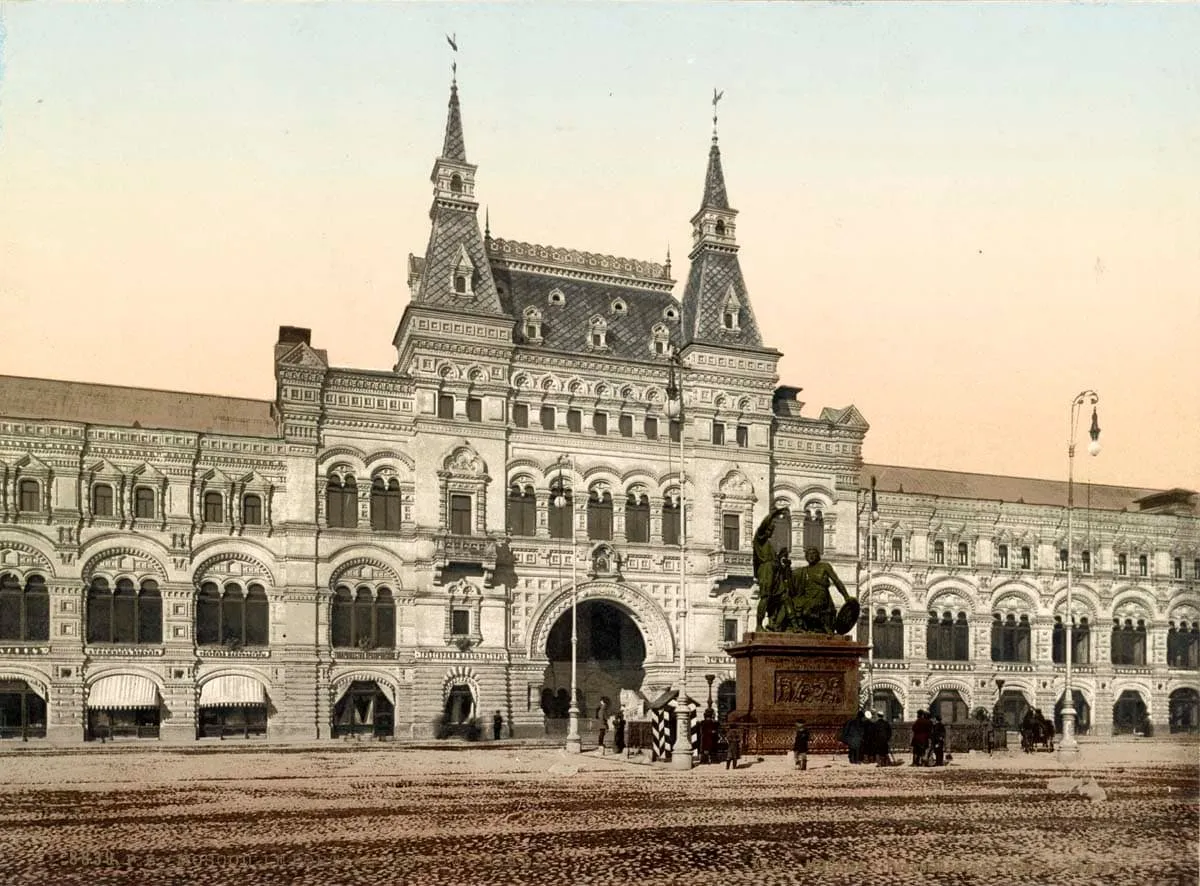
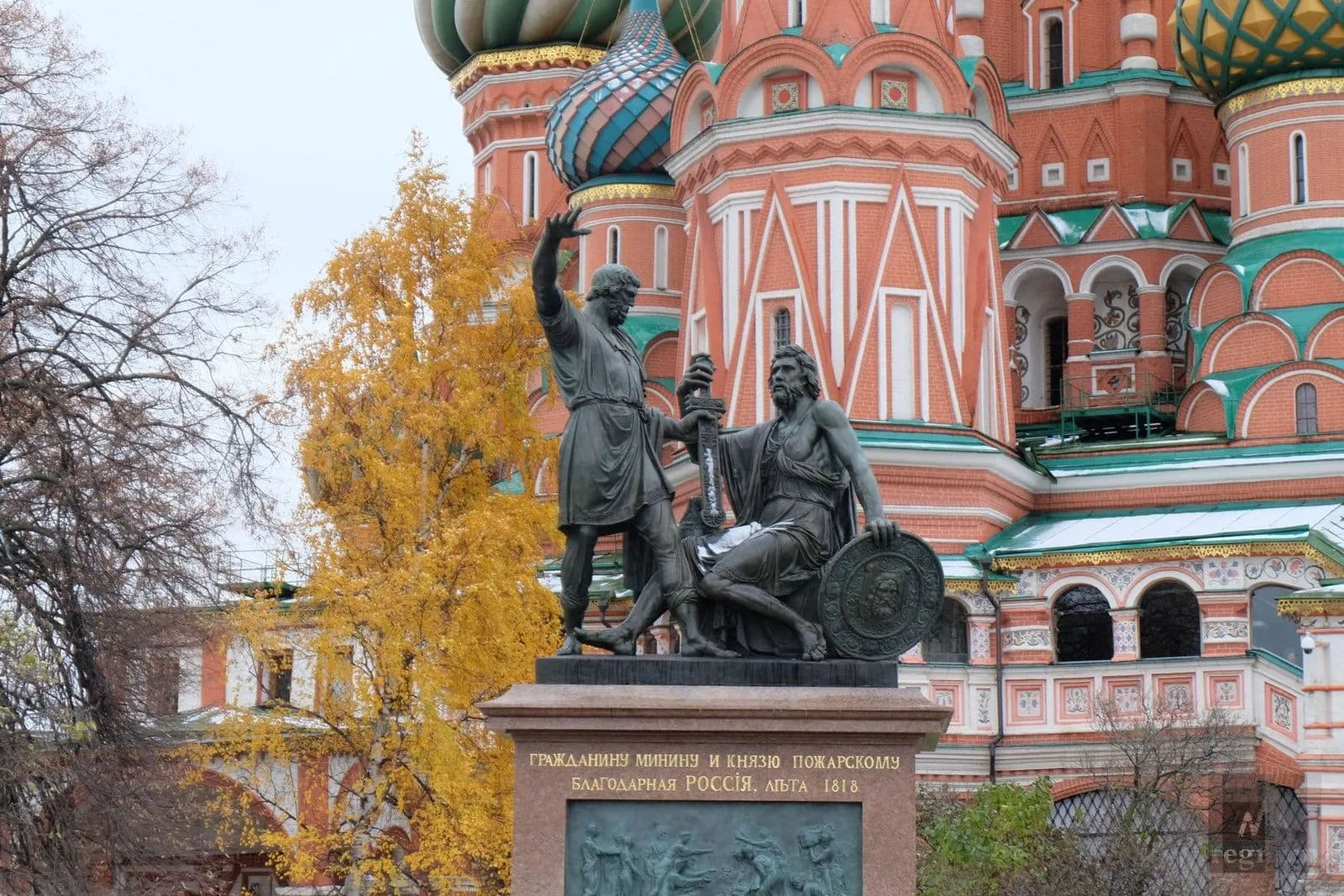
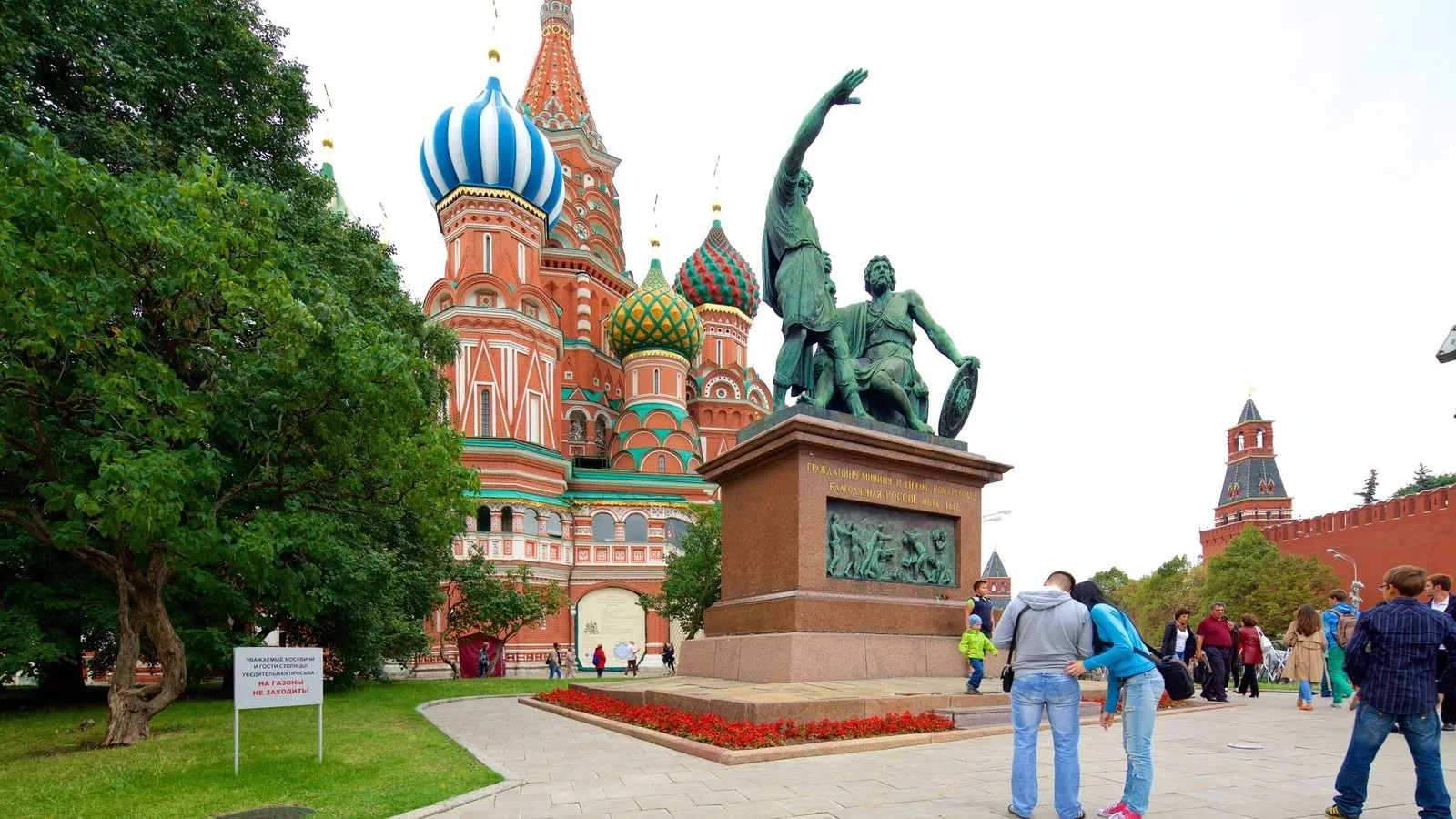
The Minin and Pozharsky monument on Red Square stands as one of the most famous, solemn, and beloved sculptures in the city of Moscow, majestically placed right in front of the steps of St. Basil’s Cathedral. Officially inaugurated in 1818, it became the capital’s first free-standing civil sculptural monument and, today, constitutes one of the most recognizable visual symbols of Russia and a mandatory visit for high-end tourists.
The work is exclusively dedicated to honoring the memory of the national Russian heroes who led the Second Volunteer Army: citizen Kuzma Minin and Prince Dmitry Pozharsky, the direct architects of the expulsion of the Polish-Lithuanian invaders from Moscow in November 1612, a geopolitical milestone that ended the convulsive Time of Troubles (Smuta). The technical execution of this masterpiece was the responsibility of the celebrated neoclassical sculptor Ivan Martos.
Sculptural Composition: The Call to Arms
The sculpture dramatically represents the exact moment of the formation of the citizens’ militia: Kuzma Minin (located on the left), vehemently urging Prince Pozharsky (on the right) to assume military command of the volunteers, hands him an iron sword with his left hand, while energetically pointing with his right arm toward the Kremlin walls occupied by enemy troops.
Prince Pozharsky is shown seated on a rectangular block, resting his hand on a round shield decorated with the mystical face of the Savior, safeguarding a princely gala helmet behind his torso. The elastic posture of the noble is unstable and visually uncomfortable: making a move to rise, he stretches one leg forward—an anatomical arrangement that acts as a historical reminder that, during the organization phases of the militia, the prince was not yet fully recovered from severe wounds received in previous battles and was receiving medical treatment in Novgorod.
Both characters wear neoclassical tunics skillfully combined with the folds of traditional Russian shirts, displaying powerful torsos and faces that radiate unshakeable confidence in Victory. The central link unifying the composition is the sword: meticulously decorated with floral ornaments and daisies carved onto the bronze handle.
| Design Layer / Aspect | Sculptural Feature | Historical and Symbolic Purpose |
|---|---|---|
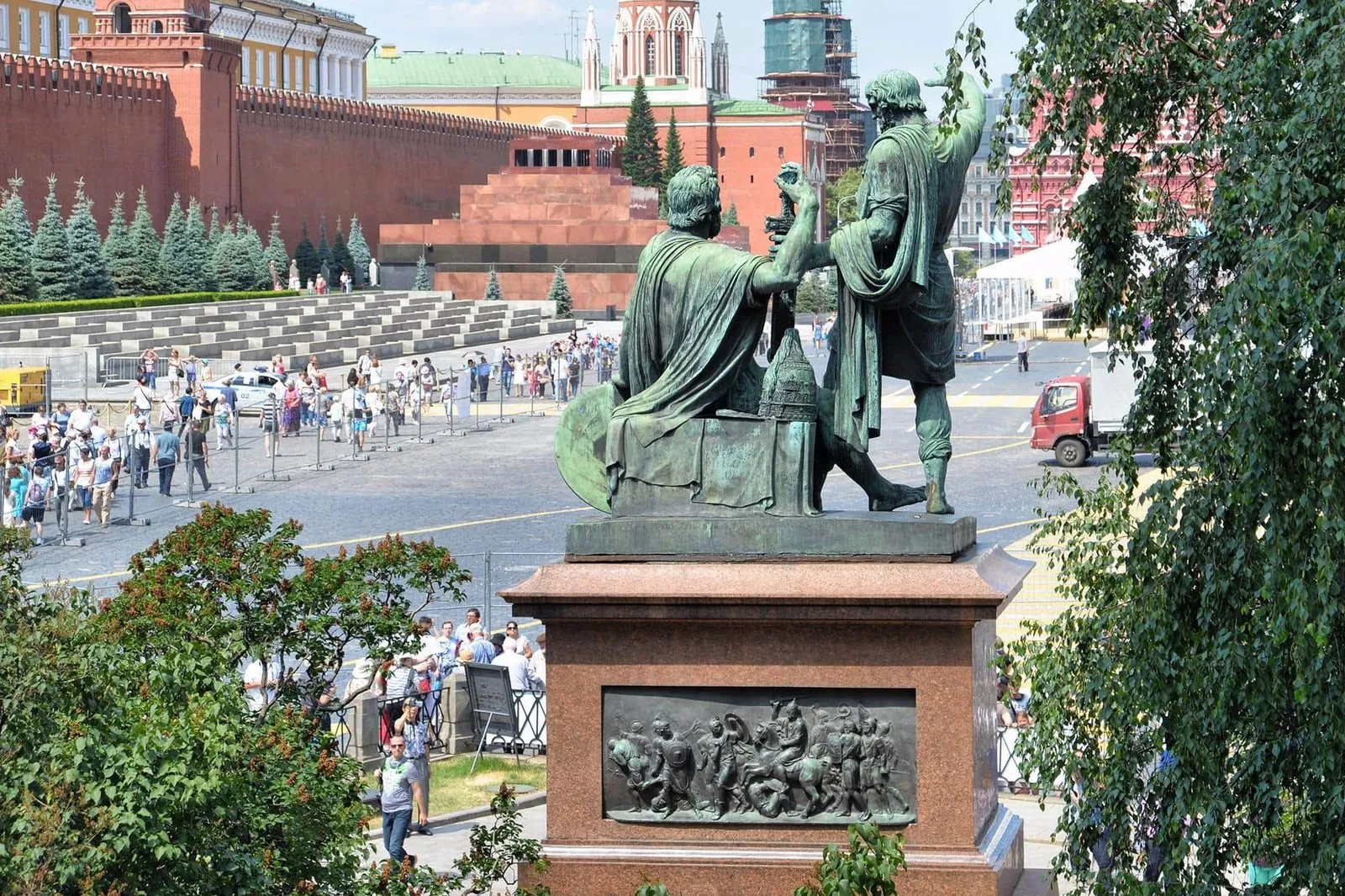
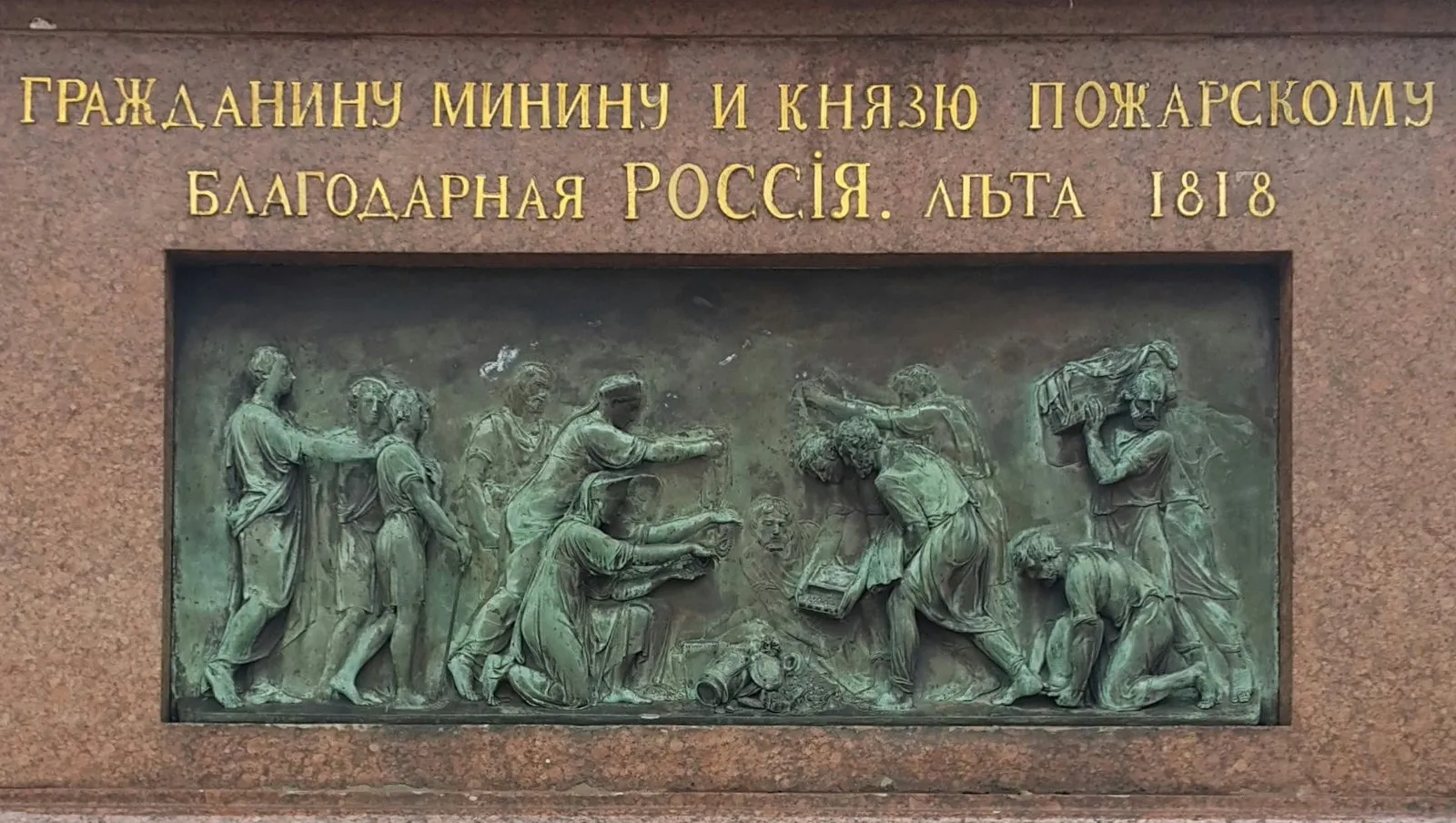
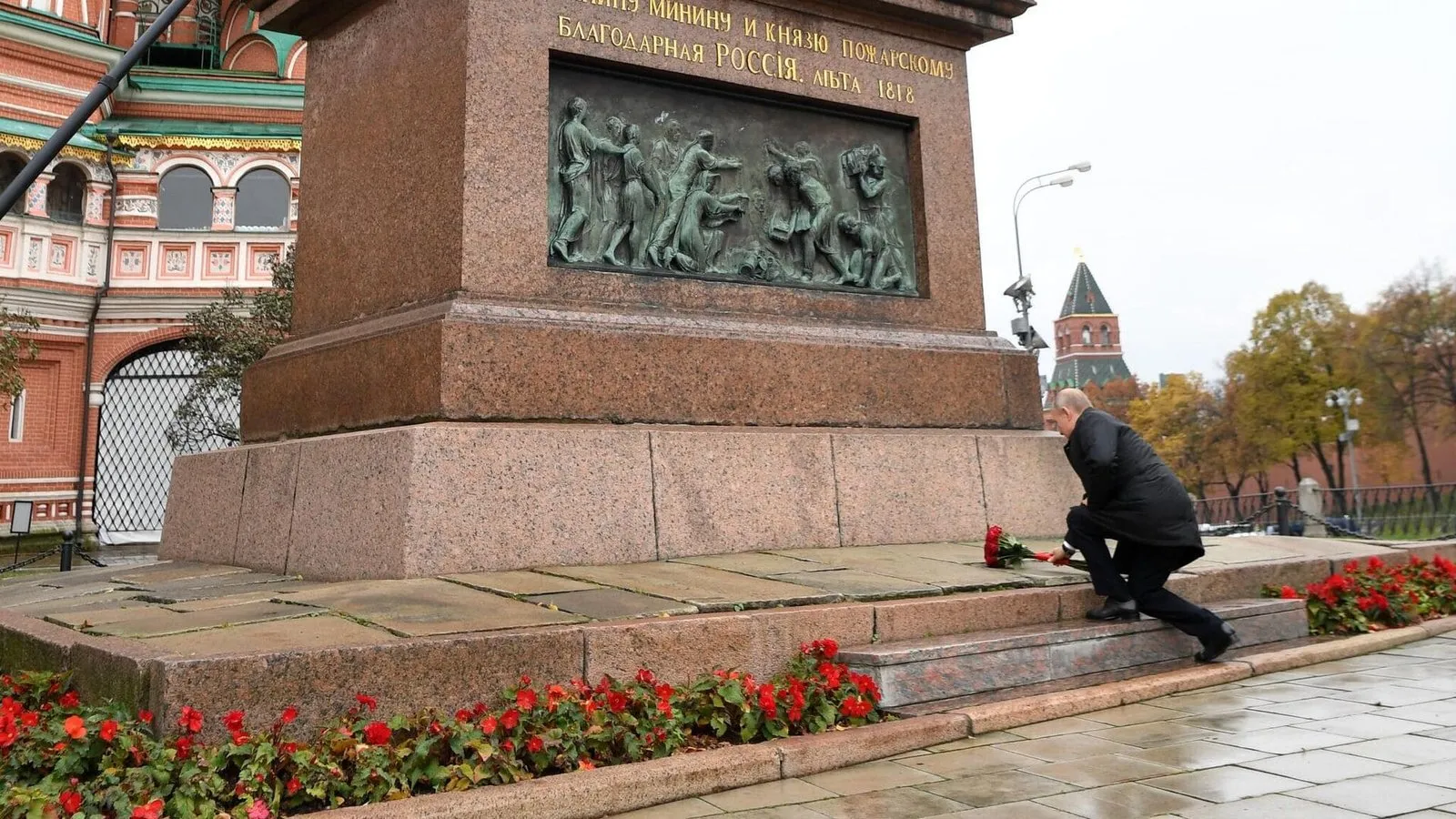
| Front High-Relief | Men carrying wealth chests; women offering family jewels in traditional kokoshniks. | Illustrates the absolute financial sacrifice of citizens to fund professional mercenaries. |
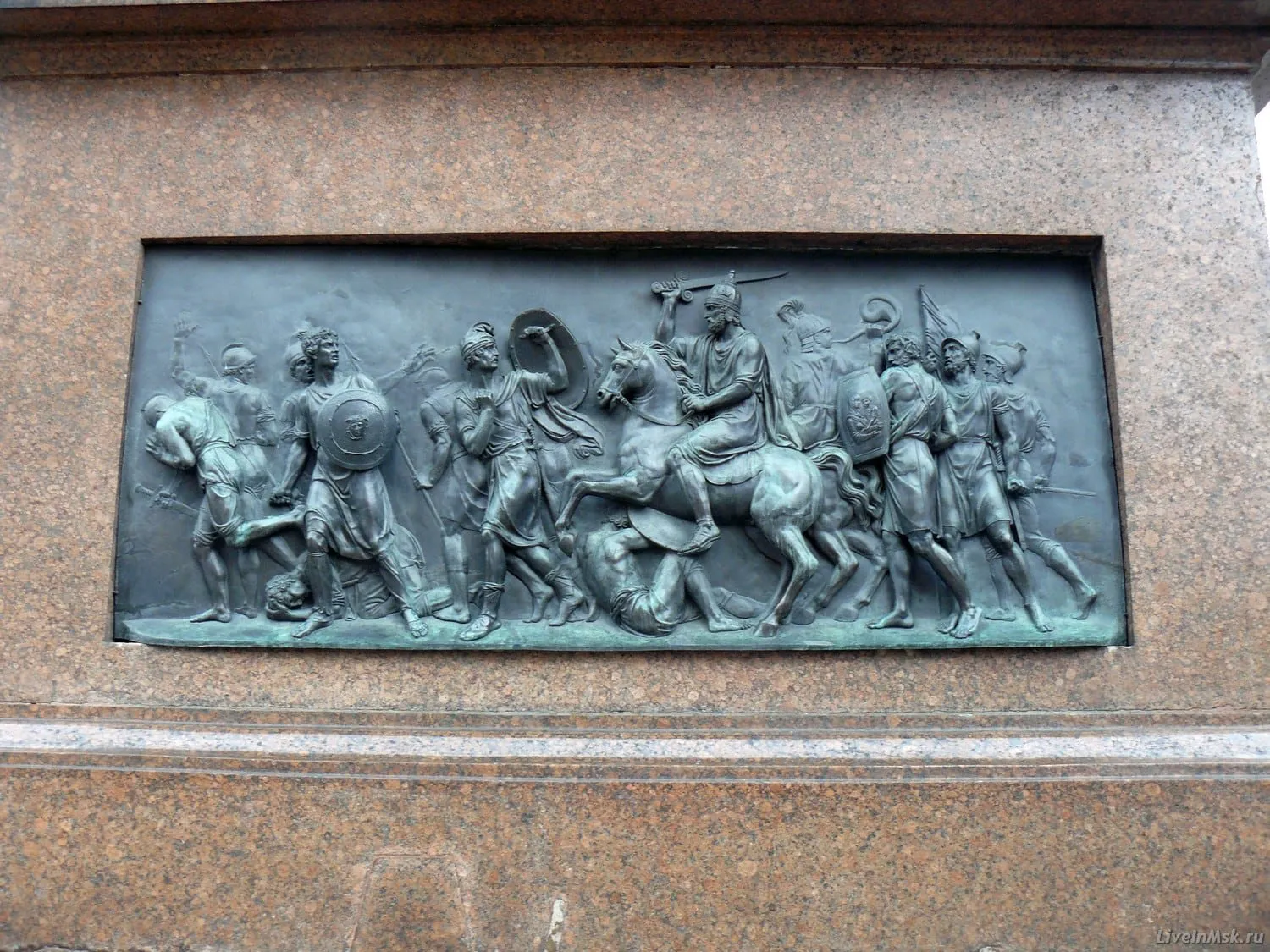
| Rear High-Relief | Chaotic retreat of Polish troops on the left; Prince Pozharsky on horseback on the right. | Chronicles the tactical victory of the Second Volunteer Army during the final assault on Kitay-Gorod. |
| Granite Pedestal | Massive blocks of carved red Finnish granite with golden imperial lettering. | Provides monumental scale (8.6 meters total height) and houses the empire’s official gratitude. |
Who Were Kuzma Minin and Dmitry Pozharsky?
Citizen Kuzma Minin (Kosma Minich Sukhoruk) and Prince Dmitry Pozharsky are the legitimate medieval liberators of Russia. They organized from nothing the Second Volunteer Army that managed to shake off the yoke of the Polish-Lithuanian occupation that had gripped Moscow since 1610. The initiative to structure an armed resistance sprouted from the commercial and craft guilds of the wealthy provincial city of Nizhny Novgorod.
The mobilization began thanks to the fiery proclamations of Kuzma Minin, a humble butcher elected as head of the Zemstvo (local assembly) of Nizhny Novgorod in 1611, who began calling authorities and citizens to patriotic union. At Minin’s suggestion, a strict mandatory financial tax was imposed: each citizen had to donate one-third of their private assets to fund the recruitment of professional soldiers and mercenaries, decreeing the total confiscation of property for those who refused to cooperate.
For the role of military strategist, citizens elected by acclamation Prince Dmitry Pozharsky, whose honesty, selflessness, and flawless service record were revered by soldiers. Pozharsky accepted the heavy cross of leading the troops on the unyielding condition that Kuzma Minin would exclusively assume the general quartermaster duties, financial control, and logistical supply of the campaign.
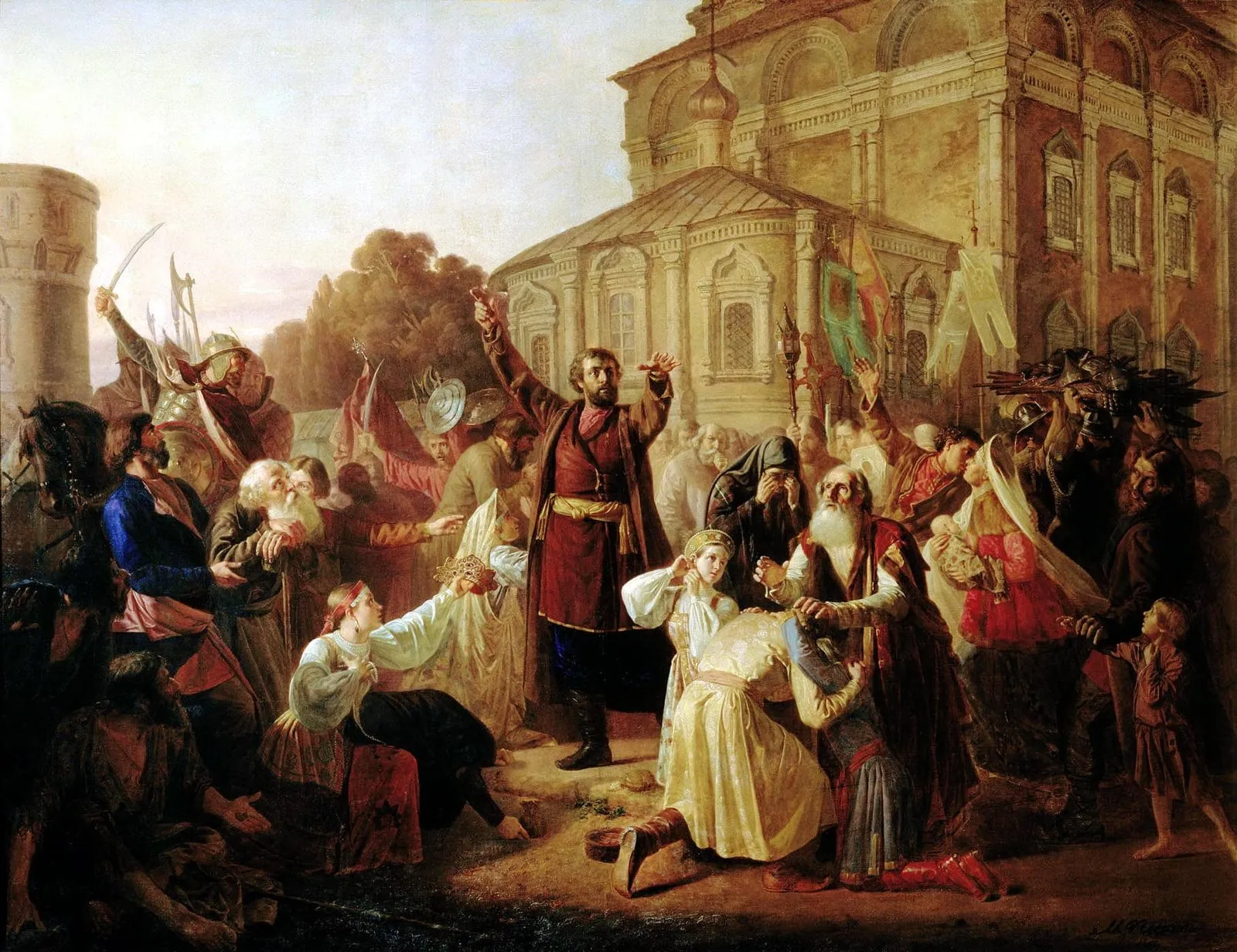
The military march toward the capital gathered thousands of peasants from the northern and central regions of Russia, with the city of Yaroslavl playing a crucial role in the concentration of the detachments. The unified army, which did not exceed 8,000 bayonets, converged on the outskirts of Moscow with the forces of Prince Trubetskoy’s first militia. The campaign concluded with total success: on November 1, 1612, the troops stormed the fortifications of Kitay-Gorod, and by November 5, the Polish garrisons besieged in the Kremlin surrendered completely, permanently vacating the Empire’s principal fortress.
Curiosities of a Historic Foundry
- Family Models: When sculpting the faces and molding the muscular bodies of Minin and Pozharsky in his workshop dacha, Ivan Martos used his own biological sons, Alexei and Nikita, as elastic models.
- Hidden Self-Portrait: In the front high-relief of the pedestal, in the scene where a father consecrates his two sons to war, the sculptor portrayed himself in profile next to his offspring—a painful tribute, as his son Alexei fought in Kutuzov’s campaigns and his son Nikita was captured and shot by Napoleonic troops in France. The effigy was subtly carved by his student Samuil Halberg.
- A Record-Breaking Foundry: To cast the monumental bronze structure, more than 18,000 kilograms of pure copper were required. Master founder Vasily Ekimov achieved a feat for the European metallurgy of the era: he cast both complex human figures at once in a single unified block in a record time of just 9 minutes, dedicating an entire month to the prior cooling phases.
- Pushkin’s Criticisms: The celebrated poet Aleksandr Pushkin was not enthusiastic about the final wording of the dedication engraved on the red granite, writing a sharp author’s comment in his diaries: "The inscription to citizen Minin is not satisfactory. For us, he is the merchant Kosma Minin, elected by the entire Moscow state. It would not hurt to know his patronymic, as well as the full name of Prince Pozharsky".
The Monument in the Soviet Era and Today
With the consolidation of the Soviet regime in the 20th century, the most radical factions of the proletarian avant-garde unleashed sharp criticisms against the statue; publicist Vladimir Blum went so far as to label it in the press as "bourgeois historical trash," while official poet Demian Bedny defamed the bronze heroes, calling them "embezzlers of the public treasury".
Fortunately, authorities discarded its demolition; however, in 1931, on the occasion of the construction of Lenin’s Mausoleum and to clear the pedestrian avenues for the massive military parades and party demonstrations, Joseph Stalin ordered the monument to be moved from its original site in the center of the square toward the walls of St. Basil’s Cathedral, a corner where it continues to stand with total gallantry today. In 2005, to restore historical justice, an exact smaller replica was inaugurated in the Kremlin of Nizhny Novgorod, the original cradle of the militia.
Today, this exceptional piece stands as a true symbol of Moscow and a structural node of the Red Square itinerary. Contemplating its bronze bas-reliefs under the guidance of our official official guide service will allow you to decipher the true keys to the birth of the Romanov dynasty and the imperial resistance.
Imperial Cultural Connection Gateway
This chronicle of medieval liberation and neoclassical metal mastery is part of our heritage knowledge network. If you wish to analyze in detail how this monument dialogues with the architecture of Red Square or trace the path of the Tsars into the fortress, we invite you to explore our reference catalog: Places in Russia: The Definitive Imperial Chronicles Guide.
Do you wish to explore the cobblestones of Red Square and unveil the medieval secrets of the Time of Troubles accompanied by certified official guides in your own language? We shield your vacation. Contact our operations department directly or discover the monumental catalogs by exploring our exclusive Moscow Private Tours Catalog.