The Russian kokoshnik stands as an ancient female headdress of dazzling beauty, consolidating itself over the centuries as the ultimate symbol and insignia of the national attire of Russian women. The etymological physiognomy of its name sinks its roots into the ancient Slavic word kokosh, a medieval term popularly used by peasants to refer to a "rooster" or a "hen".
Historically, its use was rigidly restricted exclusively to married women; during prolonged feudal eras, the Orthodox faith and civil morality dictated that, once the wedding liturgy was completed, the wife had a sacred duty to completely cover her head and hide her locks of hair from the gaze of strangers.
Shapes and Composition: The Pearl Crests of the Kokoshnitsy
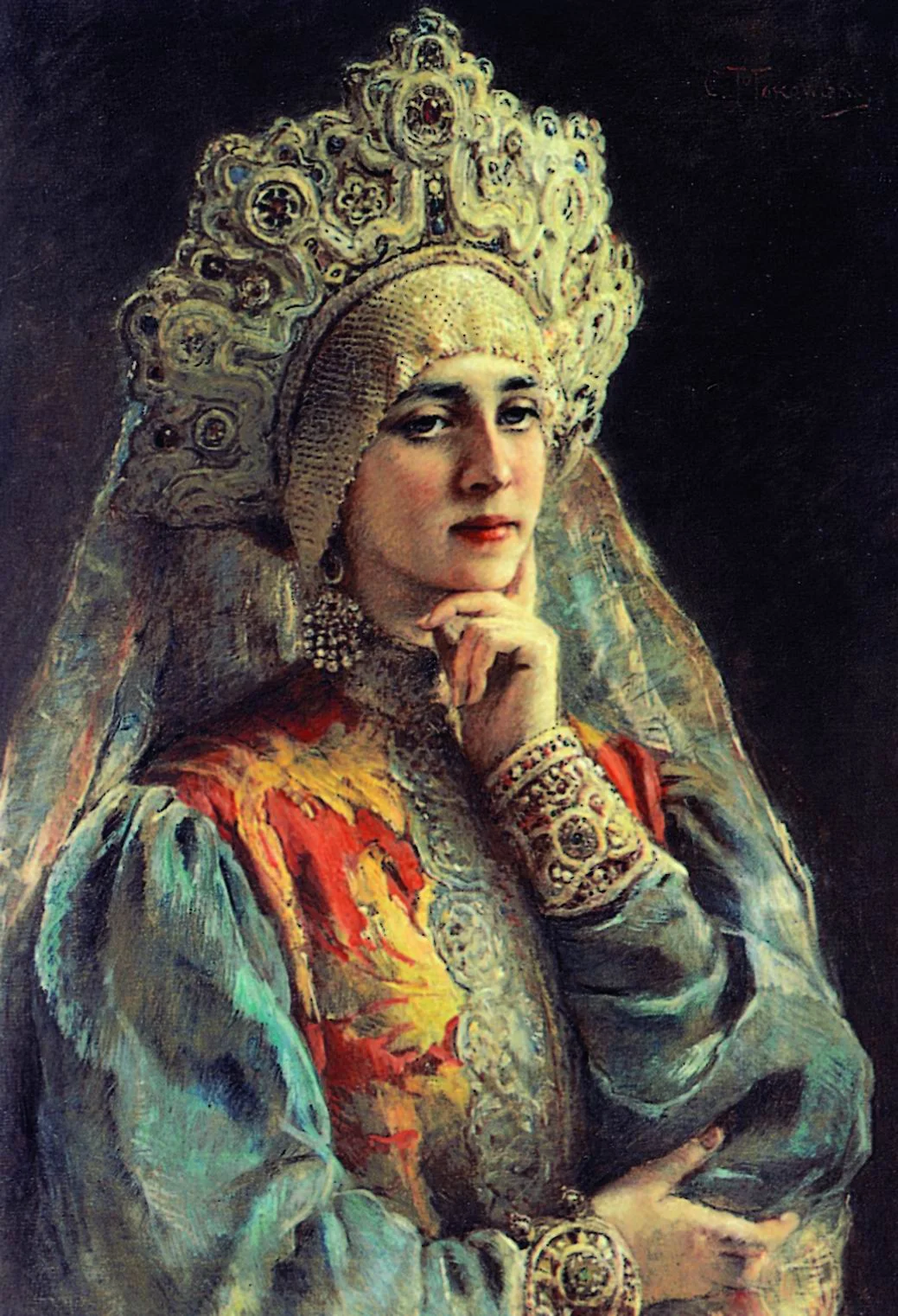
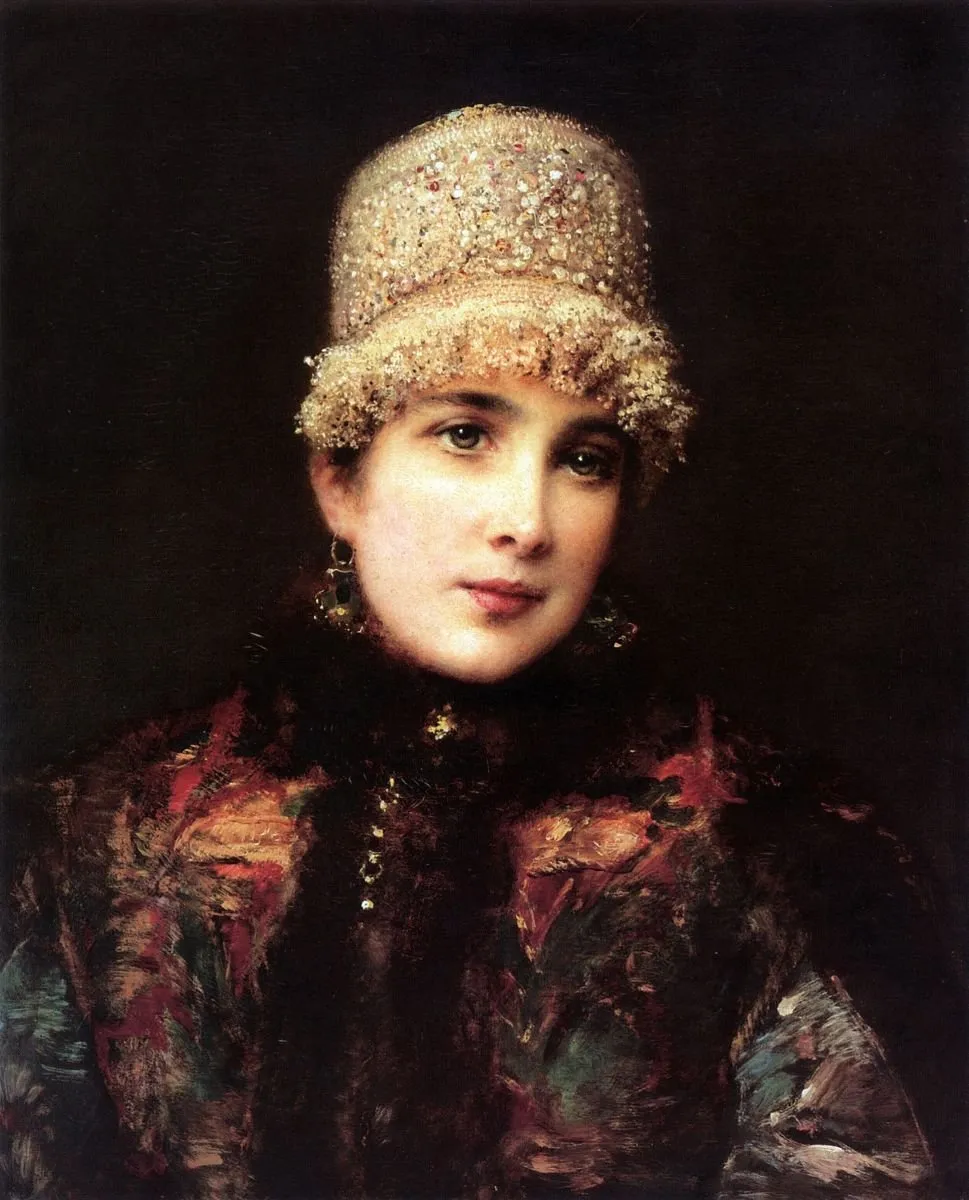
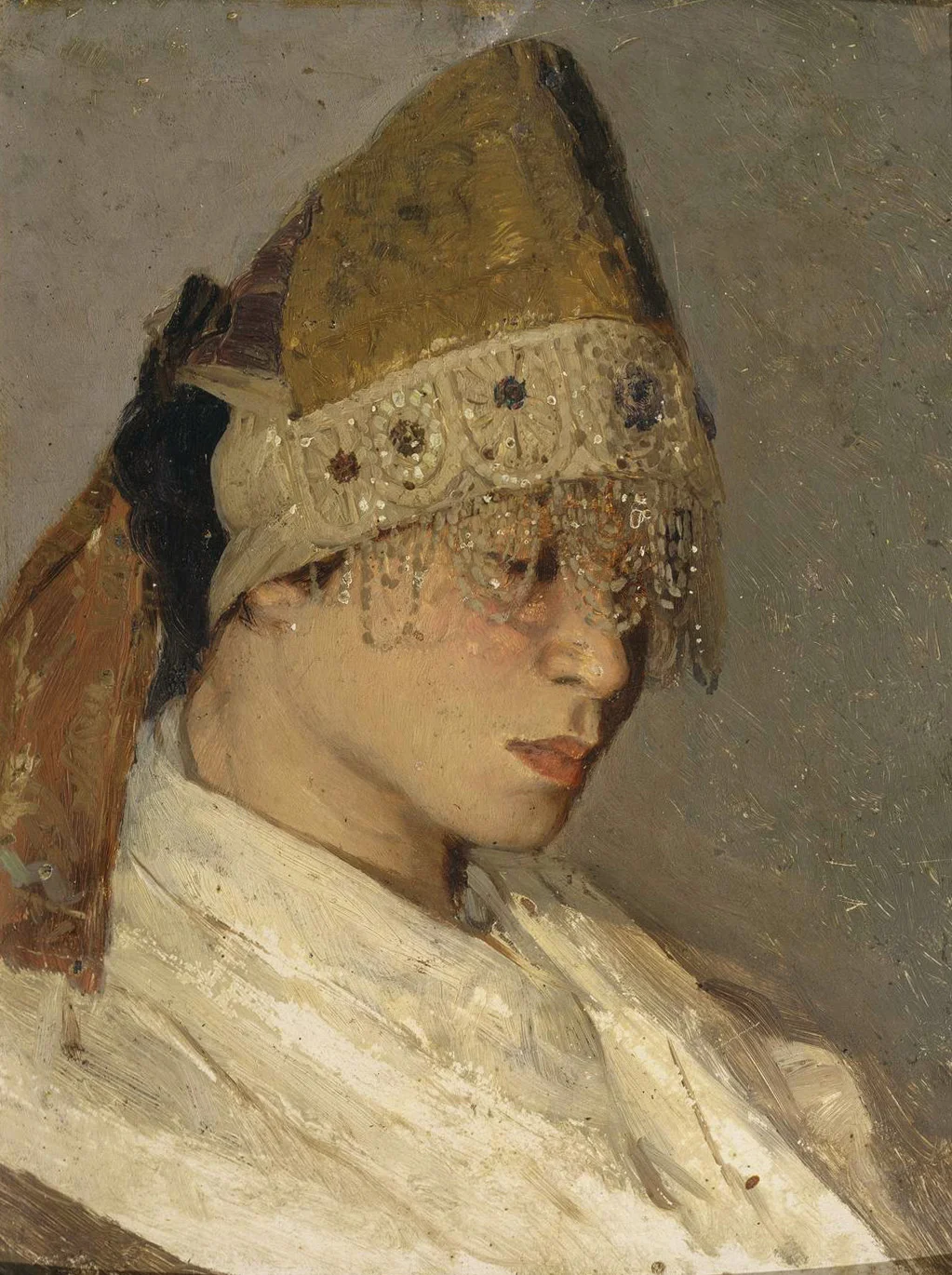
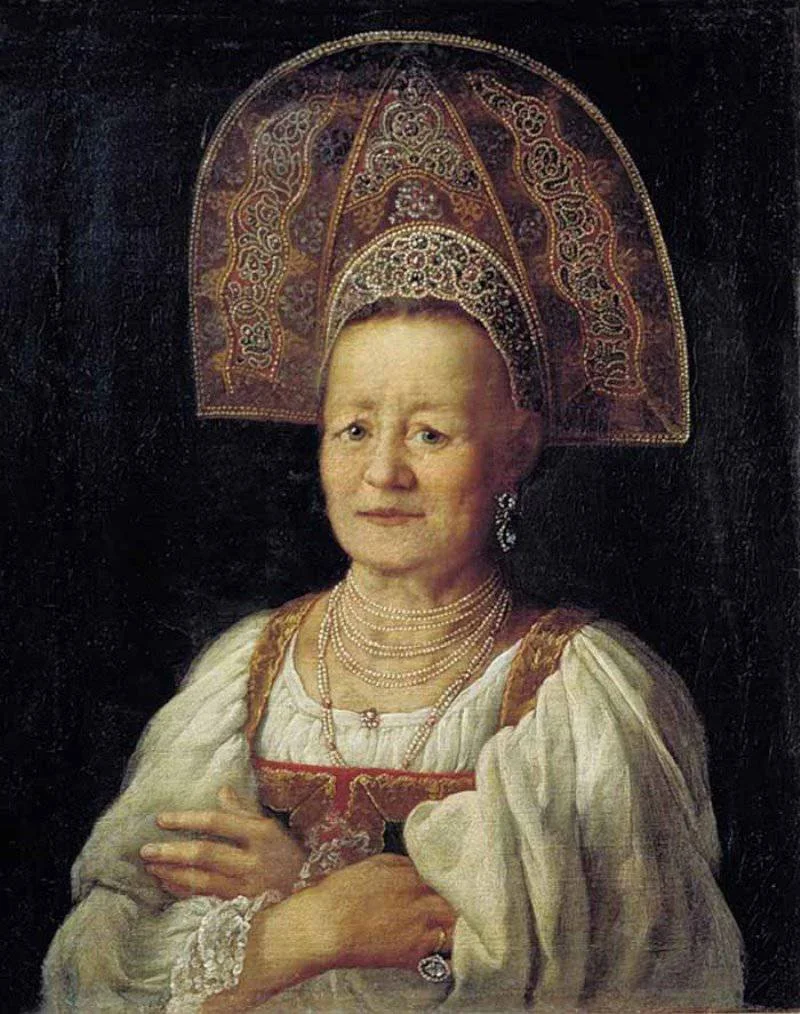
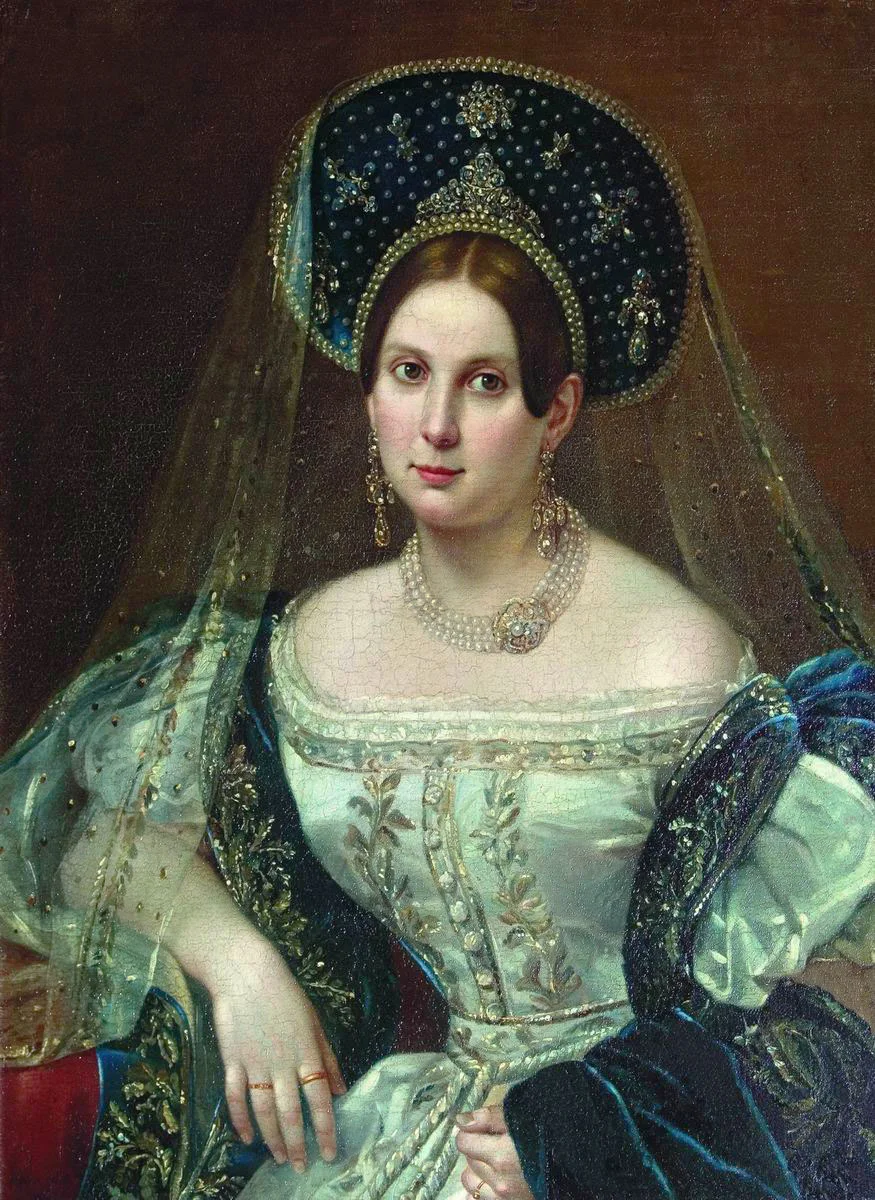
Although costume chronicles record an immense variety of local shapes depending on each province of the empire, the mold that conquered universal posterity has the appearance of a tight-fitting cap provided with a flat or convex back, to which a high textured crest shaped like a triangle or a crescent moon was masterfully assembled.
The inner frame of this sumptuous comb was manufactured using thick pressed cardboard or heavily glued linen canvases; immediately after, specialized female artisans—baptized in mercantile guilds as kokoshnitsy—upholstered the structure using highly expensive imported fabrics such as Lyon velvet, silk damask, or gold brocade.
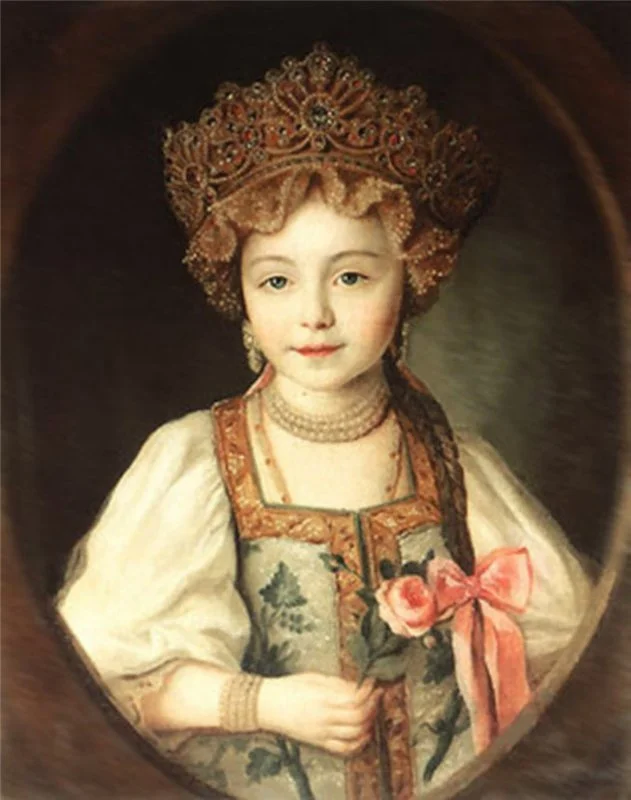
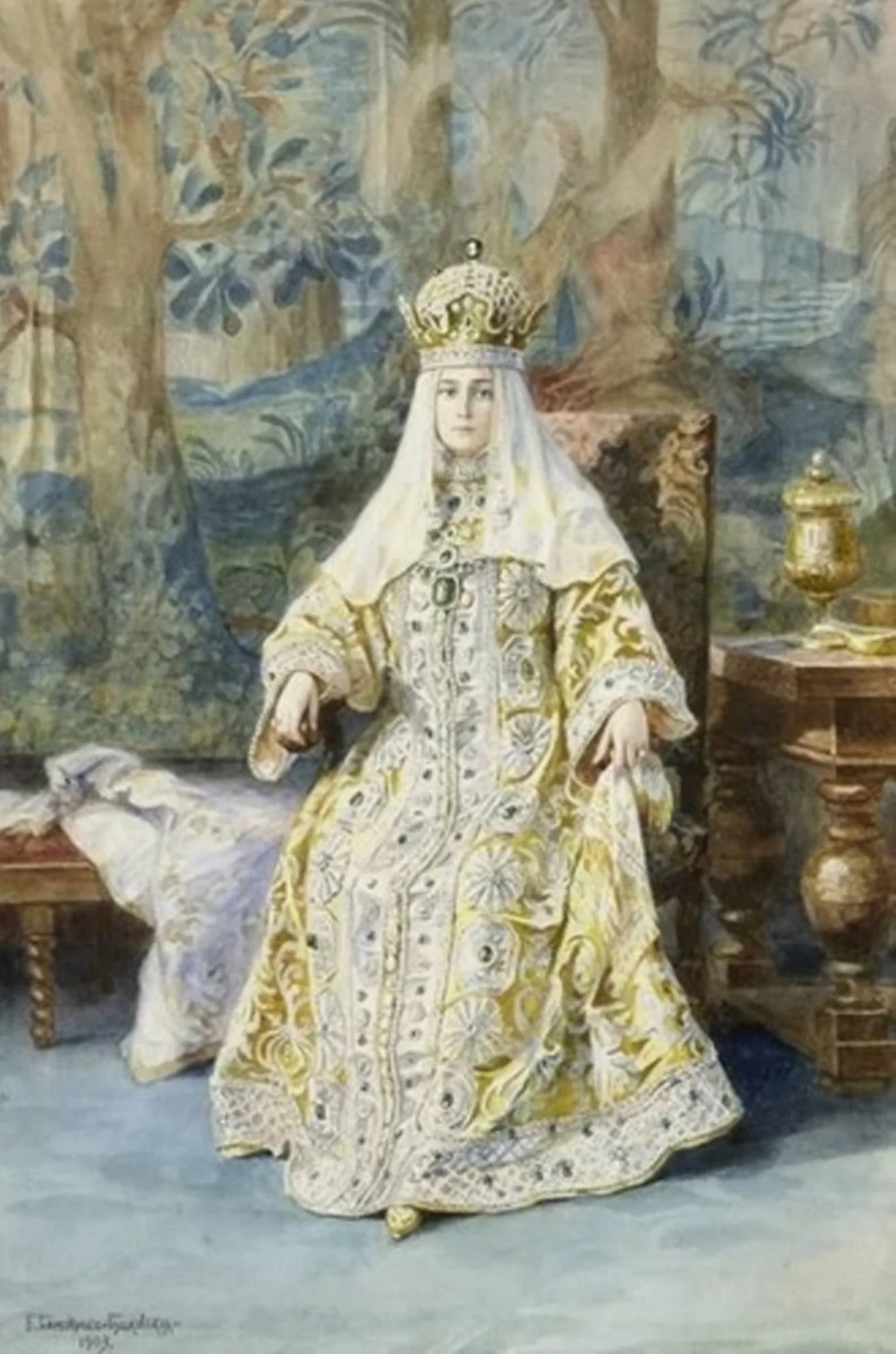
The surface was adorned with obsessive detail: minute embroidery in silver threads, laces of old gold threads, bead filigrees, and a massive accumulation of authentic pearls from northern Russia or fine glass beads; pieces belonging to the aristocracy also incorporated emeralds and precious stones that multiplied their commercial value.
On solemn occasions, etiquette commanded covering the kokoshnik by suspending a piece of subtle elastic fabric over the crest, firmly secured under the chin—a coverage that could be presented in the shape of a translucent lace veil or a thick shawl of embroidered wool.
Chronicle of a Cultural Resistance
Documentary studies place the first archaeological traces of these headdresses in the distant 10th century; however, the written physiognomy of the term "kokoshnik" sprouted for the first time in the administrative treatises of the 17th century. In its medieval dawns, women belonging to all socioeconomic strata of the population wore them with pride on festival days.
This social transversality suffered a drastic paralysis due to the westernizing reforms violently imposed by Emperor Peter I the Great. Peter I strictly forbade the nobility from wearing the garments and beards of the old Slavic school in their gala balls, forcing the ladies of the court to dress in low-cut French fashions.
As a consequence of this royal decree, the kokoshnik was strictly preserved as a cultural bunker in the rearguard of society, faithfully sustained by the wives of peasants, the petite bourgeoisie, and the guilds of wealthy provincial merchants.
Even in the households of laborers with scarce financial resources, families made extraordinary sacrifices to acquire a gala kokoshnik decorated by the kokoshnitsy, guarding the piece in wooden chests and inheriting it from mothers to daughters as an authentic patrimonial treasure.
The festive Russian attire was designed to project a monumental, majestic, solid, and solemn female figure; a large richly ornamented kokoshnik functioned as the perfect crown to culminate such a gala stappe. Unmarried maidens wore similar high headdresses—the so-called Slavic crowns or diadems (ocheliem)—but permanently leaving their hair loose or wearing a long braid in the wind.
The Return to the Court and the Russian Tiara of the British Crown
The courtly luck of this traditional headdress operated an absolute Branding turnaround by the hand of Empress Catherine II the Great. Anxious to extol her patriotic commitment and her psychological closeness to the Russian people, the tsarina loved to pose for her portraits wearing majestic summer dresses combined with pearl kokoshniks, spurring the ladies of her entourage to revive the custom at palace masquerade balls.
During the course of the Napoleonic invasion of 1812, patriotic fervor flooded residential salons; memoir writer Philip Vigel recorded in his treatises how the ladies of the St. Petersburg aristocracy “stripped off their French corsets to dress in traditional gowns, crowning their hairstyles with ribbons and kokoshniks; upon contemplating themselves in the mirrors, they discovered with astonishing pleasure that such an attire conferred upon them an elegance and a sublime bearing”.
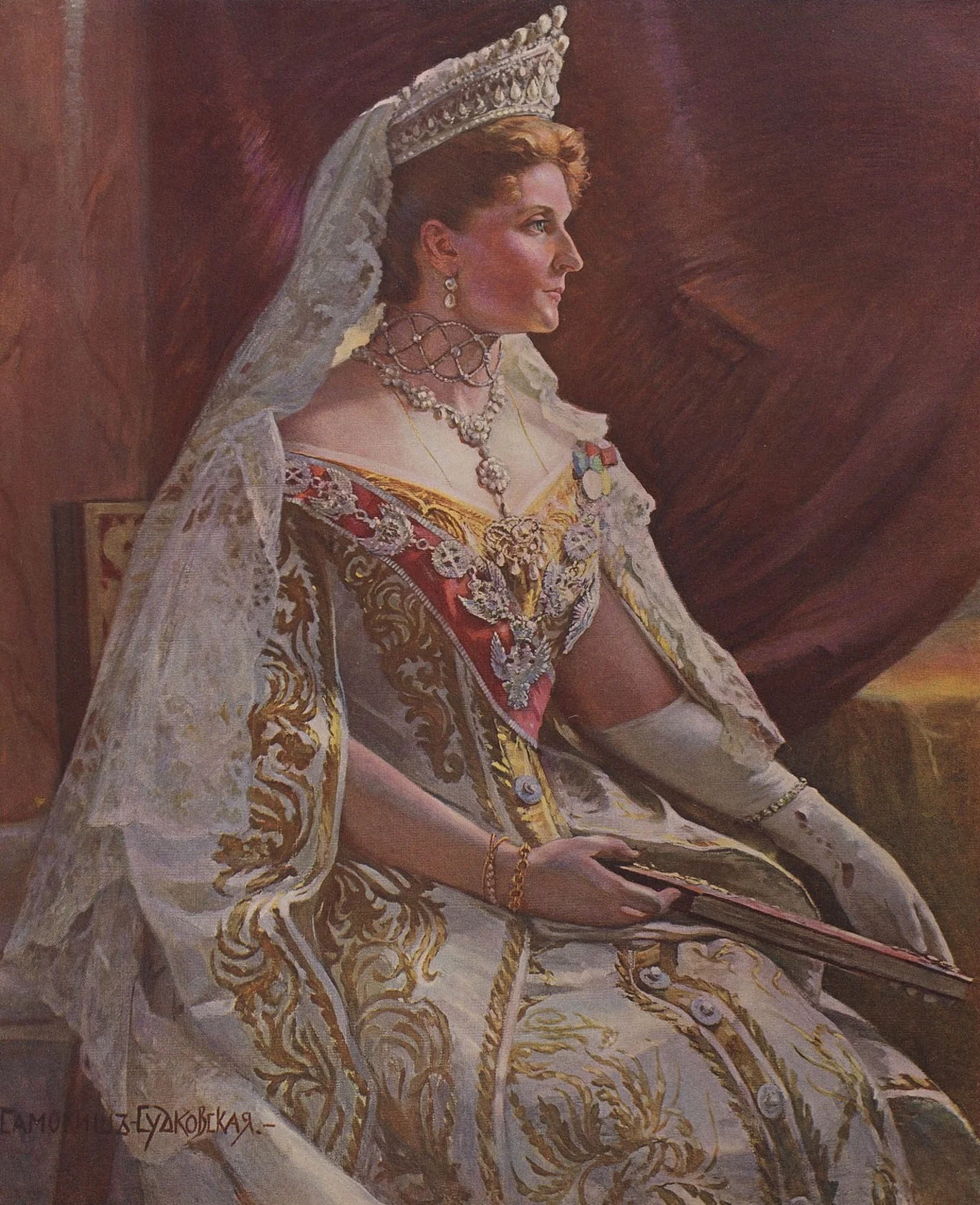
In 1834, Emperor Nicholas I of Russia elevated the kokoshnik to the rank of a mandatory component of the official female court uniform. The imperial decree meticulously fixed the colors, textures, and length of the gala dress train according to the courtly rank of the maid of honor or state lady, ordering that married women wear the kokoshnik and unmarried ones the open diadem.
Empress Maria Feodorovna, wife of Tsar Alexander III, possessed a dazzling tiara forged by royal jewelers from symmetrical cut diamonds that emulated the exact physiognomy of a Pomeranian kokoshnik. Her biological sister, Princess Alexandra of Denmark (future queen consort of British monarch Edward VII), was so subjugated by the glamour of the Russian jewel that she commissioned London goldsmiths to forge an exact replica for her own use.
This masterpiece of high jewelry, forged in white gold and paved with bars of elastic diamonds, became indissolubly integrated into the heritage of Buckingham Palace after passing into the hands of Queen Elizabeth II, known internationally in royalty catalogs under the official name of the "Russian Kokoshnik Tiara".
Russia, the Country of the Best Signature Souvenirs
Acquiring a contemporary hand-forged kokoshnik by local artisans constitutes one of the most original, beautiful, and mystically charged gifts a traveler can buy during your vacation in Russia.
In the development of our high-end private tours through Moscow and St. Petersburg, our bilingual official guides will escort you preferentially to traditional markets and the most exclusive galleries free of abusive Elementor commissions, guaranteeing you a comfortable, safe shopping journey of insuperable comfort.
Do you wish to explore the artisanal shops of Moscow and capture your portrait with a fine rhinestone Kokoshnik with the total peace of mind of having professional assistance in your language? We shield your vacation. Contact our logistics advisors directly or discover the cultural richness by exploring our select Private Tours Catalog in Moscow.