The word Katyusha (an affectionate diminutive of the traditional name Ekaterina) is globally recognized in the historical military sector for naming the feared first salvos and rocket launcher trucks of the Soviet Union. However, for the millions of foreigners who visit the country annually attracted by its heritage, this name immediately evokes an unforgettable sounding monument: the song "Katyusha," a musical symbol that ascended to the status of a national treasure of the Russian people.
When travelers land in Moscow seeking to trace the steps of Aleksandr Pushkin, Fyodor Dostoevsky, or Yuri Gagarin, or longing to verify Western myths about whether bears walk through Red Square, they inevitably end up humming this lyrical beat. It is a melody that melts romance with patriotic duty in a way so pure that it conquered the entire world.
The Birth of Poetry: The Dilemma of Mikhail Isakovsky
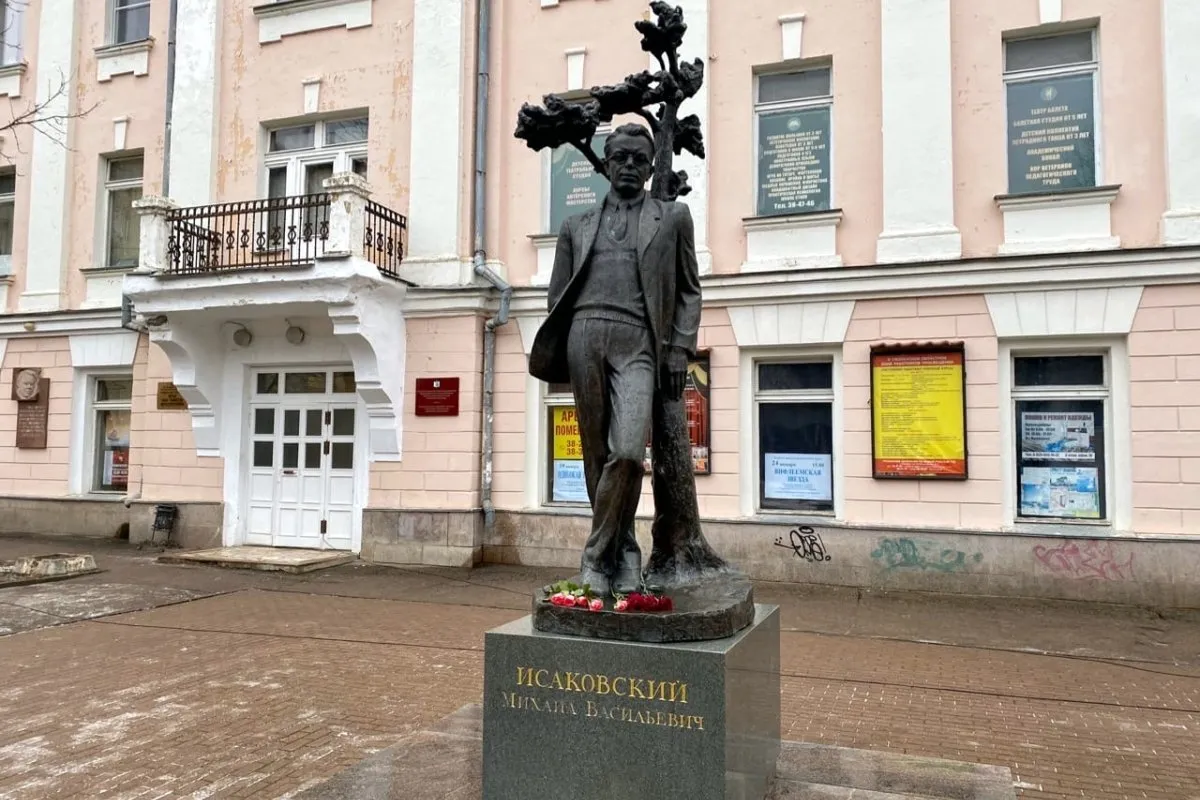
The genesis of this masterpiece dates back to 1838. The talented poet Mikhail Isakovsky, who had initiated his literary journey at a very young age in the Smolensk province, already accumulated seven years of creative success working in Moscow’s editorial circles. His poems, mostly consecrated to portraying rural life and the beauty of fields, enjoyed immense national fame and were sung with enthusiasm both by professional ensembles and amateur choirs.
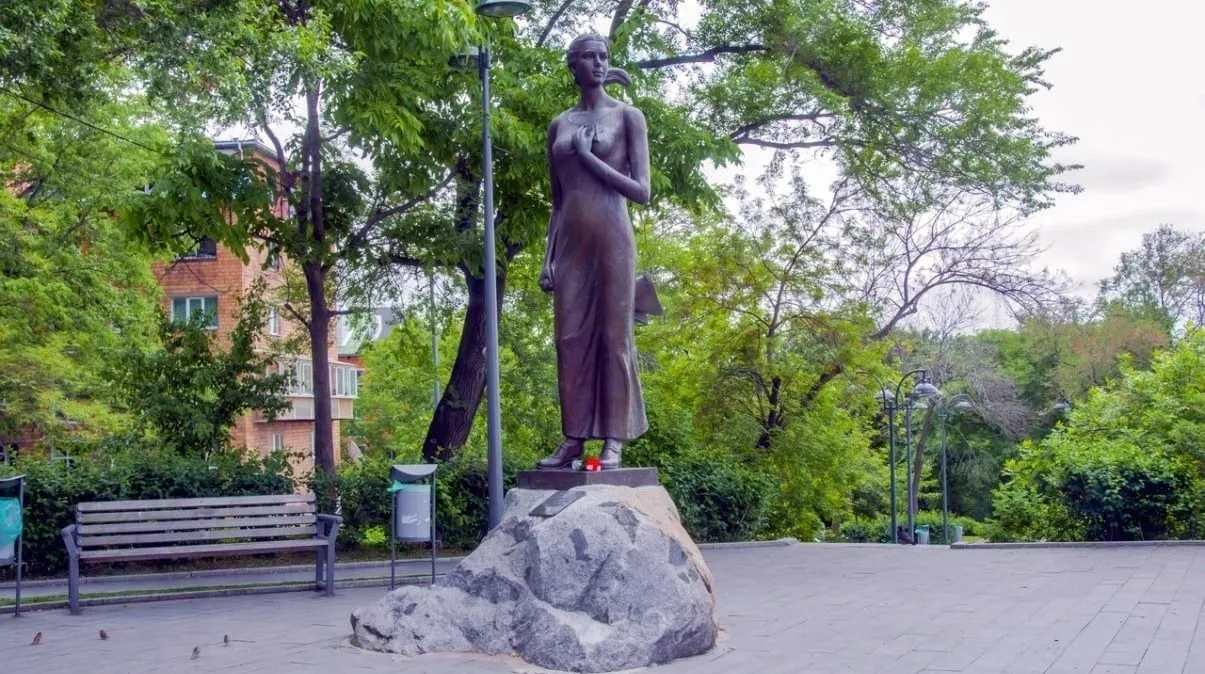
Isakovsky approached the composition of his verses with extreme rigor and responsibility, polishing lines slowly and meticulously. However, in a burst of instant inspiration, the poet drafted the first two quatrains of a composition dedicated to a young peasant girl named Katyusha, who went out to the steep bank of a river to sing a melancholy song dedicated to her absent lover.
After this initial outbreak, the plot line stalled; Mikhail Vasilievich could not decide in which direction to lead the girl’s destiny and, far from forcing the lines, chose to store the eight stanzas in a drawer waiting for better times.
Pressures and Layovers: The Encounter with Matvey Blanter
The destiny of those verses changed drastically in April 1838 in the corridors of the Pravda newspaper. There, Isakovsky crossed paths with the reputed composer Matvey Blanter, who not only served as artistic director of the USSR State Jazz Orchestra but enjoyed immense prestige as a creator of popular melodies. During the conversation, Blanter asked the poet if he possessed any recent draft to which he could inject music to renew his band’s repertoire.
Mikhail Vasilievich remembered the unfinished stanzas of the girl by the river and, warning him about the incomplete nature of the writing, transcribed the eight lines on a loose sheet of paper and handed them over. Upon reading the quatrains, the musician instantly perceived an extraordinary modular and idyllic intonation. An obsessive-compulsive composer, Blanter rehearsed dozens of melodic combinations until finding an elastic march structure that balanced melancholy with danceable energy.

A month later, Blanter tracked down the poet to inform him that the music was ready and that the result was magnificent, urging him to complete the lyrics urgently. Isakovsky promised to resolve the closure quickly, but the pressure overwhelmed him and he preferred to leave for summer vacations to the spas of Crimea.
Persistent to the extreme, Matvey Isaakovich traveled all the way to Yalta to corner the writer in his rest dacha, notifying him that the work already figured officially scheduled in the debut gala concert of the Jazz Orchestra and setting him a strict deadline of two days to deliver the closing stanzas.
Under this logistical siege, Isakovsky drafted six different variants for the final stanzas. Blanter selected without hesitation that version of deeply patriotic cut, where the young peasant girl Katyusha transmitted her vows of love and fidelity to a border guard who guarded the limits of the national territory.
The Moscow Premiere and the Geopolitical Context of 1938
The political background of that convulsive year 1938 granted the song immense sociological weight. The Soviet Empire dealt with provocative military incursions by the Japanese samurai army in the vicinity of Lake Khasan, while Spain bled under the fires of a cruel civil war. In such a pre-war juncture, praising the protection of patriotic borders and the loyalty of women in the rearguard became a necessity of State.
The official premiere of "Katyusha" took place in November 1938, during the debut concert of the Jazz Orchestra in the solemn Hall of Columns of Moscow’s House of Unions, under the baton of Viktor Knushevitsky. The performance by the singer Valentina Batishcheva, just twenty-two years old, was so moving and electrifying that the auditorium exploded into a massive ovation; the applause forced the artist to repeat and sing the piece three consecutive times on that same evening.
By 1939, the first recorded vinyl records were sold out in commercial catalogs due to a colossal demand, consolidating the work as an indispensable hymn in family gatherings and public squares across the country.
| Historical & Technical Dimension | Soviet Strategic Feature | Operational Myth / Connection |
|---|---|---|
| Lyrical Premiere | November 1938, Moscow House of Unions. | Sung 3 consecutive times by Valentina Batishcheva due to massive standing ovations. |
| BM-13 Rocket Launcher | 18-ton mobile copper and steel salvo deployment. | Nicknamed "Katyusha" because the missile stabilizers whistled like the song’s beat. |
| European Resistance | Adopted by anti-fascist partisan units across borders. | Transformed into Fischia il vento in Italy and matching resistance hymns in Greece. |
Why the BM-13 Rocket Launcher Adopted the Name
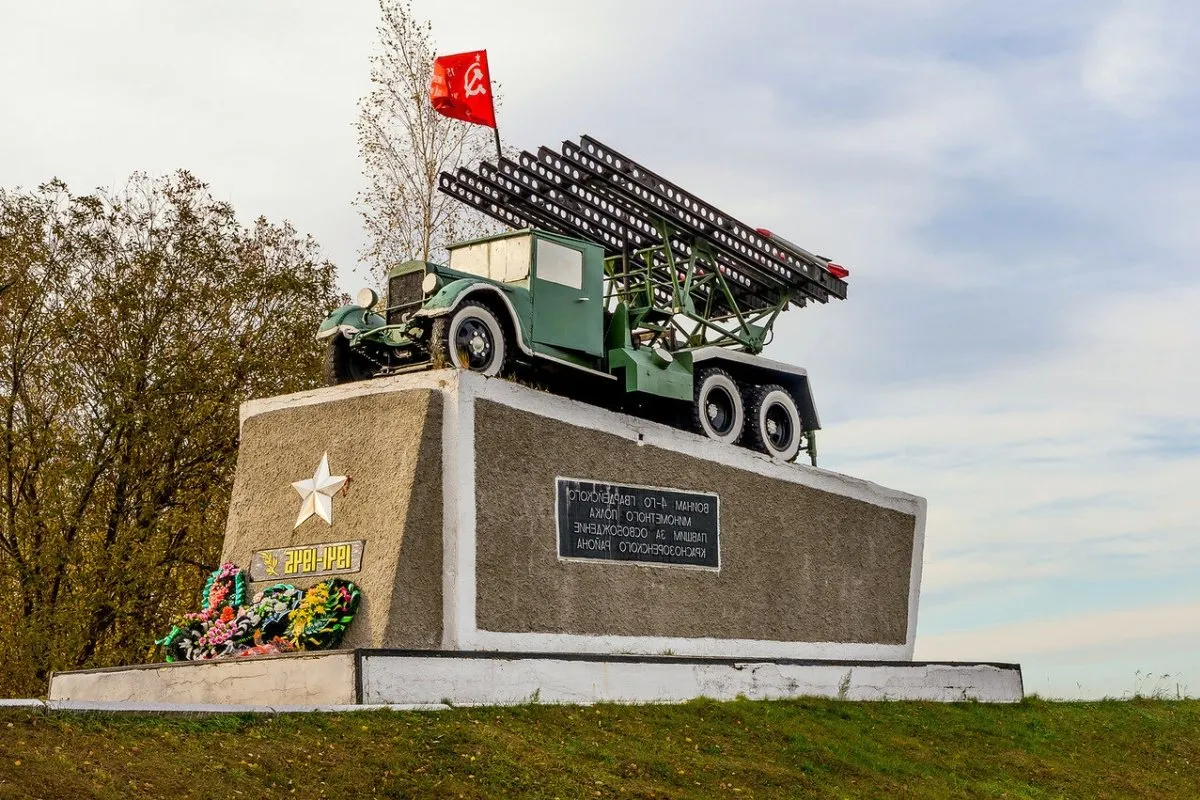
During the dark months of the Great Patriotic War, Soviet artillery forces injected the revolutionary BM-13 truck-mounted salvo rocket launcher system onto the front lines—a lethal military infrastructure that sowed panic within the infantry divisions of the German Wehrmacht. Soldiers immediately baptized this formidable war machine with the tender name of "Katyusha". Three historical theories justify this author’s baptism:
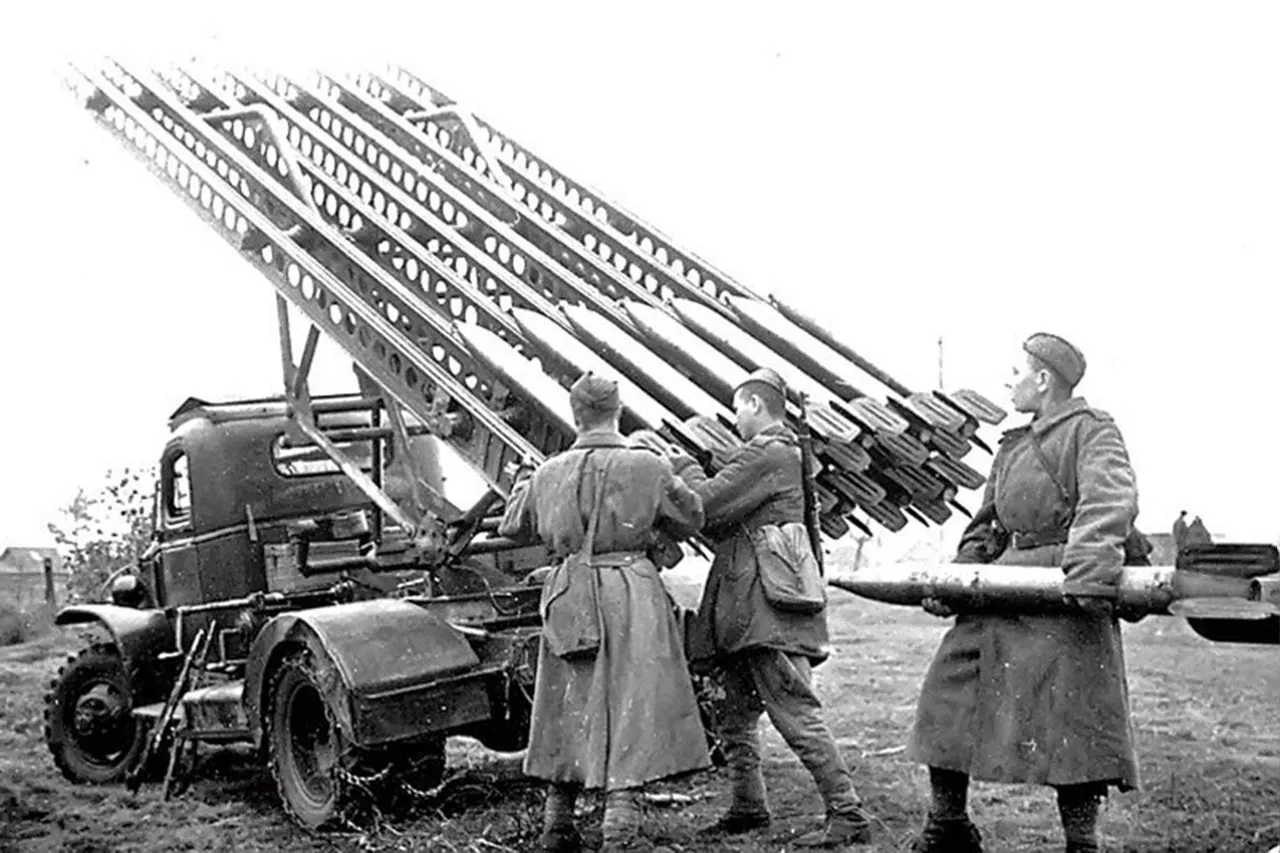
- The Echo of the Baptism of Fire (1941): In July 1941, Captain Flerov’s experimental battery executed a devastating barrage on the Orsha railway hub, positioning the launchers on a steep hill. When piercing the sky, the stabilizing feathers of the missiles generated a sharp and rhythmic whistling that soldiers instantly compared to the beat of the famous song sung from the high bank.
- The Mark of the Voronezh Factory: The trucks carried the letter "K" engraved on their chassis, the insignia of the Komintern factory in Voronezh, combined with the military ammunition labels "KAT" printed on the salvo rockets.
- The Secret Security Commands: Due to the extreme care and secrecy surrounding the BM-13, Russian officers were prohibited from employing traditional orders like "Fire!" or "Shoot!" over radio transmitters; instead, they used the playful passwords "Play!" or "Sing!" to activate the salvos, linking ballistics with the musical beat of Blanter and Isakovsky.
Folklore Alterations and the Leap to European Resistance
The extraordinary popularity of the work motivated front-line soldiers to freely alter the original stanzas to adapt them to battle contexts. In their campaign notebooks, fighters wrote verses that came from the heart, swearing to defend the Fatherland and promising fidelity to the girlfriends waiting in the provinces.
Variants sprouted singing the deeds of partisan guerrilla women and young heroines operating as trench nurses, combat pilots, or snipers, highlighting the celebrated version dedicated to Katerina Pastushenko, a brave machine-gunner who caused massive casualties in Nazi ranks. Contemporary researchers record over a hundred folk adaptations derived from Isakovsky’s matrix.
The magnetism of "Katyusha" overflowed Eurasian borders during the conflict, mutating into an armed resistance hymn against fascism in occupied Europe:
- In Italy: The partisan doctor and commander Felice Cascione used Blanter’s melody in 1943 to compose Fischia il vento ("The wind whistles"), the most famous combat song of the Garibaldian brigades of the Italian Resistance.
- In Greece: The same rhythmic base articulated the combat hymn of the National Liberation Front (EAM) partisans in their guerrilla warfare against the Axis occupation.
- The Spanish "Blue Division": Adaptations of "Katyusha" even reached foreign fighters on the German side: the Spanish Blue Division adopted a modified version called "Primavera" (Spring) after hearing it on the front near Leningrad.
Creation of the Museum in Honor of the Poet
After receiving the Stalin Prize in 1943 for his works like "Katyusha," Mikhail Isakovsky allocated the funds to build a House of Culture in Vskhody, his native Smolensk region. This prompted the creation of the Katyusha Song Museum, formally inaugurated in 1985 thanks to the gathering of his legacy. Although the poet avoided talking about his personal life when mentioning Katyusha’s name, researchers usually link it to his first teacher, Ekaterina Sergeevna Goranskaya.
The Song Katyusha Today
Today, "Katyusha" is international and performed in numerous languages. It is especially popular in China, where they consider it almost their own, use it in military parades, and even named a Russian television channel after it.
The work narrates the romance between a young Russian girl and a patriotic border guard, combining a spring landscape with a message of fidelity and military duty. Composed in five verses by Isakovsky and composer Matvey Blanter, it masterfully joins a simple lyrical text with a memorable melody, becoming a symbol of the Great Victory during World War II.
You can find the full lyrics of the song in original reference documents.
Listen to the Song Katyusha
Imperial Cultural Connection Gateway
This historical chronicle of musical telemetry and WWII military folklore is part of our strategic lifestyle knowledge network. If you wish to analyze in detail how these traditions link with the central museums of the capital or explore the select programs of the Red Army Choir, we invite you to explore our reference guide: Places in Russia: The Definitive Imperial Chronicles Guide.
Do you wish to tour the World War II memorials in Moscow and listen to live performances of the Red Army’s historic tracks handled by a certified official guide service? We coordinate your VIP agenda. Contact our travel advisors directly or explore the cultural catalogs by checking out our exclusive Moscow Tours Catalog.