For lovers of the performing arts in general and Russian ballet in particular, we present an exclusive compilation of the most celebrated, sumptuous, and legendary productions in history that no traveler should miss during their stay in the country.
Classical ballet constitutes an extraordinary artistic discipline that originally sprouted in the salons of Italy during the high Renaissance, later moving to the court of France, where it experienced a colossal institutional development under the firm patronage of King Louis XIV.
Towards the mid-19th century, the export currents of European theatrical dance operated a historic turnaround: the undisputed capital of ballet permanently moved from the theaters of Paris—the cradle of romantic masterpieces such as La Sylphide and Giselle—to the imperial stages of St. Petersburg.
It was precisely in Russia’s Northern Capital where the brilliant French choreographer Marius Petipa consecrated nearly 60 years of his professional life, modeling the system of modern classical dance and signing the authorship of the most famous compositions on the planet. Subsequently, the era of the Soviet Union continued to enrich this valuable cultural portfolio through the creation of choreographic dramas of insuperable dramatic and psychological strength.
Below, we break down the 5 most famous Russian ballets that everyone should contemplate at least once in a lifetime.
1. Swan Lake: Tchaikovsky’s Masterpiece
- Music: Pyotr Ilyich Tchaikovsky • Libretto: Vladimir Begichev and Vasily Geltser.
- Absolute Premiere: Moscow, Bolshoi Theater, 1877 (Failed original choreography by Julius Reisinger).
- Definitive Classical Production: St. Petersburg, Mariinsky Theater, 1895 (Monumental choreography by Marius Petipa and Lev Ivanov).
Swan Lake stands as the most beloved, performed, and revered composition in the entire world, crowning itself without discussion as the number one of famous Russian ballets. Although its definitive classical version saw the light on the floorboards of the Mariinsky Theater in St. Petersburg in 1895, the work had actually been born 18 years earlier on the stages of the Bolshoi Theater in Moscow, reaping a frigid initial failure due to a deficient choreographic execution that was not up to the music.
| Act / Section | Choreographer Responsible | Aesthetic Style | Focus of the Scene |
|---|---|---|---|
| Acts I & III | Marius Petipa | Courtly / Palatial | Imperial celebrations, asymmetric geometry, and character dances. |
| Acts II & IV | Lev Ivanov | Lyrical / White Ballet | Scenes at the lake shore, absolute symmetry, and emotional depth. |
Following Tchaikovsky’s passing, masters Petipa and Ivanov restructured the choreography. This 1895 version fixed the contemporary aesthetic canon of universal classical ballet.
The plot stands out for its flawless baseline clarity, symmetry, and dramatic logic: it relates the tragic fate of Princess Odette, turned into a swan by the spell of the wicked sorcerer Rothbart; the deception suffered by Prince Siegfried in the court salons before the charms of Odile (the black swan, daughter of the sorcerer), and the final redemption of the lovers. No dance company in Russia can dispense with this jewel in its repertoire catalog.
2. Don Quixote: The Festival of Spanish Dance
- Music: Ludwig Minkus • Libretto and Original Choreography: Marius Petipa.
- Absolute Premiere: Moscow, Bolshoi Theater, 1869.
- Crowning Modifications: St. Petersburg, Mariinsky Theater, 1871 (M. Petipa) • Moscow, Bolshoi Theater, 1900 (Revolutionary choreography by Alexander Gorsky).
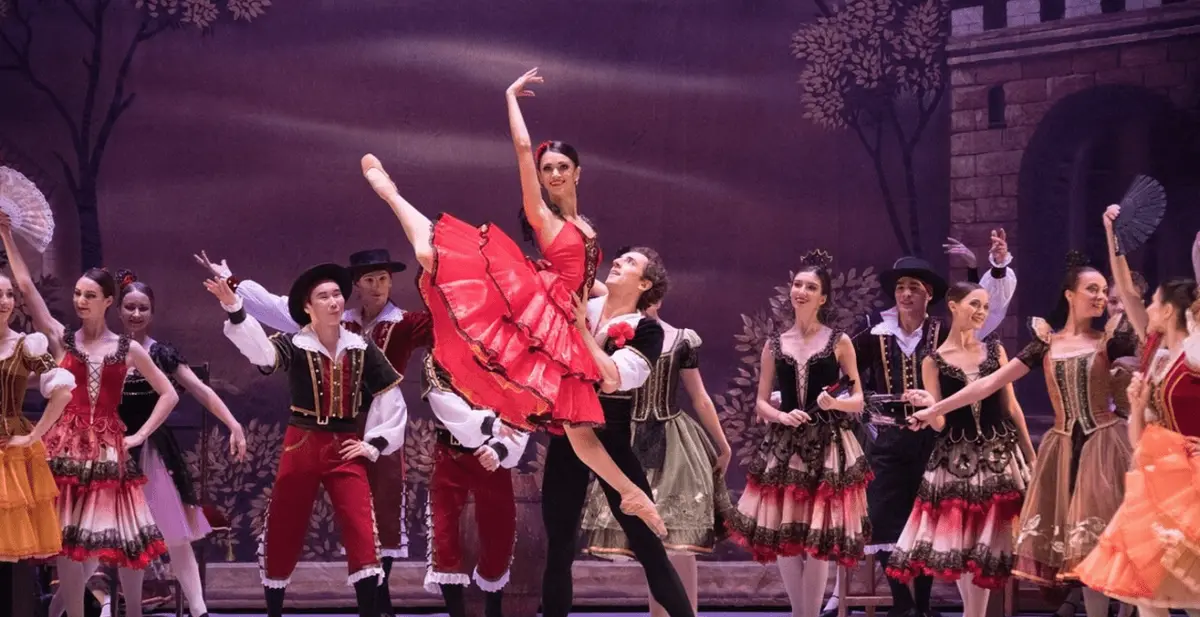
The ballet Don Quixote constitutes a theatrical representation filled with temperament, color, and overflowing joy, conceived as an authentic celebration of classical and character dance that captivates adults and children alike. Although the title pays homage to the hidalgo of Miguel de Cervantes’ celebrated novel, the libretto focuses strictly on a single passage of the literary work: "Camacho’s Wedding" (baptized in the ballet as Kitri and Basilio), relating the adventures of the young lovers whose ingenuity manages to overcome the opposition of the girl’s father. Therefore, the figure of the knight of the sorrowful countenance operates merely as a secondary common thread.
The physiognomy with which the work has survived in contemporary Russian theaters responds to the radical reform implemented by the Moscow choreographer Alexander Gorsky at the beginning of the 20th century. Gorsky, influenced by Stanislavsky’s theatrical theories, dynamited Petipa’s rigid and symmetrical choreographic compositions to endow the ballet with a living dramatic realism.
He canceled the use of rigid geometric tutus in the mystical scene of the "Dream" and insisted that the dancers apply tan makeup to emulate the Andalusian atmosphere. Although the elderly Petipa infuriated, branding Gorsky a "pig" for altering his schemes, his redesign was a resounding success, reaching 225 consecutive performances at the Bolshoi Theater.
3. The Nutcracker: Lev Ivanov’s Christmas Tale
- Music: Pyotr Ilyich Tchaikovsky • Libretto: Marius Petipa • Original Choreography: Lev Ivanov.
- Absolute Premiere: St. Petersburg, Mariinsky Theater, 1892.
In Western history manuals and internet portals, the data that The Nutcracker was choreographed by Marius Petipa is often erroneously repeated. Documentary reality proves that the elderly Petipa meticulously designed the script of the work based on Alexandre Dumas’ (father) tale, but fell gravely ill before starting rehearsals, delegating the choreographic direction entirely to his direct subordinate, the Russian master Lev Ivanov.
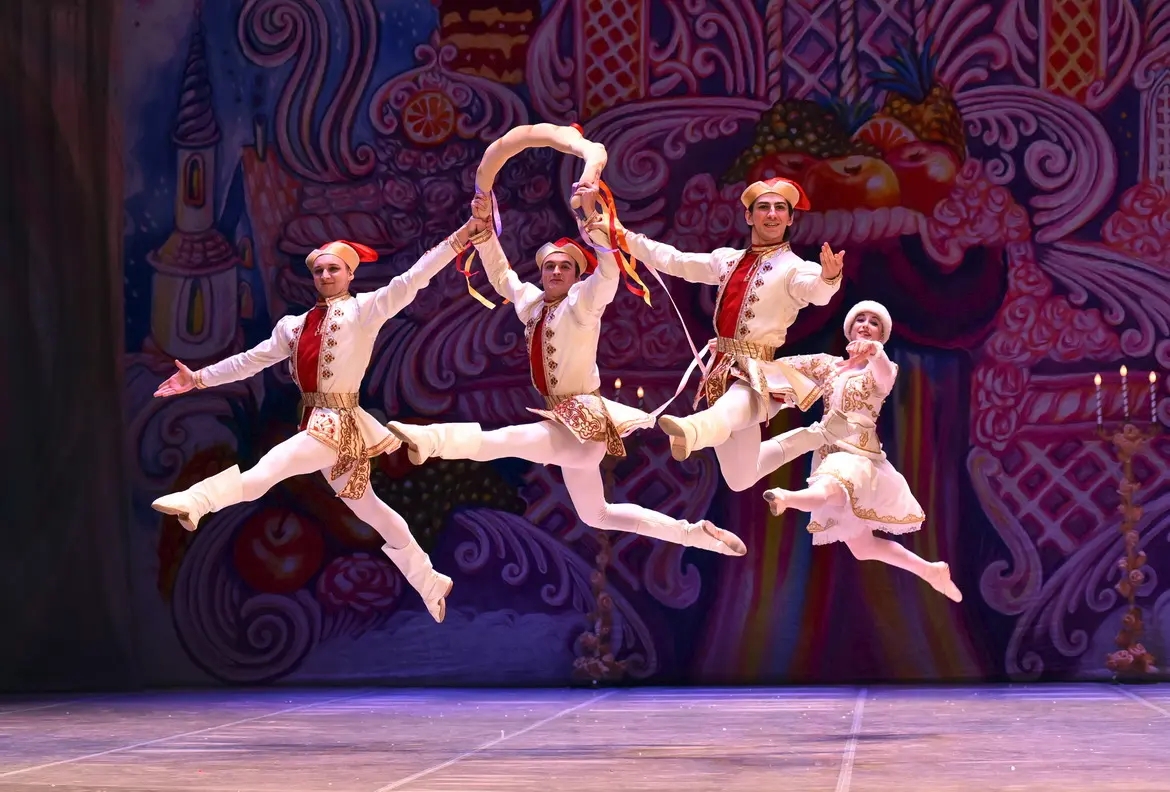
Ivanov had to solve an immense stage engineering dilemma: the libretto proposed by the court followed the patterns of the typical children’s "variety show" of the era, entering into a flagrant contradiction with Tchaikovsky’s symphonic score, which abounded in dramatic richness, melancholic textures, and a colossal psychological maturity.
Likewise, the structure confined the star ballerina to appear solely in the final Pas de Deux of the second act, leaving the weight of the work to the children of the academy. However, the 20th century knew how to decipher the hidden genius in Tchaikovsky’s music; today, The Nutcracker stands as the most performed Christmas ballet in the halls of Europe and the United States, breaking commercial box office records in every winter season.
4. Romeo and Juliet: Prokofiev’s Choreographic Drama
- Music: Sergei Prokofiev • Crowning Choreography: Leonid Lavrovsky.
- Absolute Premiere: Brno, Czechoslovakia, 1938 (Choreography by Ivo Váňa Psota).
- Definitive Soviet Production: Leningrad, Kirov (Mariinsky) Theater, 1940.
If universal literature reveres Shakespeare’s celebrated sentence that "there is no story more sad in the world than that of Romeo and Juliet," in Soviet music circles an identical phrase was coined to describe the ordeal of its composition: "there is no story more sad in the world than Prokofiev’s ballet score." Prokofiev’s superb music, filled with modern dissonances, sharp rhythms, and textures of a brutal psychological expressiveness, seemed so complex and incomprehensible to the Kirov Theater dancers of 1940 that they unanimously refused to rehearse it, declaring it "impossible to dance."
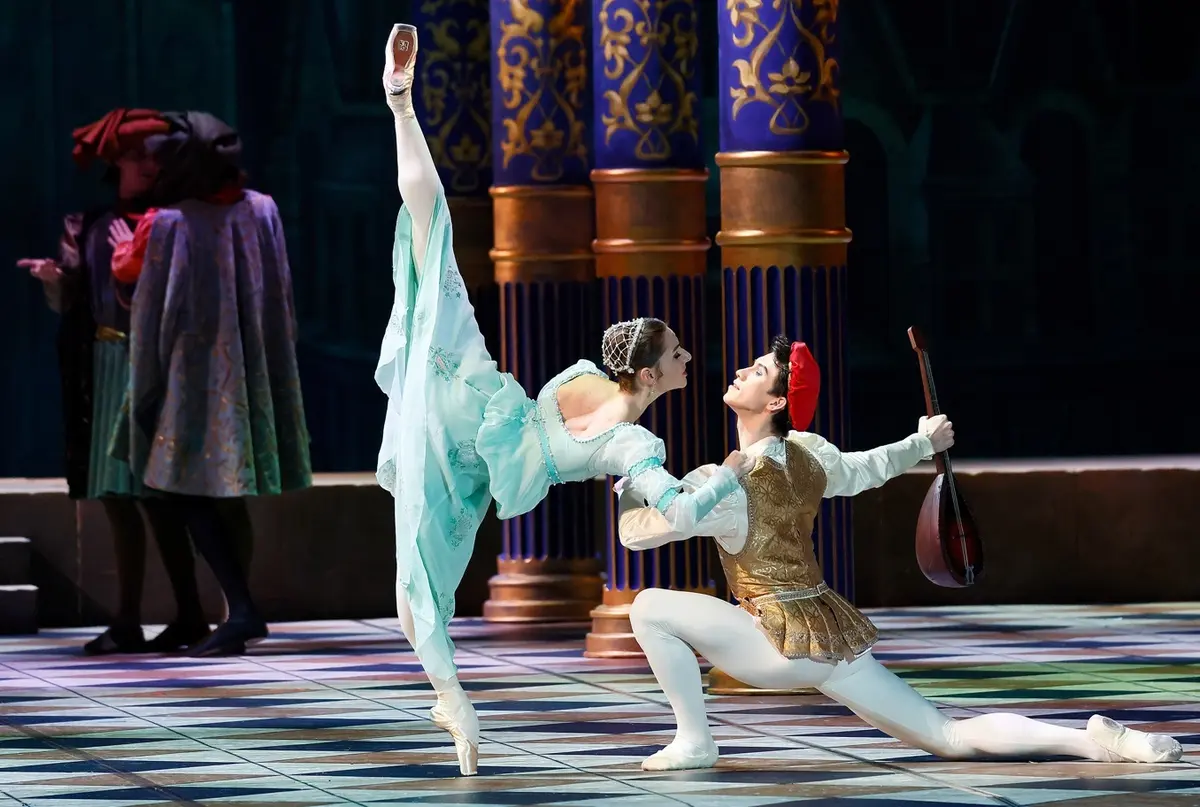
Choreographer Leonid Lavrovsky managed to save the work by integrating it within the new Soviet genre of Drambalet (choreographic drama). Lavrovsky sculpted monumental mass scenes based on real fencing and endowed the characters with a cinematographic acting depth, counting on the genius of the mythical dancer Galina Ulanova, whose incarnation of Juliet remains unmatched in the annals of Slavic theater. The commercial success was so explosive that the greatest post-war Western choreographers (such as Kenneth MacMillan or John Cranko) traveled to Leningrad to study the score and adapt it to the operas of London and Milan.
5. Spartacus: The Heroic Strength of the Soviet Block
- Music: Aram Khachaturian • Libretto: Nikolai Volkov.
- Absolute Premiere: Leningrad, Kirov Theater, 1956 (Original choreography by Leonid Yakobson).
- The Definitive Imperial Version: Moscow, Bolshoi Theater, 1968 (Masterful choreography by Yuri Grigorovich).
It is impossible to close an inventory of Slavic dance without crowning the ballet Spartacus (Spartak), the work that embodies with maximum excellence the concept of “Soviet ballet.” The period of the Soviets archived the old plots of fairy tales and princesses of Petipa’s Imperial Theaters, replacing them with collective heroic epics based on the struggle for freedom of the oppressed classes.
Spartacus consolidated itself as a grand success and symbol in 1968 thanks to the choreography of Yuri Grigorovich, who stood out for his dramaturgy, character development, and use of the corps de ballet, principally male.
In addition to the versions of Yakobson and Grigorovich, there are nearly 20 international productions of the ballet signed by creators such as Jiri Blazek, Laszlo Serega, Jüri Vamos, Renato Zanella, and Natalia Kasatkina along with Vladimir Vasiliev.
Tickets for Famous Russian Ballets
If you have planned to travel to Russia and want to enjoy the famous Russian ballets in Moscow or St. Petersburg, contact us and we will manage the tickets in advance for your peace of mind.
Do you wish to secure your preferred locations in the historic boxes of the Bolshoi or Mariinsky theaters and enjoy these masterpieces of dance with the comfort of a guaranteed management in your language? We take care of your concierge services. Contact our travel advisors directly or explore the shows of the season in our Tickets to Shows Catalog in Russia.